

Gaza Ceasefire Breached as Israeli Strikes Kill Six Palestinians
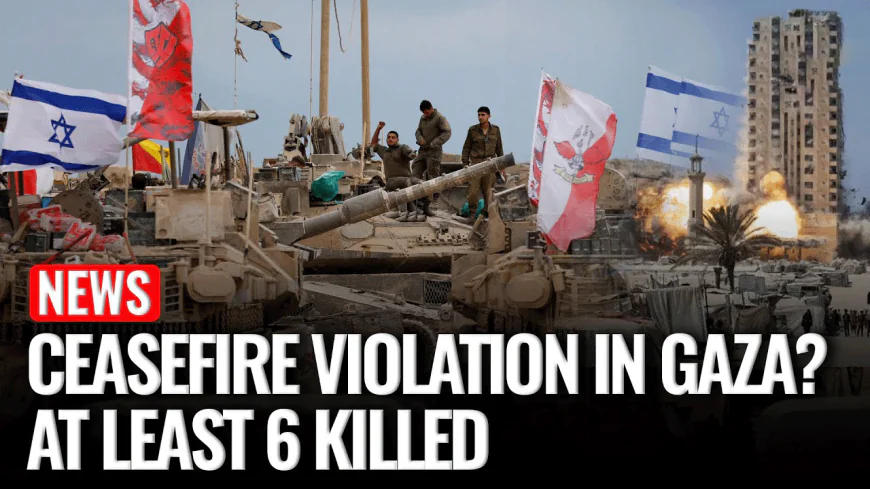
Israeli airstrikes killed six Palestinians in Gaza on February 26, 2026, marking the latest breach of the US-brokered ceasefire deal and raising fresh doubts about its durability.
Key Takeaways
- Israeli airstrikes killed six Palestinians in Gaza on February 26, 2026, marking the latest breach of the US-brokered ceasefire deal and raising fresh doubts about its durability.
- Israeli Strikes Kill Six in Gaza in Latest Blow to US-Brokered Ceasefire Israeli airstrikes killed six Palestinians in Gaza on Thursday, February 26, 2026, in what Hamas and Pa...
- Published: Feb 27, 2026 — Middle east

Israeli Strikes Kill Six in Gaza in Latest Blow to US-Brokered Ceasefire
Israeli airstrikes killed six Palestinians in Gaza on Thursday, February 26, 2026, in what Hamas and Palestinian health authorities described as a direct violation of the US-brokered ceasefire agreement that has been in fragile effect since January. The strikes hit a residential block in Khan Younis and a vehicle in northern Gaza, according to the Hamas-run Government Media Office.
The Israeli Defense Forces confirmed the strikes, saying they targeted "active terror infrastructure" and "operatives responsible for ongoing rocket fire." Gaza's health ministry said the dead included two children and a woman. IDF spokesperson Rear Admiral Daniel Hagari stated that the military would continue to respond to "any threat to Israeli citizens and soldiers regardless of ceasefire framework language."
The incident was the 11th reported breach of the ceasefire since it went into effect, though the definition of breach is itself contested: Israel argues that any Hamas rocket fire constitutes a breach first, entitling it to respond. Hamas and international monitors argue that Israeli strikes on residential areas violate the ceasefire terms regardless of the stated military justification.
The Fragile State of the Deal
The ceasefire agreement, brokered by the Trump administration with Egyptian and Qatari mediation, was designed as a phased arrangement in which hostage releases by Hamas would be followed by Israeli military withdrawals from specific zones and eventually a permanent end to hostilities. The first phase has seen 34 hostages returned in exchange for 900 Palestinian prisoners.
The second phase, which involves more sensitive exchanges and a timetable for Israeli military withdrawal, has stalled. Israel's Finance Minister Bezalel Smotrich and National Security Minister Itamar Ben-Gvir have both threatened to collapse the government if Prime Minister Benjamin Netanyahu agrees to a full Israeli withdrawal from Gaza. Their positions directly conflict with the deal's framework.
According to Aaron David Miller, Distinguished Fellow at the Carnegie Endowment for International Peace, "The ceasefire is alive but it is not well. The structural tension between what Trump brokered, what Netanyahu needs domestically, and what Hamas will accept means that every incident like today's is a potential catalyst for collapse."
International Reaction
The United States, which has invested significant diplomatic capital in the ceasefire deal, issued a statement calling for restraint from both sides without assigning blame. European Union foreign policy chief Kaja Kallas condemned the strikes more directly, calling them "incompatible with the ceasefire obligations Israel committed to." Jordan and Egypt — both critical to the deal's mediation architecture — summoned Israeli ambassadors for formal protests.
Within the White House, officials privately acknowledged frustration with the pace of implementation and the pattern of small-scale violations eroding confidence in the agreement. A senior administration official told Reuters: "We are watching the situation very closely. The deal is the best path to a durable peace. But it requires both parties to hold."
Whether both parties can hold long enough to reach the deal's second phase — and what happens to Gaza's 2.3 million civilians if they cannot — remains the most consequential open question in the Middle East right now.
What's Your Reaction?
 Like
0
Like
0
 Dislike
0
Dislike
0
 Love
0
Love
0
 Funny
0
Funny
0
 Wow
0
Wow
0
 Sad
0
Sad
0
 Angry
0
Angry
0












Comments (0)