

Russia Strikes Ukrainian Cities Hours Before US-Ukraine Peace Talks
Russia launched missile and drone strikes across multiple Ukrainian cities on February 27, hours before scheduled US-Ukraine envoy talks, killing at least nine people.
Key Takeaways
- Russia launched missile and drone strikes across multiple Ukrainian cities on February 27, hours before scheduled US-Ukraine envoy talks, killing at least nine people.
- Russia Bombs Kyiv and Kharkiv Ahead of US-Ukraine Diplomatic MeetingsRussia launched a coordinated wave of missile and drone strikes against Ukrainian cities on Friday, February...
- Published: Feb 27, 2026 — Russia


Russia Bombs Kyiv and Kharkiv Ahead of US-Ukraine Diplomatic Meetings
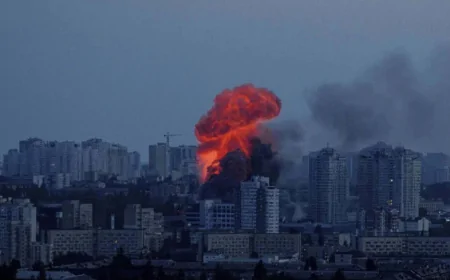
Russia launched a coordinated wave of missile and drone strikes against Ukrainian cities on Friday, February 28, 2026, killing at least nine civilians and wounding dozens more in what Ukrainian officials called a deliberate act of intimidation ahead of scheduled talks between US and Ukrainian envoys. The attacks hit residential areas in Kyiv, Kharkiv, and Zaporizhzhia.
Ukrainian air defenses intercepted a significant portion of the inbound projectiles, but a combination of Shahed drones and Kalibr cruise missiles broke through in several sectors. A five-story apartment building in Kharkiv's Saltivka district collapsed partially after a direct strike shortly before dawn. Search and rescue teams worked through the morning to pull survivors from the rubble.
President Volodymyr Zelensky addressed the nation from Kyiv within hours of the attacks. "Russia does not want peace," he said. "These strikes tonight are Russia's message to America — and we demand that message be answered with more air defense systems, not more negotiations."
The Timing Was Not Accidental
US Special Envoy Keith Kellogg was scheduled to meet Ukrainian officials in Kyiv on Saturday to discuss preliminary ceasefire frameworks. The Trump administration has been pushing for a negotiated end to the war since taking office in January 2025, a goal that has proven elusive as Russia continues to demand Ukrainian territorial concessions.
Moscow denied targeting civilians and claimed its strikes hit "military infrastructure." The Russian Defense Ministry released a statement asserting that the Kharkiv strike targeted a Ukrainian arms depot. Ukrainian emergency services disputed that account entirely, citing the apartment block location and civilian casualties.
According to Michael Kofman, Senior Fellow at the Carnegie Endowment for International Peace, "Russia is using strikes to demonstrate resolve and shape the battlefield narrative before any talks begin. It is a coercive signaling tactic they have used throughout this war."
US Response and Diplomatic Path Forward
The White House issued a statement condemning the strikes but did not announce any change in its diplomatic posture. Press Secretary Karoline Leavitt said the talks would proceed as scheduled, calling the Russian strikes "unacceptable" but avoiding any direct threat of consequences.
Congress reacted more forcefully. A bipartisan group of 43 senators released a joint letter demanding the administration provide Ukraine with additional Patriot missile interceptors and long-range ATACMS munitions. Senate Minority Leader Chuck Schumer called the strikes proof that "Putin is not negotiating in good faith."
European NATO allies also responded with alarm. Poland's Defense Minister Władysław Kosiniak-Kamysz called an emergency session of Poland's national security council. Baltic states Estonia, Latvia, and Lithuania jointly demanded an extraordinary NATO meeting.
Ukraine's Civilian Reality
For ordinary Ukrainians, Friday's strikes were a grim continuation of four years of war. In Kyiv's Obolon district, residents sheltered in metro stations for the third night in a week. Volunteers distributed hot tea and blankets along the platform. A retired teacher named Halyna, 67, told a Reuters journalist: "We have learned to live with this. But living with this is not living."
The human toll of the war now exceeds 500,000 dead and wounded on both sides, according to US intelligence estimates. More than 6 million Ukrainians remain displaced within their own country. Whether Saturday's talks in Kyiv produce any movement toward a ceasefire — or become another diplomatic exercise in futility — will define the coming weeks of this grinding war.
What's Your Reaction?
 Like
0
Like
0
 Dislike
0
Dislike
0
 Love
0
Love
0
 Funny
0
Funny
0
 Wow
0
Wow
0
 Sad
0
Sad
0
 Angry
0
Angry
0













Comments (0)