


























Canada's Carney Backs Iran War 'With Regret,' Signs Australia Pact
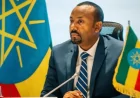
Canadian PM Mark Carney endorsed the US-Israel war on Iran 'with some regret' during an Australia visit where he signed a new bilateral defense cooperation agreement.
Carney Endorses Iran War Strikes During Australia Visit, Citing Iranian Nuclear Threat
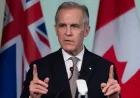
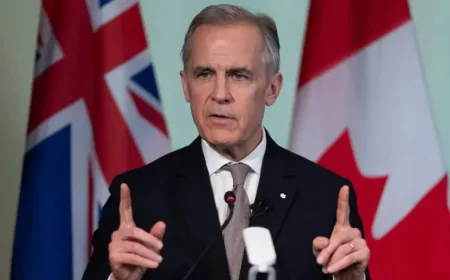
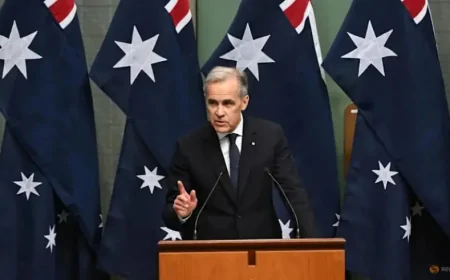
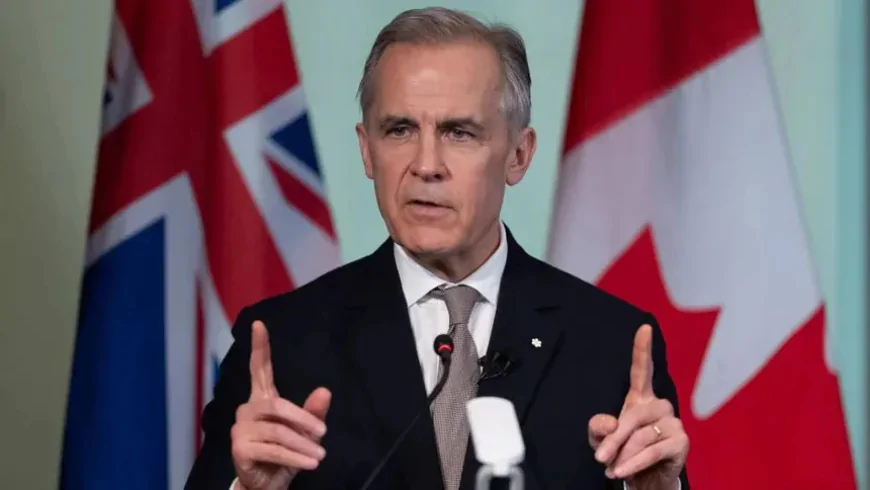
Canadian Prime Minister Mark Carney backed the US-Israel strikes on Iran "with some regret" during a visit to Sydney, Australia, where he also signed a new bilateral defense cooperation agreement with Australian Prime Minister Anthony Albanese, deepening the security partnership between two nations increasingly aligned on the geopolitical responses to great-power competition in the Indo-Pacific. Carney's endorsement of the Iran strikes — the most explicit from a Canadian leader since the operation began — came with carefully framed reservations about the war's conduct and humanitarian consequences.
Carney described the strikes as "an extreme example of a rupturing world order" and said Canada supported them as a last resort after the failure of diplomatic options, including the February nuclear talks in Oman. He did not commit Canadian forces to the operation and made clear that Canada would not provide military personnel or equipment to the US-led campaign. His statement, simultaneously broadcast in Ottawa, was calibrated to satisfy both the domestic constituency that expects Canada to maintain alignment with its Five Eyes intelligence partners and the significant Canadian public opinion that has grown skeptical of military adventurism in the Middle East.
The defense agreement with Australia covers joint exercises, intelligence sharing, and coordination on maritime security in the Indo-Pacific. It stops short of the AUKUS arrangements — the trilateral security partnership between Australia, the United Kingdom, and the United States — to which Canada is not a party. Several Canadian defense analysts have argued that Ottawa should seek accession to AUKUS as China's military posture in the Pacific has grown more assertive. The Sydney agreement represents a step in that direction without the political commitment that formal AUKUS membership would require.
Carney's Foreign Policy Vision: Middle Power Multilateralism
Carney, who took office after winning the January federal election, has articulated a foreign policy vision built around what he calls "constructive middle power multilateralism" — Canada's traditional role as a builder of international coalitions and institutional frameworks, updated for a more fragmented and transactional international environment. His endorsement of the Iran strikes sits awkwardly within that framework, which typically emphasizes international law and multilateral legitimacy as organizing principles.
The tension is not lost on him. In Sydney, Carney was asked directly how his support for the strikes squared with Canada's stated commitment to the UN Charter's prohibition on the use of force against sovereign states. He deflected the question, saying Canada was focused on preventing nuclear proliferation and supporting its allies, and that legal questions would be addressed in appropriate forums. That answer satisfied almost no one — critics on the left accused him of abandoning Canadian legal principles, while hawks on the right complained that his "with regret" framing undermined allied solidarity.
According to Roland Paris, professor of international affairs at the University of Ottawa and a former foreign policy adviser to Prime Minister Justin Trudeau, "Carney is navigating the impossible arithmetic of Canadian foreign policy in 2026. Canada cannot break with the United States on a matter of core strategic interest and survive the relationship intact, but it cannot fully endorse every US military choice without damaging its international credibility as a rule-of-law advocate. 'With some regret' is not a policy — it is the sound of a middle power caught between its principles and its dependencies."
The Australia Relationship and Indo-Pacific Strategy
The bilateral agreement signed in Sydney reflects a broader realignment of Canadian foreign policy attention toward the Indo-Pacific. For much of the post-Cold War period, Canada's foreign policy was organized around NATO, North America, and the G7. The rise of China as a strategic competitor and the growing US focus on Asia-Pacific security have pulled Canadian strategic planning in new directions, accelerated by Carney's government's explicit decision to deepen ties with like-minded democratic allies in the region.
Australia and Canada share overlapping interests across several domains: both are significant commodity exporters who have felt the weight of Chinese economic coercion; both are Five Eyes intelligence partners with deep institutional security relationships; and both have navigated the complications of Trump's second-term unilateralism from positions of formal alliance but occasional policy disagreement. Whether the Sydney defense agreement produces the deeper structural integration that both governments have described as desirable — or whether it remains, as past Canada-Australia security agreements have, more symbolic than operational — will depend on the political will of both governments to invest real resources in a relationship that lacks the visceral urgency of either's relationship with the United States.
Canada's Economic Vulnerability and the Iran War's Energy Dimension
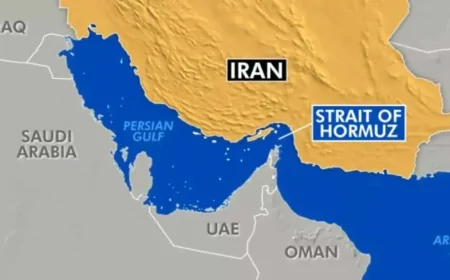
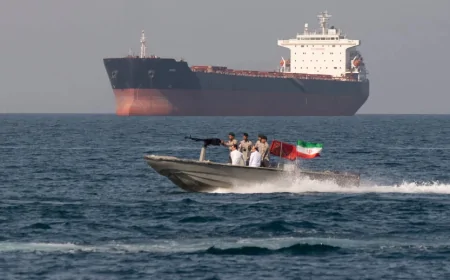
Carney's qualified endorsement of the Iran war is shaped not only by alliance politics but by economic interest. Canada is a major oil producer and exporter — it is the world's fourth-largest crude oil producer and the United States' most important energy supplier. The Strait of Hormuz closure and the consequent rise in global oil prices have produced mixed signals for Canada's economy: higher oil prices benefit Alberta's producers and the federal government's royalty revenues, but they increase input costs for Canadian manufacturers and add to household energy bills in a country still grappling with elevated inflation.
The trade deal renegotiation with the United States and Mexico, due by mid-2026, adds another dimension. Canada cannot afford to antagonize the Trump administration on a matter the White House regards as its core strategic achievement while simultaneously negotiating the renewal of a trade agreement on which Canadian manufacturing and agricultural exports depend. Carney's "with some regret" formulation threads an impossible needle: it provides enough cover domestically to avoid accusations of uncritical American deference, while providing enough alignment internationally to maintain Canadian relevance in the security conversations that matter.
Whether that formulation will survive the coming weeks — as the civilian death toll in Iran rises, as the humanitarian situation in Lebanon deteriorates, and as the political pressure from within the Liberal Party's progressive wing intensifies — is an open question. Carney is a former central banker who won the Liberal leadership on the promise of pragmatic competence. His Iran war positioning is a test of whether pragmatic competence can survive in a world where the choices on offer are all bad, and where silence is no longer an available option.