

UK Spring Statement: OBR Slashes Growth Forecast as Iran War Rewrites Economic Picture
The UK's OBR slashed its 2026 growth forecast to 1.1% from 1.4% and explicitly warned that Iran war risks and U.S. tariffs were not reflected in projections delivered at Wednesday's Spring Statement.
Key Takeaways
- The UK's OBR slashed its 2026 growth forecast to 1.1% from 1.4% and explicitly warned that Iran war risks and U.S. tariffs were not reflected in projections delivered at Wednesday's Spring Statement.
- UK Spring Statement Delivered Into an Economy the OBR Already Knows It Has MismeasuredChancellor Rachel Reeves delivered Britain's Spring Statement on Wednesday to a House of Co...
- Published: Mar 04, 2026 — U.K. News

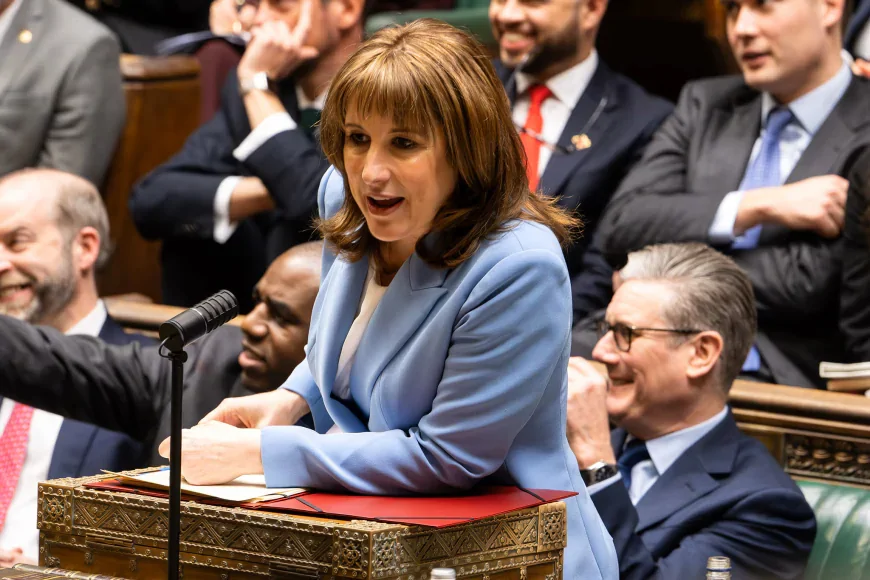
UK Spring Statement Delivered Into an Economy the OBR Already Knows It Has Mismeasured
Chancellor Rachel Reeves delivered Britain's Spring Statement on Wednesday to a House of Commons whose members were simultaneously receiving updates on an Iran war that the Office for Budget Responsibility had explicitly warned was not reflected in the economic forecasts it had produced only hours earlier. The OBR cut its 2026 growth forecast to 1.1 percent from the 1.4 percent projected at the October 2025 Autumn Statement, raised its peak unemployment estimate to 5.3 percent from 4.9 percent, and stated in unusually direct language that the risks posed by the Iran conflict and U.S. tariffs represented material downside threats that could not yet be quantified with the data available on Wednesday.
The political subtext was acute. A government that had staked considerable credibility on restoring economic stability — against a backdrop of years of Conservative fiscal turbulence — delivered its statement knowing that the headline numbers would be revised before many people had finished reading them. The borrowing position improved: a record £30.4 billion January surplus, driven by capital gains tax receipts and self-assessment payments, reduced annual borrowing by £18 billion relative to October forecasts. The fiscal headroom — the buffer against breaching the government's self-imposed borrowing rules — rose to £23.6 billion. But the OBR's own narrative described those improvements as potentially temporary, noting that energy price inflation driven by the Hormuz closure would feed through to consumer prices, nominal earnings, and social transfer costs in ways that would erode the January surplus's positive impact.
Natural gas TTF futures had surged more than 60 percent in two days as the Strait of Hormuz closure took hold, and Goldman Sachs economists released a note on Wednesday projecting that sustained Hormuz disruption could add between 0.4 and 0.8 percentage points to UK CPI over a six-month period. The Bank of England's rate-cutting cycle, which financial markets had been pricing in for the spring, was now in question: an inflationary shock that pushes CPI back above target removes the central bank's space to support a slowing economy through lower borrowing costs.
Aviation Shutdown Adds Unquantified Costs
The EASA conflict zone ban across 11 Middle Eastern countries cancelled more than 1,300 flights on Tuesday and Wednesday, with British Airways, Virgin Atlantic, and TUI among the carriers suspending Middle East operations. An estimated 300,000 British nationals were stranded in Gulf states, prompting the Foreign Secretary to activate consular evacuation support — an operation with direct fiscal costs that were not included in the OBR's Wednesday numbers.
For UK carriers already prohibited from Russian airspace since 2022, the Middle East closure eliminated the last efficient routing corridor to Asia, forcing longer routes through the Caucasus or around southern Africa that add hours of flight time and additional fuel consumption per journey. Aviation analysts estimated the additional per-flight cost at between $30,000 and $80,000 depending on the route and aircraft type — costs that carriers will pass to passengers, adding an inflationary dimension to travel costs precisely when consumer confidence was already fragile.
The Spring Statement's inheritance tax reforms — taking effect in April 2026 and applying a new £1 million cap on previously unlimited business and agricultural property relief exemptions — became the most politically contentious domestic measure in the statement. Rural constituencies and farming organisations had been campaigning against the reform since its announcement in October 2025, and the Iran war's emergence as a dominant story ensured the inheritance tax fight received less political attention than it would have in a quieter news cycle, giving the government temporary cover it will not be able to sustain.
The Political Vulnerability the Statement Exposed
The structural political problem for Reeves is that her government's fiscal credibility rests on hitting targets the OBR has now projected may be missed if the Iran war persists. The £23.6 billion headroom sounds substantial but, in historical context, is within one energy price shock of disappearing — and the IRGC's Hormuz closure has already delivered the opening phase of that shock. If the war continues through the spring and energy prices remain elevated into summer, the OBR's next forecast revision will produce numbers that put the government's spending rules in jeopardy.
Opposition leader Kemi Badenoch responded to the statement by arguing that the government's October tax rises — the largest single-year tax increase in British history — had already weakened the economy's resilience before the external shocks arrived, leaving Britain without the fiscal space to respond to a crisis. Reeves disputed that characterisation, arguing that the fiscal repair work undertaken since July 2024 had created precisely the headroom that was now visible in the improved borrowing figures.
According to Paul Johnson, Director of the Institute for Fiscal Studies, "The Spring Statement was designed to project stability, but the OBR's own language makes clear that stability is conditional on a geopolitical situation that is moving faster than any forecast model can track. The honest number is not 1.1 percent growth — it is 1.1 percent growth if the war doesn't get worse."
Whether Britain's economy navigates the Iran war's economic fallout through the spring without requiring an emergency fiscal response — or whether the Hormuz closure's energy price impact forces a Budget revision before autumn — depends on factors entirely outside the Treasury's control and on a war whose duration no one in Whitehall is prepared to predict.
What's Your Reaction?
 Like
0
Like
0
 Dislike
0
Dislike
0
 Love
0
Love
0
 Funny
0
Funny
0
 Wow
0
Wow
0
 Sad
0
Sad
0
 Angry
0
Angry
0











Comments (0)