





































Israel Orders Mass Beirut Evacuation, Strikes Tripoli in Lebanon Push
Israel issued sweeping evacuation orders for southern Beirut and all areas south of the Litani River, while striking Tripoli for the first time as Lebanon war widens.
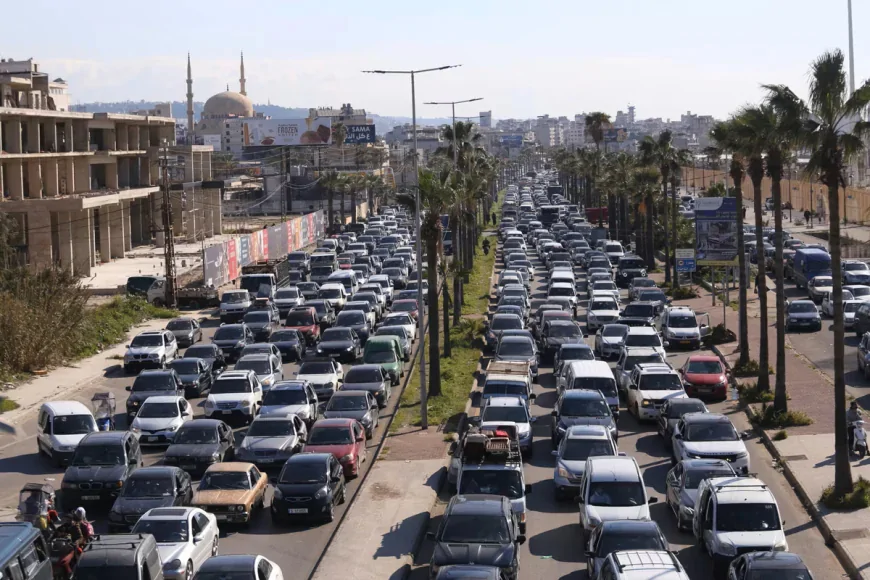
Israel Issues Unprecedented Evacuation Orders as Lebanon War Escalates to Tripoli
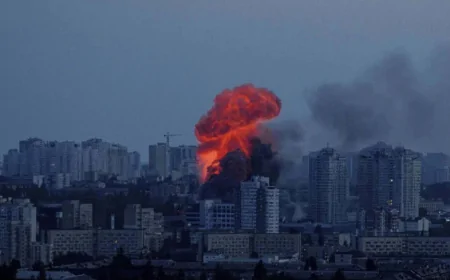
Israel's military issued sweeping evacuation warnings for large sections of Lebanon on Thursday, ordering all residents south of the Litani River, the entirety of Beirut's southern suburbs, and parts of the Beqaa Valley to leave immediately. The geographic scope of the orders has not been seen since the 2006 war between Israel and Hezbollah — and the simultaneous strike on the northern city of Tripoli, the first since the current conflict began, suggests the campaign is expanding its footprint in ways that alarm Lebanese political leaders and international observers alike.
Lebanon's Health Ministry reported 77 people killed by Israeli airstrikes since Monday and 527 injured. Thursday's casualties included eight people killed in the southern village of Kfar Tebnit, four of them from the same family. Three paramedics were among the dead.
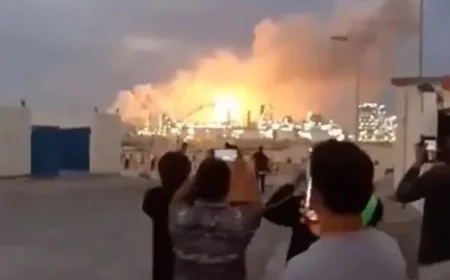
The Tripoli strike was struck without warning or advance evacuation notice. Tripoli, Lebanon's second-largest city and predominantly Sunni Muslim, has historically maintained distance from Hezbollah — a point that opposition politicians and Lebanese government officials seized upon in demanding international condemnation of the attack.
The Military Logic and the Humanitarian Cost
Israeli officials framed the expanded operations as an effort to degrade Hezbollah's command infrastructure, logistics networks, and weapons storage. IDF Chief of Staff Zamir said he had ordered his forces to "push deeper into Lebanon" as part of the new operational phase announced Thursday. The IDF said it struck several Hezbollah command centers in Beirut in overnight operations.
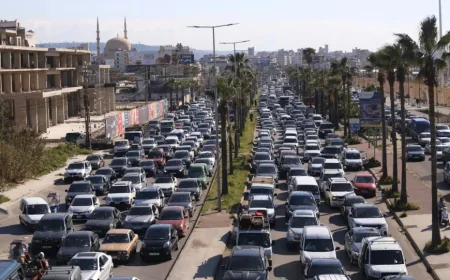
The mass evacuation orders, if enforced through military operations in the coming days, would produce one of the largest internal displacement events in Lebanon's modern history. Lebanon was still recovering from the 2006 war, the 2020 Beirut port explosion, and years of cascading economic collapse when the current conflict began. The country's hospitals, roads, and aid infrastructure were already operating well below capacity before the first Israeli strike in this round.
According to Lina Mounzer, senior researcher at the Lebanese Center for Policy Studies in Beirut, "Lebanon did not choose to be the secondary theater in this war, but the international community is treating it as a footnote to the main event in Iran. The evacuation orders affect a million or more people with nowhere safe to go. The country does not have the logistical infrastructure to absorb that movement and the humanitarian system is already beyond its limits."
Diplomatic Failure and the Absence of Restraint
International calls for restraint have produced no visible effect on Israeli military planning. France, which has maintained the largest European diplomatic presence in Lebanon and has historically styled itself as the country's protector among world powers, issued a formal protest on Thursday following the Tripoli strike. It was the third French diplomatic protest in as many days. None resulted in a change of Israeli operational tempo.
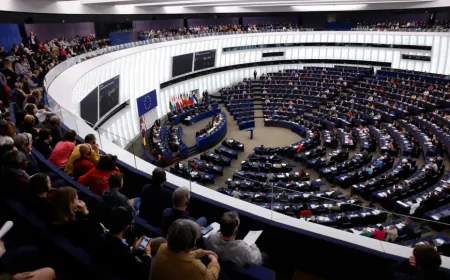
The Lebanese government formally requested an emergency session of the UN Security Council on Thursday afternoon. Whether the Council can agree on any resolution remains deeply uncertain. The United States has publicly backed the Israeli operation and has veto power over any binding resolution. Russia and China have been more critical but have not presented binding language.
Hezbollah itself, weakened since 2024 when Israeli strikes and the October 2025 joint US-Israeli operation removed its senior military leadership, has continued fighting — but at lower intensity than before. Its capacity to retaliate inside Israel has diminished sharply. That diminished capacity has not spared Lebanese civilians from the expansion of Israeli operations. The question of whether Israeli forces will cross the Litani River in a ground operation, or whether the current campaign will remain predominantly airborne, is the strategic unknown that will define Lebanon's trajectory in the weeks ahead.
The Humanitarian Dimension and International Response
The mass evacuation orders create a logistical and humanitarian crisis for which Lebanon's government, NGOs, and the UN system are entirely unprepared. The UN Office for the Coordination of Humanitarian Affairs estimates that more than one million people have already been displaced since Monday by Israeli operations and evacuation warnings. The Lebanese Red Cross reported Thursday that its ambulances have been unable to reach casualties in several southern villages because roads have been destroyed by airstrikes.
Lebanon's government formally requested an emergency UN Security Council session Thursday afternoon. The request was the third in six days. The two previous requests produced meetings but no binding resolutions. The United States has veto authority over any resolution that would establish a ceasefire, authorize peacekeeping forces, or hold Israel legally accountable for attacks on civilian infrastructure. No such resolution is expected to pass.
For the 4.5 million Lebanese citizens who are not Hezbollah members, not involved in any military operation, and not responsible for any of the calculations that have brought this war to their streets, the evacuation orders represent an existential displacement without a destination. Lebanon has no safe zone designated for civilian refuge, no functioning humanitarian corridor to a neighboring country capable of absorbing a million displaced people, and no government capacity to manage a crisis of this scale. What happens to those who cannot or will not leave the areas Israel has ordered evacuated is the question that the military briefings and the strategic analyses consistently fail to answer.
The International Law Framework and Accountability Gap
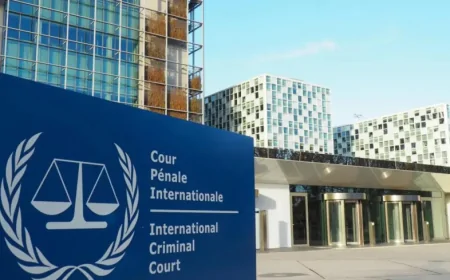
Lebanon is a state that has repeatedly been the site of military operations by external powers without its consent and without effective accountability. Israel's 2006 war, its 2024 operations, and the current campaign have all proceeded under international legal frameworks that theoretically prohibit attacks on civilian populations but that in practice have generated prosecution of no Israeli or American military commander for Lebanese civilian deaths. The Rome Statute applies to Lebanon — it is a state party to the International Criminal Court — but the court's ability to pursue cases involving US and Israeli operations is constrained by Washington's non-membership and by the political dynamics of ICC prosecution priorities.
The UN Interim Force in Lebanon — UNIFIL — has been on the ground in southern Lebanon since 1978. Its presence has not historically constrained Israeli military operations, and the current campaign is no exception. UNIFIL has reported that several of its positions have been struck in the current conflict, that its patrols have been unable to operate in areas under active bombardment, and that its ability to document and report on violations of international humanitarian law has been severely limited by the scale of operations. The force's mandate does not include the authority to use force to protect civilians or to stop military operations. It is a presence, not a protection.