


























China Sets Lowest Growth Target Since 1991 at NPC as Military Purged
China's NPC opened with Premier Li Qiang setting a 4.5–5% GDP growth target — the lowest since 1991 — as nine military officers were expelled before the session.
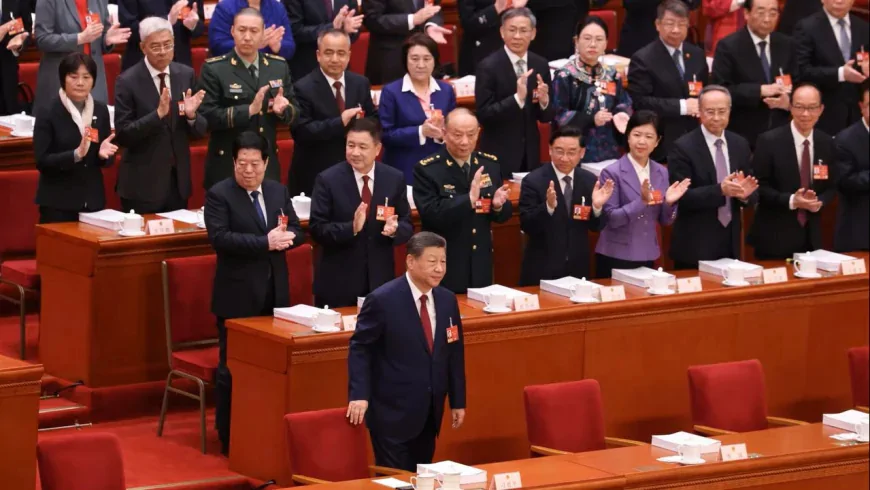
China's NPC Opens With Lowest Growth Target in 35 Years and Military Accountability Signal
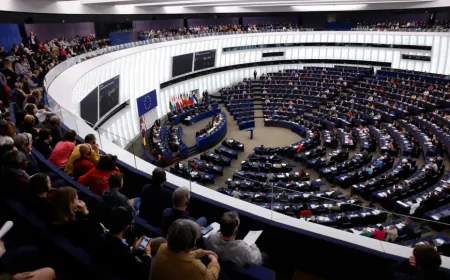
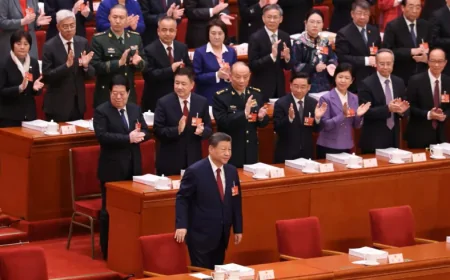
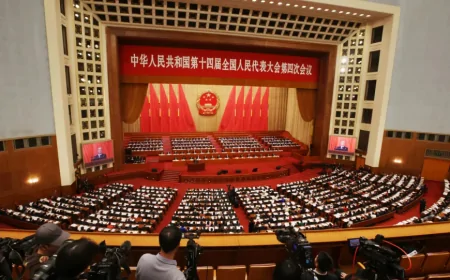
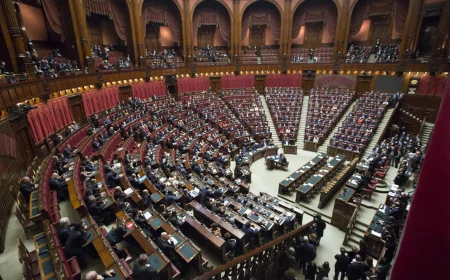
China's National People's Congress opened its annual session in Beijing on Thursday with a government work report that set the country's GDP growth target at 4.5 to 5 percent for 2026 — the lowest such target since 1991 and a notable downward revision from the "around 5 percent" goal that had defined Chinese economic ambitions for three consecutive years. Premier Li Qiang delivered the target in an address to nearly 3,000 delegates assembled at the Great Hall of the People, acknowledging with unusual directness that China faces a "grave and complex landscape."
The downward revision is a signal, not merely a statistic. It represents the Communist Party's formal acknowledgment that the twin pressures of a collapsing property sector and escalating global trade friction have made the previous target structurally unachievable. The Iran war, which erupted February 28 and has driven oil prices sharply higher, has added new urgency to the challenge facing a Chinese economy that imports roughly 75 percent of its energy from the Middle East.
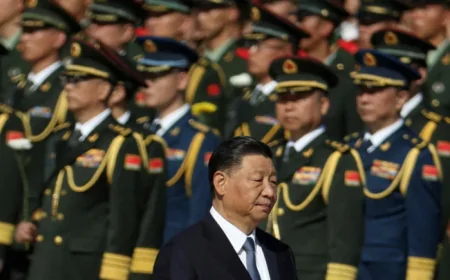
Before the session even opened, nine military officers were expelled from the Congress — part of a broader group of 19 delegates dismissed ahead of the meeting. The dismissals reflect an ongoing anti-corruption campaign within the People's Liberation Army that has intensified under Xi Jinping since late 2024, when a series of senior generals were investigated for graft related to weapons procurement contracts.
The Five-Year Plan: Technology, Loyalty, and Domestic Demand
The NPC is expected to approve China's 15th Five-Year Plan — covering 2026 to 2030 — at its closing session next week. Draft language reviewed by state media signals three priorities: accelerating investment in advanced technology including semiconductors, aerospace, and biomedicine; reorienting the economy from export-led growth toward domestic consumption; and — in a new and telling addition — enshrining political loyalty within the military as an explicit policy goal.
The work report, a 35-page document read by Li Qiang over more than an hour, included a new line absent from previous editions: "Guided by the principle of ensuring political loyalty in the military, we will continue to improve military political conduct." That phrasing — political loyalty as a governing principle of military organization — represents a formalization of what analysts have long described as Xi's effort to personally control the PLA rather than govern it through institutional structures.
According to Dr. Alfred Wu, associate professor at the Lee Kuan Yew School of Public Policy at the National University of Singapore, "The addition of explicit political loyalty language to the government work report marks a shift from institutional control to personal loyalty as the organizing principle of Chinese civil-military relations. Combined with the military purges, the message to the officer corps is unmistakable: the Party's power, and Xi's authority within it, are non-negotiable."
The Geopolitical Dimension: Oil, Trade, and Taiwan
The NPC is also taking place against a backdrop of extraordinary geopolitical volatility that China's leadership has navigated with conspicuous caution. Beijing has declined to condemn the US-Israeli strikes on Iran publicly, while privately communicating through diplomatic channels its opposition to regime change in Tehran. China's relationship with Iran is the most extensive of any major power — it is Iran's largest oil customer and has been the primary investor in Iranian infrastructure since the collapse of the JCPOA.
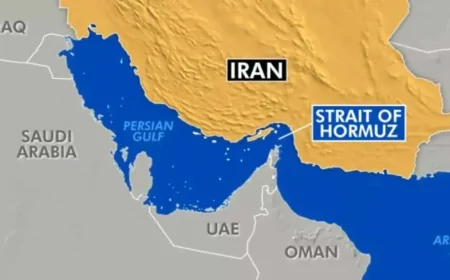
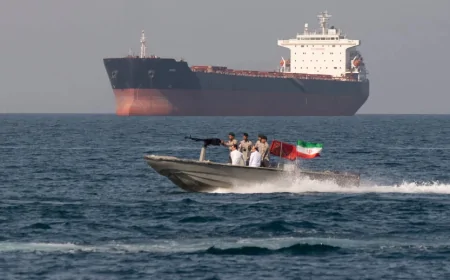
A weaker or destabilized Iran creates both opportunity and risk for Beijing. The opportunity: greater Chinese leverage over post-conflict Iran. The risk: supply disruption that compounds domestic economic pressures. The Strait of Hormuz closure, announced by Iran's Revolutionary Guard Corps on Wednesday, has already driven Brent crude above $90 per barrel — a direct hit to Chinese manufacturing costs.
Defense spending was trimmed marginally, from 7.2 percent annual growth to 7 percent, a signal of fiscal constraint rather than strategic retrenchment. Analysts noted that in absolute terms, Chinese defense spending continues to grow. Whether the NPC session will produce any direct statement on Taiwan — which Xi has repeatedly described as a "historical task" to be resolved in his lifetime — remains the most consequential unanswered question of the week-long meeting. The Taiwan Strait has been quiet while the world watches Tehran. Whether that quiet holds after the NPC concludes is uncertain.
Xi's Political Consolidation and the Five-Year Plan's Long-Term Significance
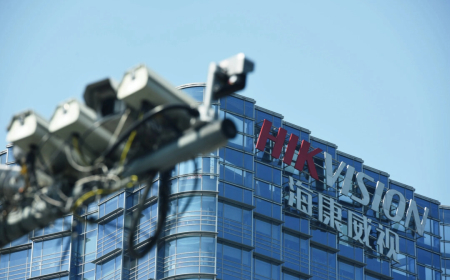
The dismissal of nine military officers from the NPC before the session opened is not merely an anti-corruption measure — it is a statement about who controls the People's Liberation Army. All nine dismissed officers were connected to procurement contracts under which foreign-manufactured components entered Chinese weapons systems without proper security vetting, according to Chinese state media's characterization of the cases. The prosecutions follow the 2024 anti-corruption campaign that removed several senior generals, including the heads of the PLA Rocket Force and the Equipment Development Department.
Xi's consolidation of personal authority over the PLA is now formalized in the Five-Year Plan language. In China's political system, the words that appear in the plan have binding significance — they define the permitted space of policy debate and bureaucratic action for five years. The insertion of "political loyalty" as the governing principle of military conduct is not bureaucratic noise. It is a doctrine.
For Xi's international interlocutors, the NPC session's most consequential signal is what it reveals about China's long-term strategic posture. The lowered growth target, the explicit acknowledgment of "grave and complex" external conditions, and the renewed commitment to technological self-sufficiency all point to a leadership that has accepted the prospect of sustained US-China competition and is organizing China's economy and military accordingly. The question facing every major government watching Beijing this week is not whether China is preparing for strategic competition — it clearly is — but how far that preparation has already progressed.