

China Stays Silent on Iran War, Quietly Watches U.S. Military Stretched Across Two Crises
Beijing has conspicuously avoided taking sides on the Iran war while analysts note that U.S. military engagement in the Middle East reduces American capacity to respond to any Chinese assertiveness in the Taiwan Strait.
Key Takeaways
- Beijing has conspicuously avoided taking sides on the Iran war while analysts note that U.S. military engagement in the Middle East reduces American capacity to respond to any Chinese assertiveness in the Taiwan Strait.
- China's Silence on the Iran War Is a Strategic Message of Its OwnChina's response to the U.S.-Israeli military operation against Iran has been a masterclass in calculated ambigu...
- Published: Mar 04, 2026 — China

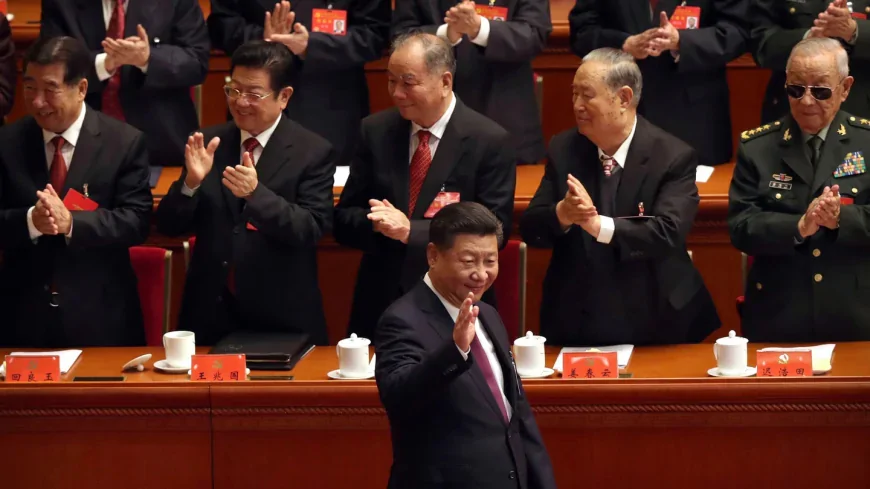
China's Silence on the Iran War Is a Strategic Message of Its Own
China's response to the U.S.-Israeli military operation against Iran has been a masterclass in calculated ambiguity. Beijing abstained on the UN General Assembly ceasefire resolution. It issued careful statements calling for "dialogue and restraint" without condemning the strikes. Foreign Ministry spokesperson Lin Jian declined three times in Wednesday's press briefing to answer direct questions about whether China regarded the U.S. strikes as lawful under international law. The silence is not an absence of policy — it is the policy, and its strategic logic is becoming clearer with each passing day of the conflict.
The most immediate geopolitical consequence of the U.S.-Iran war is the diversion of American military attention, resources, and political bandwidth away from the Indo-Pacific. Three aircraft carrier strike groups have been repositioned toward the Middle East. The U.S. Air Force has deployed additional fighter squadrons to Gulf bases. Defense Secretary Hegseth and Joint Chiefs Chairman Dan Caine are managing a fast-moving, multi-front military operation that is consuming the working hours of every senior Pentagon official. Whatever attention was being paid to Taiwan Strait deterrence, South China Sea freedom of navigation operations, and the annual rotational exercises with allies in the Philippines, Japan, and South Korea is now being allocated elsewhere.
Chinese military analysts — whose writings in PLA journals track American strategic posture with professional attention — have noted the pattern for years: every major U.S. military commitment in the Middle East has historically corresponded with a period of reduced American operational tempo in the Western Pacific. The 2003 Iraq invasion, the 2011 Libya operation, the 2017 Syria strikes — each produced windows during which Chinese military activity in the South China Sea experienced what analysts described as an "opportunity surge." Whether Beijing chooses to exploit the current window actively, or simply uses it for accelerated military preparation without immediate territorial action, is the question that regional capitals from Tokyo to Manila are asking with considerable urgency.
Beijing's Iran Relationship: Economic Interests Above Solidarity
China is Iran's largest trading partner and has been the primary absorber of Iranian oil exports that Western sanctions attempted to constrain. The $400 billion 25-year cooperation agreement signed between Beijing and Tehran in 2021 covers infrastructure, banking, and energy — a framework that gives China substantial economic exposure to Iran's stability and territorial integrity. The destruction of Iranian oil infrastructure by U.S. and Israeli strikes represents a direct financial loss for Chinese state-owned companies that have invested in Iranian upstream capacity.
Yet China's economic interests in the broader Middle East — particularly its relationships with Saudi Arabia, the UAE, and Qatar — are larger than its Iran relationship, and those Gulf states are currently managing the fallout of Iranian missile and drone attacks on their infrastructure. Publicly choosing sides between Tehran and Riyadh would cost Beijing relationships it has spent a decade cultivating. The abstention at the General Assembly and the studied neutrality in public statements allow China to preserve all its relationships simultaneously, at the cost of credibility with each.
China's relationship with Russia adds another dimension to Beijing's strategic calculation. Russia and China have maintained deep strategic and economic cooperation throughout the Ukraine war, and Moscow will be watching closely whether China's Iran response suggests any loosening of Sino-Russian alignment. China abstained on the General Assembly Ukraine resolution — as it did on the Iran resolution — maintaining its established pattern of parallel neutrality on both conflicts, even as the conflicts themselves are being conducted by opposing sides in the emerging geopolitical contest between the United States and its adversaries.
The Taiwan Signal and the April Summit
Wellington Management's 2026 geopolitical forecast, published in January, identified the anticipated Xi-Trump summit in April as the most important bilateral stabiliser in the year's geopolitical calendar. The Iran war's eruption in late February has altered the political context for that meeting: Trump is now a wartime president managing a major military operation, which gives him domestic political incentives to project strength vis-à-vis China rather than conciliation. Xi, for his part, has incentives to avoid any action that would give Trump a second geopolitical crisis to manage — and disincentives to do anything that appears to support or validate what China's government privately regards as dangerous American unilateralism.
The April summit, if it proceeds, will take place in a geopolitical environment transformed from the one in which it was planned. Whether Trump uses the summit to demand Chinese pressure on Iran — where Beijing has genuine leverage — or whether the Iran war becomes a background condition that both sides agree not to let dominate the agenda is a diplomatic calculation being made in Beijing and Washington simultaneously.
According to Bonnie Glaser, Managing Director of the Indo-Pacific Program at the German Marshall Fund, "Beijing is watching the Iran war with the focused attention of a strategic competitor that understands distraction is an opportunity. Whether it acts on that opportunity depends on Xi's risk tolerance — which remains genuinely uncertain even to the analysts who study him most closely."
Whether China's conspicuous silence on the Iran war translates into concrete assertiveness in the Taiwan Strait, the South China Sea, or through accelerated support for Russia's Ukraine operation in the months ahead will tell analysts more about Xi's strategic intentions than any amount of Foreign Ministry briefing language.
What's Your Reaction?
 Like
0
Like
0
 Dislike
0
Dislike
0
 Love
0
Love
0
 Funny
0
Funny
0
 Wow
0
Wow
0
 Sad
0
Sad
0
 Angry
0
Angry
0










Comments (0)