
































NATO Raises Alert After Turkey Intercepts Iranian Missile
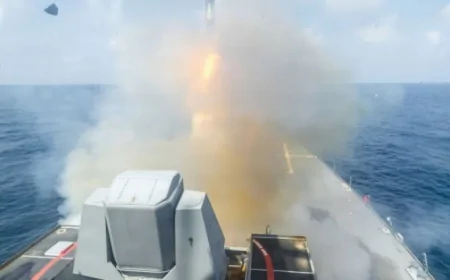
NATO raised its defense posture after Turkish air defenses intercepted an Iranian missile traveling toward Turkish airspace — the first such NATO engagement of the Iran conflict.
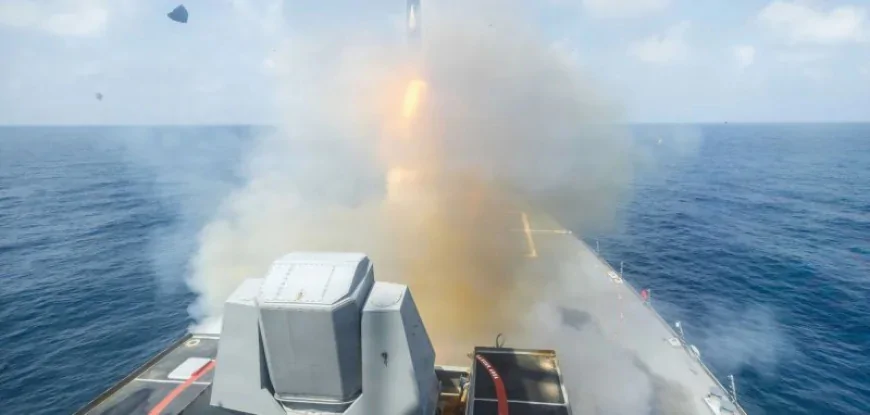
NATO Mobilizes Missile Defenses After Turkey Intercepts Iranian Ballistic Missile
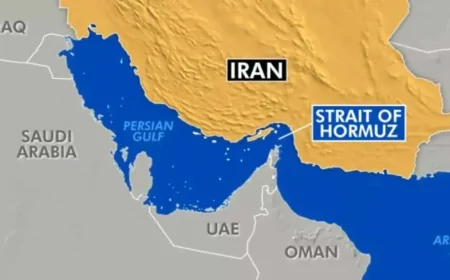
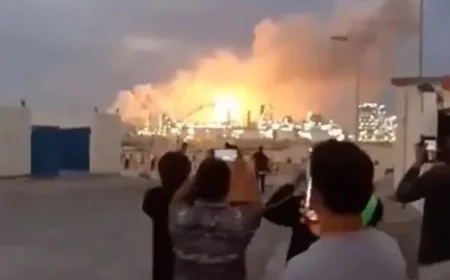
NATO member states collectively raised their defensive military posture Thursday after Turkish air defense systems intercepted an Iranian ballistic missile traveling toward Turkish airspace, according to the Turkish presidency and NATO officials. It was the first time NATO forces had engaged an Iranian missile targeting a member state's territory since the US-Israeli strikes on Iran began six days ago, and it sharply elevated the risk of the alliance becoming formally entangled in a conflict that several of its members have not endorsed and some have actively criticized.
The Turkish intercept was carried out using the country's own defense systems in the country's southeast, according to officials in Ankara. The Turkish presidency confirmed the intercept in a brief statement and said it was briefing NATO allies. The missile, which Iranian state media did not acknowledge, appeared to have been intended for a US military facility rather than Turkish territory — but the trajectory took it into a zone where Turkish air defenses engaged it automatically before a determination of intent could be made.
NATO Secretary-General Mark Rutte convened an urgent meeting of foreign ministers by secure video link Thursday evening. The alliance increased the readiness level of its integrated air and missile defense architecture across southern and eastern member states, with particular focus on Greece, Bulgaria, and Romania — countries whose airspace borders the broader conflict zone.
The Alliance's Internal Fault Lines
The Iran war has exposed NATO's internal divisions in ways that the Russia-Ukraine conflict, for all its complexity, did not. Ukraine was an existential European threat with broad allied consensus. The Iran war is an American strategic choice that was not consulted with allies in advance, involves an attack on a sovereign state, and has generated explicit legal criticism from multiple European governments. Several NATO members — including Spain, Hungary, France, and Italy — have issued statements expressing varying degrees of concern or opposition. Not one has broken formally with the alliance's support for the US.
Turkey's position is particularly complex. NATO's second-largest military has deep economic ties with Iran and has served as a conduit for indirect diplomatic communications between Tehran and Western capitals for years. Turkey under President Recep Tayyip Erdogan has repeatedly played both sides of geopolitical divides — maintaining relations with Russia throughout the Ukraine war while remaining in NATO — and its posture on the Iran conflict follows a similar pattern. The intercept of the Iranian missile was an act of self-defense, not an expression of solidarity with the US-Israeli operation.
According to Dr. Sinan Ulgen, chairman of EDAM, a think tank in Istanbul, "Turkey's intercept was not a political statement — it was an operational necessity. But the fact that it happened will now generate pressure from Washington for Turkey to align more explicitly with the coalition. Erdogan will resist that pressure as long as possible, because Turkey's ability to maintain channels to Iran is one of its few remaining geopolitical assets in a conflict it cannot control."
The Defense Posture and the Risk of Escalation
NATO's elevated posture is defensive rather than offensive. The alliance is not deploying strike aircraft to the Middle East or committing ground forces. Its measures involve the activation of additional air defense batteries across the alliance's southern flank, the increased deployment of airborne warning and control aircraft, and the pre-positioning of maritime assets in the eastern Mediterranean capable of intercepting ballistic missiles.
The risk that these defensive measures produce an inadvertent escalation is not theoretical. With Iranian drones and missiles traveling through the airspace of multiple countries simultaneously, the probability of a NATO intercept of an Iranian weapon — intentional or accidental — has increased significantly since Thursday's events. Each such intercept has the potential to escalate into something larger. Whether NATO's emergency deliberations produce a clear political framework for managing that risk, or whether member states continue to respond on an ad hoc basis as events force their hand, will determine whether the alliance exits this crisis intact or fractured in ways that outlast the conflict itself.
The Future of NATO Cohesion Under Military Pressure
NATO has never faced a situation where a war conducted by one of its most powerful members — the United States — against a third party has drawn direct military attacks on the sovereign territory and military installations of other alliance members. The Cold War deterrence architecture was built for a different threat: a Soviet conventional or nuclear attack on Western Europe. It was not designed for Iranian ballistic missiles traveling toward Turkish airspace or drones striking British bases in Cyprus.
The alliance's response has been limited precisely because the political consensus required for collective action does not exist. Several NATO members have explicitly criticized the US operation. Asking them to formally commit to collective defense of assets being used to conduct a war they oppose would produce a political crisis inside NATO of a kind the alliance has not experienced since France's departure from the integrated military command in 1966. The Secretary-General knows this. His careful language about "consultation" and "appropriate responses" is designed to avoid that crisis, not to address the security challenge.
Whether NATO can navigate this period without a rupture that permanently damages alliance cohesion depends partly on how long the Iran war lasts and partly on whether further escalations — more strikes on NATO territory, more Turkish intercepts, more British bases hit — force governments to make decisions they are currently trying to avoid. The pressure on alliance solidarity is not theoretical. It is being applied in real time, and the architecture designed to manage it is visibly straining.