

France Boosts Nuclear Weapons Prompts Russia Warning of Major Provocation
Russia has warned that France's nuclear arsenal expansion and plan to deploy nuclear aircraft to European allies represents a major provocation that could lead to dangerous escalation.
Key Takeaways
- Russia has warned that France's nuclear arsenal expansion and plan to deploy nuclear aircraft to European allies represents a major provocation that could lead to dangerous escalation.
- Russia Calls Macron Nuclear Move a Major Provocation Risking EscalationThe reaction from Moscow was swift and predictable — but no less serious for being expected. Russian offic...
- Published: Mar 02, 2026 — Europe

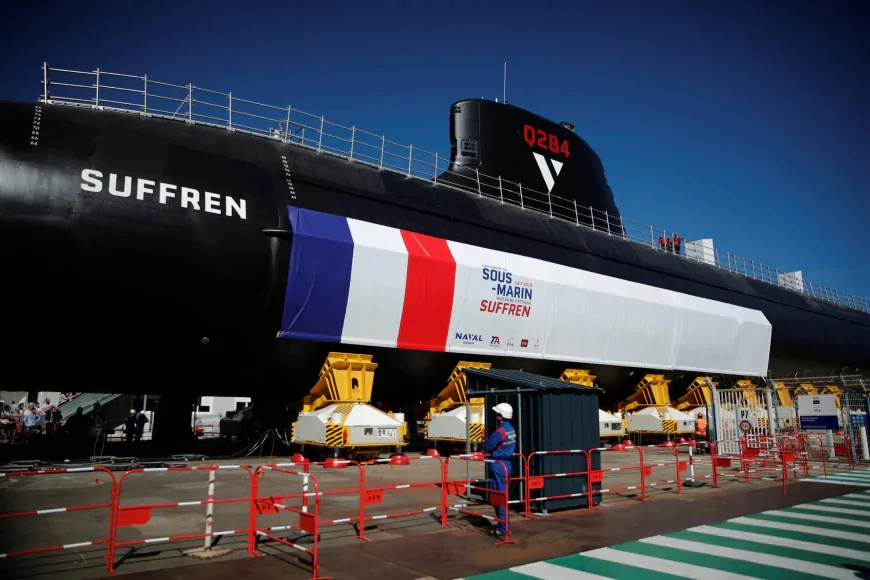
Russia Calls Macron Nuclear Move a Major Provocation Risking Escalation
The reaction from Moscow was swift and predictable — but no less serious for being expected. Russian officials called French President Emmanuel Macron's nuclear expansion announcement a major provocation that could trigger dangerous escalation, hours after Macron unveiled plans to increase France's nuclear warhead stockpile and temporarily deploy nuclear-capable aircraft to eight European allies.
The International Campaign to Abolish Nuclear Weapons, which won the Nobel Peace Prize in 2017, was equally alarmed. Jean-Marie Collin, the group's French director, said on behalf of the organization that Russia would very likely interpret the French initiative as a provocation, with risks of escalation that the announcement's architects were underestimating.
The response highlights the core tension in Macron's "advanced deterrence" concept: the very capability designed to deter adversaries may, in the short term, intensify the threat perception of the country it is primarily designed to deter.
German Participation Breaks a Decades-Old Taboo
The most diplomatically sensitive element of Macron's announcement was the immediate German response. Within hours of the speech, Paris and Berlin issued a joint statement establishing a "high-ranking nuclear steering group." German forces will participate in French nuclear exercises — a development that crosses a threshold that German governments have carefully avoided since the end of World War II.
Germany's Basic Law, its constitutional document, does not prohibit nuclear cooperation with allies in the way it restricts Germany from independently developing, possessing, or controlling nuclear weapons. But German participation in nuclear exercises has carried profound symbolic weight that successive governments have declined to disturb.
Chancellor Friedrich Merz, who has moved Germany significantly toward a more assertive defense posture since taking office, made the decision to accept the offer. Berlin justified it as a supplement to NATO's nuclear deterrence, not a replacement. The Netherlands confirmed it was in strategic talks with France on deterrence as well.
The NPT Question
Critics argue that France's expansion plan conflicts with Article VI of the Nuclear Non-Proliferation Treaty, which commits nuclear-armed states to pursue negotiations in good faith toward nuclear disarmament. France has always maintained that its doctrine of "strict sufficiency" — holding the minimum arsenal required for credible deterrence — satisfies its NPT obligations.
The planned increase to France's warhead count — from below 300 — contradicts that posture in the eyes of arms control advocates. The decision to stop disclosing the arsenal's size adds a layer of opacity that complicates treaty compliance verification.
According to Professor Beatrice Fihn, former Executive Director of ICAN, "When a nuclear state increases its arsenal while simultaneously hiding the numbers, it sends one message to the world: that the rules only apply to others."
Eight Countries, One Shield
Macron confirmed that eight European countries — the UK, Germany, Poland, the Netherlands, Belgium, Greece, Sweden, and Denmark — had expressed interest in the advanced deterrence framework. France's nuclear-capable aircraft will be available for temporary deployment to these nations' territory.
Macron was emphatic that final decision authority over any use of nuclear weapons would remain exclusively with the French president. There would be no sharing of what France calls its "vital interests" with any other government. Partners could participate in exercises and conventional aspects of nuclear missions — but the trigger would stay in Paris.
The new ballistic missile submarine Invincible, announced Monday, will sail in 2036. France and Britain will jointly develop very long-range missile systems under the European Long Range Strike Approach. Whether this architecture will function as Macron intends — as a credible deterrent rather than a provocation — may be the defining European security question of the next decade.
What's Your Reaction?
 Like
0
Like
0
 Dislike
0
Dislike
0
 Love
0
Love
0
 Funny
0
Funny
0
 Wow
0
Wow
0
 Sad
0
Sad
0
 Angry
0
Angry
0










Comments (0)