

Antarctica's Hektoria Glacier Loses 8km in Two Months in Record Collapse
Antarctica's Hektoria Glacier retreated eight kilometers in just two months, with nearly half collapsing in record time, driven by an underwater bedrock formation that scientists say made the collapse unstoppable.
Key Takeaways
- Antarctica's Hektoria Glacier retreated eight kilometers in just two months, with nearly half collapsing in record time, driven by an underwater bedrock formation that scientists say made the collapse unstoppable.
- Hektoria Glacier's Eight-Kilometer Retreat Sets a Terrifying New RecordScientists watching Antarctica's Hektoria Glacier did not expect this. The glacier retreated eight full ki...
- Published: Mar 02, 2026 — Science

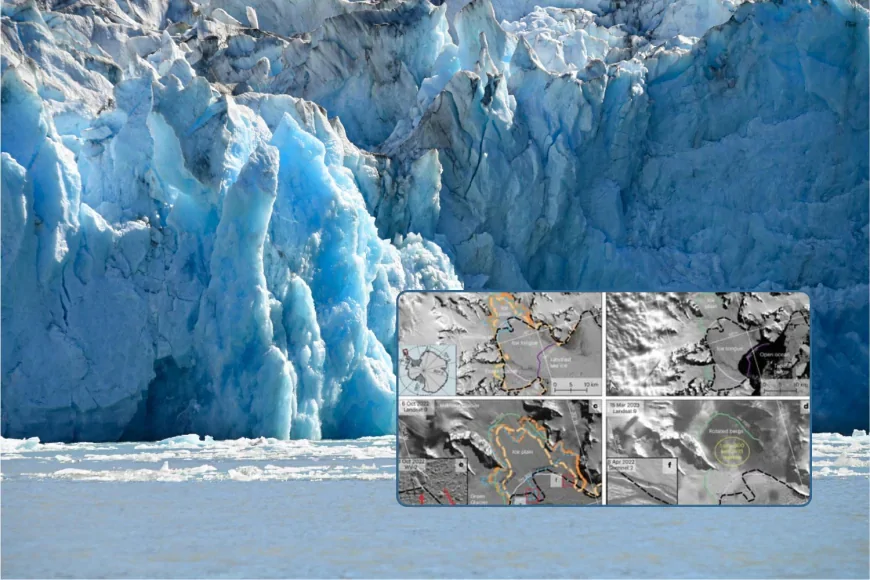
Hektoria Glacier's Eight-Kilometer Retreat Sets a Terrifying New Record
Scientists watching Antarctica's Hektoria Glacier did not expect this. The glacier retreated eight full kilometers in two months. Nearly half of it collapsed. The speed was not seen coming. The mechanism behind it was, once researchers reviewed the data.
The rapid breakup was driven by a flat, underwater bedrock surface that allowed the glacier to suddenly float free and fracture from below. When a glacier loses contact with the bedrock that pins it in place, it becomes vulnerable to collapse from underneath — not just melting from above. Satellite imagery and seismic monitoring stations captured the chain reaction in near real time.
Hektoria is located on the Antarctic Peninsula, a region that has warmed faster than almost anywhere on earth over the past five decades. It was already retreating before this event. What scientists had not fully modeled was the speed at which a specific bedrock geometry could accelerate the process once a tipping threshold was crossed.
Why This Collapse Was Different
Previous glacier retreats in Antarctica have generally been measured in meters per year, not kilometers per month. The Hektoria event has forced researchers to revisit models that assume gradual, linear ice loss as the standard pattern of Antarctic change.
The flat bedrock beneath the glacier's base created what glaciologists call a marine ice sheet instability scenario — a condition where retreat is self-reinforcing once it begins. As the glacier floats free of its grounding point, water rushes in underneath, accelerating the separation. The ice then fractures under its own weight. The process, once initiated, cannot be reversed by any intervention available to current technology.
Satellite data from commercial operators detected the sequence of events. Seismic stations recorded the fracture events as the ice broke apart. The combination gave scientists an unusually detailed record of a process that has been theorized for decades but rarely observed at this speed.
Sea Level Implications and the Bigger Picture
A separate analysis published this month found that melting land ice is now the main driver of rising global sea levels. Oceans rose approximately 90 millimeters since 1993, with most of the increase coming from added water mass — ice that melted and ran into the sea — rather than thermal expansion of warming ocean water. Greenland and mountain glaciers account for the vast majority of that gain.
The rate of increase is accelerating. If the pattern continues, scientists warn that coastal planning assumptions used in infrastructure projects across Asia, North America, and Europe will need to be revised significantly within the coming decade.
According to Dr. Anna Hogg, Professor of Earth Observation at the University of Leeds, "The Hektoria event is a data point that belongs in our worst-case models, not our median scenarios. The bedrock geometry that drove this collapse is not unique to Hektoria. There are other glaciers sitting on similar flat beds."
What Scientists Are Watching Next
Researchers are now applying the bedrock analysis used to understand Hektoria's collapse to other vulnerable glaciers on the Antarctic Peninsula. Preliminary results have identified at least four additional glaciers with similar flat-bed profiles that could be susceptible to rapid marine ice sheet instability under continued warming conditions.
The findings have been submitted to several peer-reviewed journals and are currently under review. Preliminary results were presented at a rapid-response scientific briefing organized by the British Antarctic Survey last week.
Hektoria's eight-kilometer retreat in two months is now the documented record for Antarctic glacier withdrawal in the satellite era. Whether it remains a record — or becomes the baseline against which future events are measured — may be answered within years, not decades.
What's Your Reaction?
 Like
0
Like
0
 Dislike
0
Dislike
0
 Love
0
Love
0
 Funny
0
Funny
0
 Wow
0
Wow
0
 Sad
0
Sad
0
 Angry
0
Angry
0











Comments (0)