

Washington and Tel Aviv: An Investigative Look at Influence, Aid and Power
An investigative feature examining the US–Israel relationship: aid flows, lobbying influence, UN vetoes and the balance between mutual dependency and asymmetry.
Key Takeaways
- An investigative feature examining the US–Israel relationship: aid flows, lobbying influence, UN vetoes and the balance between mutual dependency and asymmetry.
- Washington and Tel Aviv: The Hidden Power Behind an Unequal Alliance Few alliances in modern geopolitics are as enduring — or as contested — as that between the United Stat...
- Published: Oct 12, 2025 — Editor's Choice

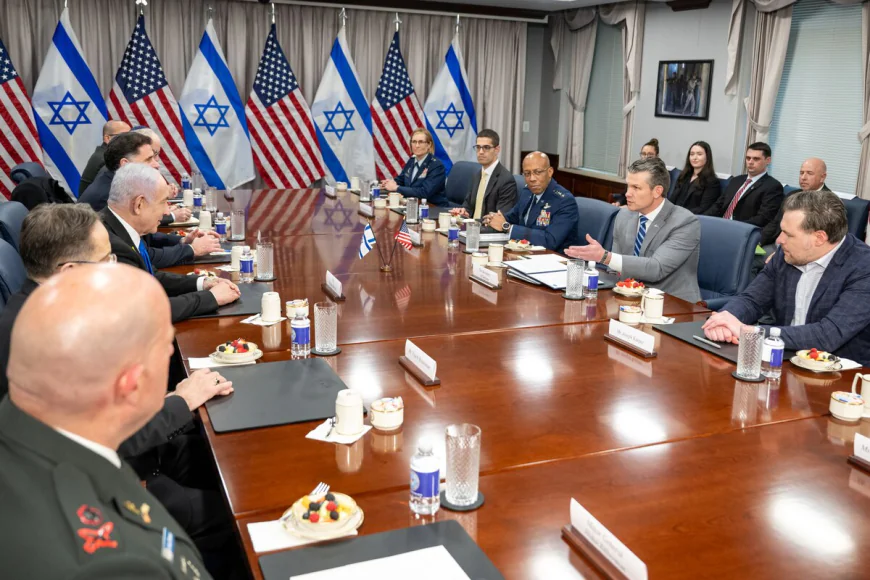
Washington and Tel Aviv: The Hidden Power Behind an Unequal Alliance
Few alliances in modern geopolitics are as enduring — or as contested — as that between the United States and Israel. Critics call it one-sided; supporters call it strategic. But beneath the official rhetoric lies a structure of power built on money, lobbying, and decades of political protection.
Aid That Shapes the Balance
Since the 1960s, Washington has provided Israel with billions of dollars in military assistance every year — roughly between US$3 billion and US$4 billion annually. The 2016 Memorandum of Understanding locked in US$38 billion for the decade to 2028, much of it channelled into advanced weapons and missile-defence systems.
In return, Israel offers the United States something just as valuable: intelligence, battlefield testing of U.S. technology, and a reliable pro-Western presence in the Middle East. It’s a partnership that has blurred the lines between ally and asset.
Vetoes, Cover and Consequences
Nowhere is U.S. protection more visible than at the United Nations. For decades, Washington has blocked resolutions condemning Israel’s occupation policies and military actions — more than forty vetoes in total. In June 2025, it vetoed yet another Security Council call for a ceasefire in Gaza, standing alone against the rest of the council.
Each veto underscores the cost of the relationship. Washington’s moral authority on human rights and conflict mediation has eroded, replaced by perceptions of selective justice. Yet successive U.S. administrations — Republican and Democrat alike — have treated Israel as untouchable.
The Lobbying Machine
Behind the scenes, a network of political organisations reinforces the alliance. Chief among them is the American Israel Public Affairs Committee (AIPAC), one of Washington’s most powerful lobbies. Its fundraising power, campaign donations, and voter mobilisation efforts ensure bipartisan loyalty on Capitol Hill.
Lawmakers who diverge from AIPAC’s line often face political isolation. Meanwhile, policy provisions favourable to Israel — from missile defence to intelligence sharing — pass with little resistance. This political machinery has made support for Israel not just a foreign-policy stance, but a domestic expectation.
Power, Dependency and the Myth of Control
To suggest Israel “controls” America is a distortion. The United States remains the stronger partner — the source of aid, weapons, and diplomatic cover. Israel’s security architecture depends on U.S. funding and arms, not the other way around.
Still, the influence Israel wields inside Washington is undeniable. Through lobbying networks, shared security goals, and political alignment, Tel Aviv has learned how to work the system. Washington, for its own strategic reasons, rarely says no.
Shifting Public Opinion
In the wake of recent conflicts in Gaza, a generational shift is emerging inside the United States. Younger voters, including Jewish and progressive communities, are questioning unconditional support for Israel. Major polling organisations have recorded a steady decline in public approval for U.S. military aid amid mounting civilian casualties.
For the first time in decades, what was once a consensus is now a debate — one that could reshape how Washington navigates its Middle East alliances in the years ahead.
Influence Without Accountability
The U.S.–Israel partnership endures because it serves both sides: Israel gains protection and legitimacy; the U.S. maintains leverage in a volatile region. But this alliance has also insulated Israel from accountability — shielding it from sanctions and international pressure that most other nations face under similar scrutiny.
As global power shifts eastward and public opinion hardens, Washington’s automatic defence of Israel may prove harder to justify. Influence is not control — but when influence operates without limits, it can be just as powerful.
What's Your Reaction?
 Like
0
 Dislike
0
 Love
0
 Funny
0
 Wow
0
 Sad
0
 Angry
0









Comments (0)