














US Interior Chief Burgum Arrives in Caracas for Venezuela Talks
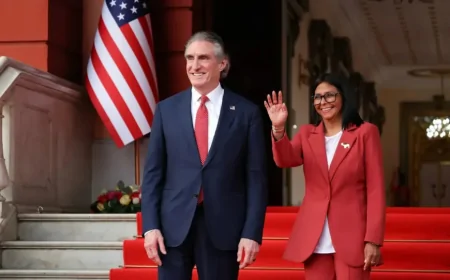
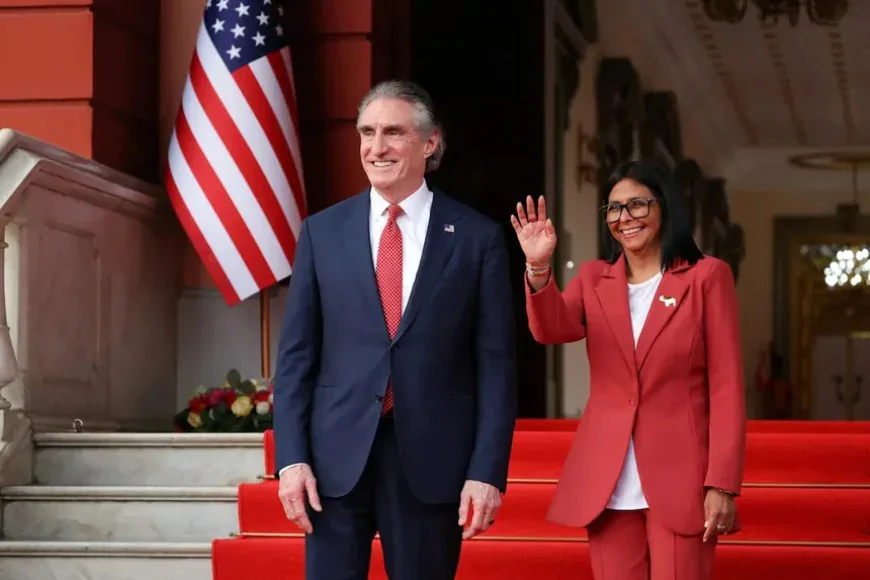
US Interior Secretary Doug Burgum traveled to Caracas to meet with Venezuela's interim leadership following the US military operation that removed Nicolás Maduro in January.
Burgum in Caracas: US Moves to Secure Venezuela's Oil Future After Maduro's Removal
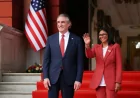
US Interior Secretary Doug Burgum arrived in Caracas on Thursday for meetings with interim Venezuelan President Delcy Rodríguez, becoming the highest-ranking US official to visit the country since the Trump administration's military operation removed Nicolás Maduro in early January. Burgum's portfolio — which includes oversight of the US Department of the Interior's natural resources and energy responsibilities — makes his presence in Venezuela a clear signal of the central role oil plays in the US strategic calculus for the country's transition.
Venezuela holds the world's largest proven oil reserves, estimated at 303 billion barrels — larger than Saudi Arabia's. Under Maduro, production had collapsed from more than 3 million barrels per day in the early 2000s to fewer than 800,000 barrels, a reflection of mismanagement, lack of investment, and sanctions. The Trump administration has described Venezuela's energy sector restoration as a strategic imperative — both for US energy security and for the commercial interests of American oil companies that had been shut out of Venezuelan business for years.
Rodríguez, who served as Maduro's foreign minister and vice president, emerged as the de facto head of the transitional administration that the US and its regional partners have been attempting to structure since January. Her survival as a political figure in the post-Maduro environment reflects the Trump administration's stated desire to avoid the Iraq War scenario — where the removal of Saddam Hussein's government left an institutional vacuum that destabilized the country for years.
The Oil Equation and American Strategic Interests
Burgum's visit is focused on the framework for restoring Venezuelan oil production to levels that make the country economically viable and strategically useful to Washington. American oil companies including ExxonMobil, ConocoPhillips, and Chevron — all of which had assets expropriated or operations disrupted under Hugo Chávez and Maduro — are closely monitoring the transitional negotiations. Chevron had maintained a limited operational presence in Venezuela under a specific OFAC license even through the Maduro period; expanding that presence is reportedly one of the topics Burgum is addressing in Caracas.
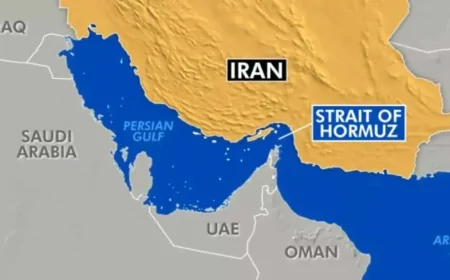
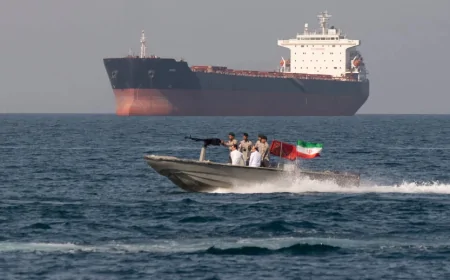
The timing of Burgum's visit — simultaneous with the US-Israeli war on Iran and the disruption of Persian Gulf oil flows through the Hormuz closure — adds urgency. The Trump administration, which has repeatedly framed its foreign policy around energy security and the desire to drive down global oil prices, needs Venezuelan production to offset the supply disruption from the Hormuz closure. Every barrel of Venezuelan oil that can be brought to market within the next six to twelve months has geopolitical as well as commercial value.
According to Francisco Monaldi, fellow in Latin American Energy Policy at Rice University's Baker Institute, "Burgum's visit tells you everything you need to know about the primary US interest in Venezuela: it's the oil. The transition narrative, the democracy framing, the human rights language — all of those are real considerations, but they are secondary to the strategic and commercial imperative of restoring Venezuelan production to levels that serve American interests. Venezuela is a test of whether the Trump administration can turn a military adventure into a sustainable economic and political outcome."
Regional Reactions and Venezuela's Political Future
Latin American governments have watched the post-Maduro transition with a mixture of calculated pragmatism and unease. Argentina's Milei government welcomed Maduro's removal enthusiastically and has positioned itself as Washington's most vocal regional supporter. Brazil's Lula — who had maintained some diplomatic engagement with Caracas through the Maduro years — has been more cautious, expressing concern about the precedent of military-forced regime change and the implications for regional sovereignty norms.
Colombia, whose border with Venezuela is among the most active in the hemisphere for cross-border movement of people, drugs, and criminal groups, faces the most immediate practical consequences of whatever political arrangement emerges in Caracas. President Gustavo Petro has been deeply critical of the US operation and has called for Venezuelan political autonomy in the transition process — a position that puts him at odds with Washington and complicates the regional diplomatic effort to build a credible transitional framework. Whether Burgum's Caracas visit accelerates a political settlement or deepens the appearance of an American-managed outcome will shape how Venezuela is governed — and whether it governs itself at all — for the foreseeable future.
The Oil Transition Framework and Its Complications
Burgum's visit is focused on short-term production restoration, but the framework being negotiated has medium and long-term implications that complicate the picture. Venezuela's oil industry, after years of mismanagement and sanctions, is not capable of rapid production increases. Infrastructure has deteriorated severely — pipelines are corroded, refineries are non-functional, and the skilled workforce has emigrated or retired. Estimates from the International Energy Agency suggest that restoring Venezuelan production to 2 million barrels per day would require at minimum $50 billion in investment over five to seven years, even under favorable political conditions.
The politics of who controls that investment, and on what terms, will shape Venezuelan political outcomes as fundamentally as any electoral process. If American oil majors obtain the terms they seek — large equity stakes, favorable tax treatment, repatriation of profits, minimal environmental regulation — they will have an interest in maintaining whatever political arrangement in Caracas enables those conditions. That may not be the arrangement that most serves Venezuelan citizens' interests, or that produces the democratic transition that the US government has publicly stated as its goal.
The Colombian border and the regional drug trafficking networks that have used Venezuelan territory as a transit zone under Maduro will also require attention in any sustainable transitional framework. Burgum's portfolio does not formally include those dimensions — they belong to the State Department, the DEA, and the National Security Council. But in practice, the economic and security dimensions of Venezuela's transition are inseparable, and the Interior Secretary's visit to Caracas is the first act of a complex diplomatic drama whose second and third acts are not yet written.