

EU Parliament Adopts Rights Resolutions on Iran, Turkey and Uganda
The European Parliament adopted three resolutions Thursday condemning rights abuses in Iran, Turkey, and Uganda amid the war's disruption to EU foreign policy.
Key Takeaways
- The European Parliament adopted three resolutions Thursday condemning rights abuses in Iran, Turkey, and Uganda amid the war's disruption to EU foreign policy.
- European Parliament Signals Rights Concerns Across Three Continents in Rare Concurrent Resolutions The European Parliament adopted three simultaneous resolutions on human rights...
- Published: Mar 05, 2026 — Europe

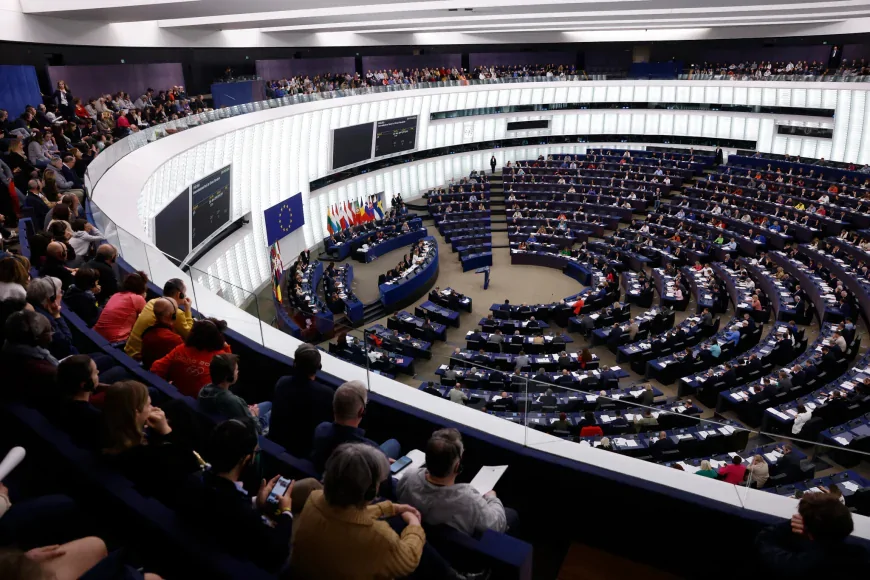
European Parliament Signals Rights Concerns Across Three Continents in Rare Concurrent Resolutions
The European Parliament adopted three simultaneous resolutions on human rights situations in Iran, Turkey, and Uganda on Thursday, deploying one of the assembly's most significant tools for expressing collective political judgment on the conduct of foreign governments — even as the institution's broader foreign policy influence is constrained by the intensity of the US-Israel-Iran war and the EU's ongoing struggle to respond coherently to the crisis.
The triple resolution represents an unusually broad sweep of human rights geography from a single parliamentary session and reflects the agenda that had been scheduled before the current military conflict upended European political attention. That the parliament proceeded with all three resolutions despite the war underscores the institution's commitment to maintaining its human rights mandate even in a period of geopolitical emergency — and its recognition that crises in Iran, Turkey, and Uganda do not pause for more dramatic conflicts elsewhere.
The Iran resolution, adopted with a substantial majority, condemned the targeting of civilian infrastructure during the US-Israeli military campaign and called for an immediate ceasefire, independent access for humanitarian organisations, and accountability for civilian casualties. The parliament also called on EU member states to use all available diplomatic channels to press for civilian protection standards.
The Turkey Resolution: Erdoğan's Crackdown on Judges and Civil Society
The Turkey resolution focused on what MEPs described as accelerating democratic backsliding under President Recep Tayyip Erdoğan, centring on the government's systematic removal of elected mayors in Kurdish-majority municipalities, the persecution of journalists and civil society leaders, and what the text called "the systematic dismantling of judicial independence" through executive appointments to the Constitutional Court and the Council of State.
Turkey's government has consistently rejected European Parliament resolutions on its democratic performance as "political interference in internal affairs," a position that has not changed under the current parliamentary term. The EU-Turkey accession process, officially still open, has been functionally frozen for years due precisely to the democratic governance concerns that Thursday's resolution documents. The parliament called for the European Commission to formally reassess the accession framework in light of continued backsliding — a step Brussels has been reluctant to take given Turkey's NATO membership and its role as a key partner in migration management.
According to Dr. Berk Esen, Associate Professor of Political Science at Sabancı University in Istanbul, "The parliament's resolution documents a pattern that Ankara has developed over years: replacing elected local officials with government-appointed trustees whenever Kurdish political parties win municipal elections. Each instance normalises the next, and the cumulative effect is a systematic exclusion of a large minority population from democratic representation."
The Uganda Resolution: Museveni, Opposition Repression, and the 2026 Election
The Uganda resolution came as President Yoweri Museveni — who has held power since 1986 — pursues a sixth consecutive presidential term in elections scheduled for later this year. The parliament condemned the detention of opposition politicians and journalists, the use of security forces to disperse peaceful demonstrations, and what it described as the use of anti-terrorism legislation to criminalise political activity by the National Unity Platform party of opposition leader Bobi Wine.
Uganda's elections have attracted particular attention from European observers given Museveni's use of a 2021 constitutional amendment — approved by a parliament widely regarded as government-controlled — to remove the presidential age limit, which would have barred him from standing. The resolution called on the Ugandan Electoral Commission to implement meaningful reforms before polling and urged the EU to condition development cooperation on measurable democratic progress.
All three resolutions will be transmitted to the relevant governments and to EU foreign ministers ahead of the next Foreign Affairs Council meeting. Whether they translate into coordinated EU action — rather than declaratory politics — depends on a Council of member states that has historically struggled to align on human rights conditionality when strategic or economic interests pull in the opposite direction. The parliament has set the normative agenda. Execution remains the harder question.
The Institutional Limits of Parliamentary Diplomacy
The European Parliament's triple resolution on Thursday crystallises a fundamental tension in European foreign policy: the parliament possesses the rhetorical authority to name and shame, but not the institutional tools to act. The Council of the EU — made up of member state foreign ministers — retains exclusive authority over EU foreign policy decisions that carry legal consequences: sanctions, trade measures, diplomatic expulsions. The parliament's resolutions are politically meaningful precisely because they are legally limited; they represent Europe's conscience without being Europe's policy.
That gap has historically been most acutely felt in relation to Turkey, where the parliament has adopted more than a dozen resolutions condemning democratic backsliding since 2016 while the Council has maintained the formal accession framework, the customs union, and the 6-billion-euro migration management agreement that give Turkey substantial use as use over European policy. The parliament says one thing; European governments do another. The result is a foreign policy architecture that condemns without consequencing — which is precisely what Erdoğan has learned to absorb.
The Uganda resolution arrives against the backdrop of EU-AU Summit conclusions that prioritise economic partnership and climate finance over political conditionality in relations with African states. European development assistance to Uganda has continued through bilateral and multilateral channels despite the parliament's documented concerns about democratic governance, because member states have concluded that the costs of conditioning aid on democratic performance — in terms of Chinese and Russian diplomatic alternatives available to Kampala — outweigh the benefits. The parliament is right about the human rights situation in all three countries. What remains unanswered is whether being right is enough.
What's Your Reaction?
 Like
0
Like
0
 Dislike
0
Dislike
0
 Love
0
Love
0
 Funny
0
Funny
0
 Wow
0
Wow
0
 Sad
0
Sad
0
 Angry
0
Angry
0













Comments (0)