

Peru Election Chaos: 36 Candidates, No Front-Runner Six Weeks Out
Peru's April 12 presidential first round begins with 36 candidates and 40-50% of voters undecided, as the country remains under emergency declarations due to flooding.
Key Takeaways
- Peru's April 12 presidential first round begins with 36 candidates and 40-50% of voters undecided, as the country remains under emergency declarations due to flooding.
- Peru Heads Into April Election With 36 Candidates, Fractured Politics, and No Clear Winner Six weeks before Peru's April 12 presidential first-round vote, the country presents a...
- Published: Mar 05, 2026 — World News

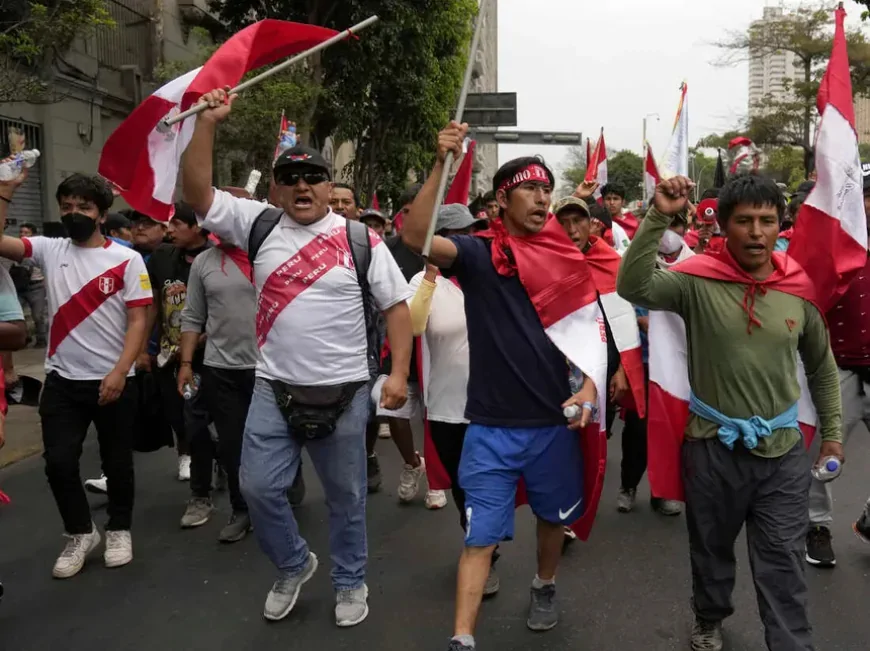
Peru Heads Into April Election With 36 Candidates, Fractured Politics, and No Clear Winner
Six weeks before Peru's April 12 presidential first-round vote, the country presents a political landscape of extraordinary fragmentation: 36 officially registered candidates, polls showing between 40 and 50 percent of voters as genuinely undecided, and a caretaker government under interim Prime Minister José María Balcázar that took office only in February after a period of cabinet instability that has become nearly routine in Lima's politics over the past decade. No candidate currently commands double-digit support in a country of 33 million voters that has had five presidents in the past seven years.
Former Lima Mayor Ricardo López Aliaga leads current polling at 10 to 15 percent, making him a front-runner by default in a field this dispersed. Keiko Fujimori, the right-wing candidate who has contested and lost two previous presidential runoffs, is running again and polling in the vicinity of 8 to 12 percent. No other candidate has broken out of single digits in surveys conducted this week.
The breadth of the field reflects a structural feature of Peruvian democracy that political scientists have documented with alarm: the country has failed to develop stable, programmatic political parties capable of aggregating voter preferences across elections. Organizations are built around individual candidates and dissolve after elections, leaving each new cycle to begin from scratch. The result is an extreme version of democratic fragmentation in which any candidate capable of breaking from the pack in the final weeks can win a first-round ticket to the runoff.
The Security and Disaster Context Shaping the Campaign
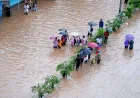
Peru's election campaign is playing out against a backdrop of compounding crises. More than 700 districts remain under state of emergency declarations due to El Niño Costero flooding, with the national meteorological service SENAMHI forecasting intense rainfall returning this week to the country's northern coast. The interim government is managing the emergency response while also conducting basic state functions and preparing election logistics in affected areas.
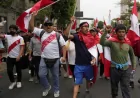
Security is the dominant voter concern. Extortion networks operating through messaging apps have paralyzed economic life in multiple regions, particularly in Lima's peripheral districts, where small business owners pay protection fees to criminal groups as a routine operating cost. Protests over insecurity have blocked highways across the country in recent weeks, forcing the caretaker government to declare emergency zones in regions where local police forces have been effectively neutralized by organized crime. Balcázar, appointed February 18, has described his primary mandate as ensuring a smooth transition to an elected government on July 28 — Peru's independence day and the traditional date for presidential inaugurations.
According to Dr. Paula Muñoz, professor of political science at the Universidad del Pacífico in Lima, "Peru is heading into this election in a state of political exhaustion and democratic fatigue. The candidates are not offering credible programs for addressing extortion, flooding, or economic stagnation — they are competing to accumulate enough votes to reach a runoff, after which real political bargaining begins. The structural conditions for governance reform do not exist in this election cycle."
The Regional and International Dimension
Peru's election takes place within a Latin American regional environment of pronounced political volatility. Colombia holds its own presidential election in May, and Brazil heads toward an October race with former president Luiz Inácio Lula da Silva — now in his fourth term — facing a genuine challenge from the right. The regional political current runs to the right in 2026, a trend driven by insecurity, economic frustration, and an admiration for authoritarian efficiency that political leaders including El Salvador's Nayib Bukele have successfully harnessed.
López Aliaga, Peru's front-runner, has explicitly modeled himself on Bukele's iron-fist security approach. His campaign literature calls for military deployment in criminal hotspots, life sentences for extortion gang leaders, and the suspension of due process protections for alleged organized crime members. Whether that agenda is legally achievable under Peru's constitutional framework, or whether it represents electoral signaling rather than genuine policy intent, is a question that legal scholars and international observers are beginning to ask with some urgency. The candidate who wins on April 12 will govern a fractured country with a hostile legislature and a population whose patience with democratic institutions has been eroding steadily since 2016.
The Institutional Fragility Underlying Peru's Political Crisis
Peru's democratic institutions have been under sustained assault for years before the 2026 election cycle. Three presidents have been impeached or removed since 2016. The Constitutional Tribunal has been drawn into partisan battles. The Attorney General's office has been weaponized by competing political factions. The Congress, elected in 2021 on the same day as Pedro Castillo's shock presidential victory, spent three years in permanent conflict with the executive before Castillo's removal and replacement by Dina Boluarte, whose government lasted less than two years before collapsing under protest pressure in late 2025.
Against this backdrop, the question is not only who wins the April 12 first round, but whether whoever wins will be able to govern for a full term. López Aliaga, the current polling leader, represents a hard-right authoritarian politics that has generated mass protest movements in Lima and other major cities during his mayoral tenure. His presidency, if achieved, would almost certainly face street opposition from the moment of inauguration. Keiko Fujimori, running for the third time, carries the baggage of her father Alberto Fujimori's decade of authoritarian rule and her own two prior corruption prosecutions — charges from which she has been acquitted but which continue to define her politically.
The international election observer community — the Organization of American States, the EU election observation mission, and the Carter Center — has already indicated it will deploy observers for the first round in April and the likely second round in June. Their assessments will matter for the legitimacy of whoever emerges victorious in a country where the legitimacy of the election result is routinely contested by losers. Peru's democratic system has survived extraordinary stress before. Whether it survives 2026 intact depends partly on the result and partly on whether the losing candidates accept it.
What's Your Reaction?
 Like
0
Like
0
 Dislike
0
Dislike
0
 Love
0
Love
0
 Funny
0
Funny
0
 Wow
0
Wow
0
 Sad
0
Sad
0
 Angry
0
Angry
0






Comments (0)