

Somalia's Jubaland Rejects Federal Constitution, Deepening Power Rift
Jubaland formally rejected Somali President Hassan Sheikh Mohamud's constitutional amendments, citing centralization of power and threats to the May 2026 election timeline.
Key Takeaways
- Jubaland formally rejected Somali President Hassan Sheikh Mohamud's constitutional amendments, citing centralization of power and threats to the May 2026 election timeline.
- Jubaland's Rejection of Mogadishu's Constitutional Agenda Threatens Somali Federal Compact The semi-autonomous Jubaland administration formally rejected a set of constitutional ...
- Published: Mar 05, 2026 — World News

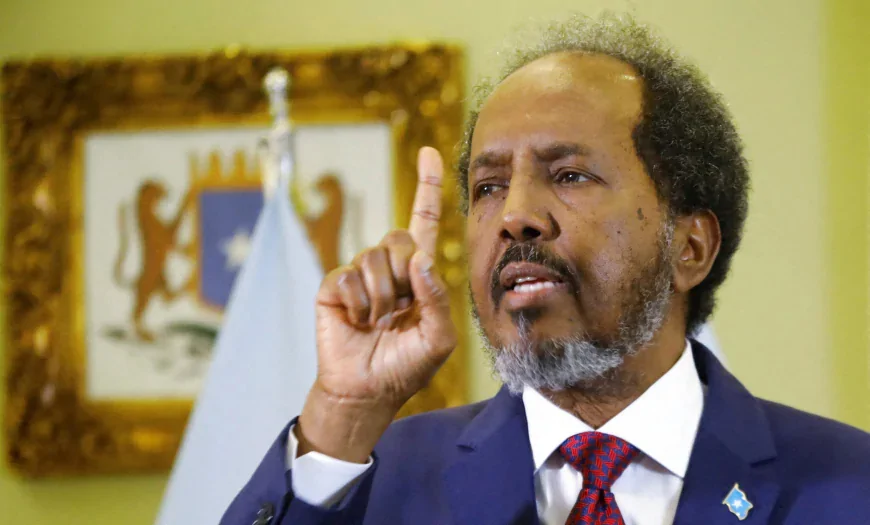
Jubaland's Rejection of Mogadishu's Constitutional Agenda Threatens Somali Federal Compact
The semi-autonomous Jubaland administration formally rejected a set of constitutional amendments proposed by Somali President Hassan Sheikh Mohamud's federal government in Mogadishu, declaring Thursday that the proposed changes represent a unilateral assault on the federal architecture that underpins Somalia's fragile governance compact. The rejection is the most explicit statement yet from a federal member state that Mohamud's second-term agenda — which critics characterize as a systematic effort to centralize executive power — has crossed a political red line.
Jubaland President Ahmed Madobe, whose administration controls the port city of Kismayo and the surrounding Lower and Middle Jubba regions bordering Kenya and Ethiopia, released a statement condemning the constitutional amendments as designed to "extend the current president's mandate beyond May 2026" and to redraw Somalia's federal map in ways that would diminish the autonomy of regional administrations. The statement was coordinated with Puntland, Somalia's most powerful semi-autonomous state, whose government had issued a similar rejection last week.
The amendments were presented to Somalia's parliament in late February by Mohamud's government and include provisions that would revise the country's electoral system, alter the balance of power between the federal government and member states, and extend certain institutional timelines — changes that Jubaland and Puntland argue are timed to prevent a genuine transition of power when Mohamud's mandate expires in May.
The Federalism Question at the Heart of Somalia's Political Crisis
Somalia's federal system, enshrined in the 2012 Provisional Federal Constitution, was designed to hold together a country where central authority had collapsed entirely in 1991. The five federal member states — Jubaland, Puntland, South West, Hirshabelle, and Galmudug — have varying degrees of administrative capacity and political alignment with Mogadishu. Their relationship with the federal government has always been tense; the question of who controls taxation, resources, ports, and security forces has never been definitively resolved.
Mohamud's constitutional agenda has amplified that tension to a breaking point. His government's proposal to revise the electoral system — away from the clan-based power-sharing model and toward a one-person, one-vote system — has been presented as a democratic reform. Puntland and Jubaland regard it with deep suspicion, arguing that implementation under the current government's control would allow Mogadishu to impose results rather than enable genuine democratic choice.
According to Abdihakim Omar, researcher at the Heritage Institute for Policy Studies in Mogadishu, "The constitutional amendments are being proposed at the worst possible moment — when the country should be preparing for an election, not rewriting the rules under which that election will take place. The federal member states' objections are rooted in a rational calculation about power and survival, not abstract principle. If Mohamud extends his mandate through constitutional manipulation, it will likely end in a renewed cycle of political conflict."
Al-Shabaab's Exploitation of Federal Division
Al-Shabaab, which retains control of significant territory across southern and central Somalia, actively exploits the divisions between Mogadishu and the federal member states. Every period of inter-governmental tension has historically coincided with renewed al-Shabaab offensive operations — the group targets administrative vacuums and political distractions with deliberate tactical efficiency.
The current constitutional crisis is unfolding at a moment when al-Shabaab has not been militarily defeated but has been pushed back from several key towns as a result of the ATMIS mission and Somali National Army operations. The risk that the constitutional standoff diverts political attention and weakens inter-governmental security cooperation — at precisely the moment when military gains need to be consolidated — is one that international partners, including the United States and the European Union, have raised in quiet diplomatic communications to Mogadishu.
Whether the Somali Federal Parliament proceeds with Mohamud's constitutional amendments over the objections of the member states — and what Jubaland and Puntland do if it does — is the question on which Somalia's political trajectory now turns. A negotiated compromise before May remains theoretically possible. But the window for such a compromise is narrow, and the history of Somali inter-governmental relations suggests that parties rarely walk back from public confrontations without a political price that shapes outcomes for years.
The International Community's Diminished Attention
The Somalia federal crisis is unfolding in what analysts describe as a period of acute international attention deficit. The Iran war, the Taiwan Strait situation, the DRC-Rwanda conflict, and the aftermath of the Venezuelan military operation have collectively consumed the diplomatic bandwidth of the United States, the European Union, and the African Union in ways that leave complex sub-regional political crises without the sustained high-level attention they require.
ATMIS, the African Union Transition Mission in Somalia, was scheduled to complete its drawdown by December 2026, transferring full security responsibility to the Somali National Army. That transition was already a source of significant concern among security analysts before the constitutional crisis erupted. A Somalia that is simultaneously managing a federal political rupture and absorbing the transition of security responsibility from an international mission is more vulnerable to al-Shabaab exploitation than one that has managed either challenge individually.
For the international community's Somalia partners — the United States, the European Union, Turkey, Qatar, and others — the constitutional crisis demands a difficult choice: intervene diplomatically to broker a compromise between Mogadishu and the federal member states, risking the accusation of external interference in Somali political processes; or stay silent and hope the parties find their own solution, risking a political breakdown that reverses a decade of fragile but real progress. Both options carry significant costs. The precedent of every previous Somali political crisis suggests that the default will be delayed engagement, applied too late to prevent the damage it seeks to contain.
What's Your Reaction?
 Like
0
Like
0
 Dislike
0
Dislike
0
 Love
0
Love
0
 Funny
0
Funny
0
 Wow
0
Wow
0
 Sad
0
Sad
0
 Angry
0
Angry
0













Comments (0)