

Russia's Gray Zone Sabotage Campaign in Europe Escalates as Ukraine Talks Stall
The Kremlin has intensified its gray zone campaign of arson and infrastructure sabotage across Europe as Ukraine peace talks stalled, with multiple incidents documented in Germany, Poland, and the Baltic states.
Key Takeaways
- The Kremlin has intensified its gray zone campaign of arson and infrastructure sabotage across Europe as Ukraine peace talks stalled, with multiple incidents documented in Germany, Poland, and the Baltic states.
- Russia's Shadow War on European Soil Intensifies as Diplomats Struggle in Abu DhabiRussia's campaign of gray zone warfare across European territory — a sustained effort to impos...
- Published: Mar 04, 2026 — Russia

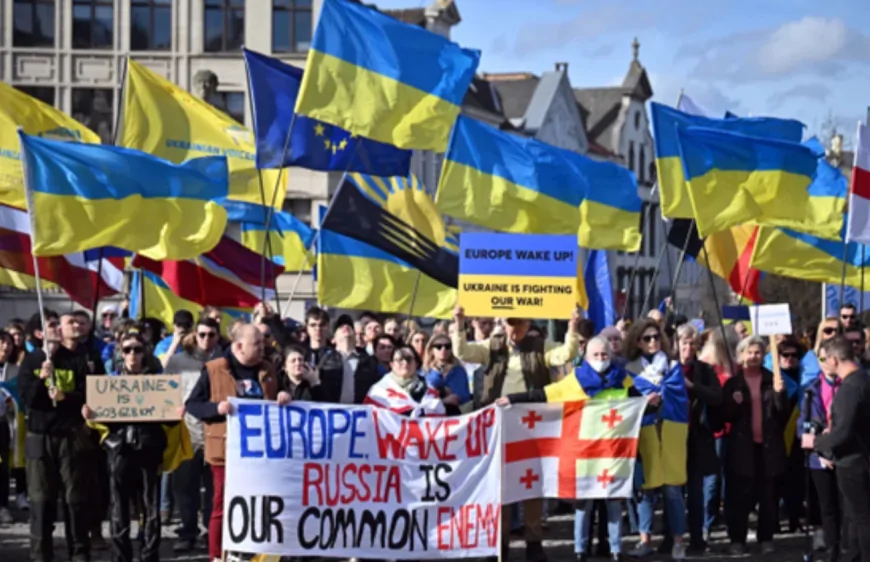
Russia's Shadow War on European Soil Intensifies as Diplomats Struggle in Abu Dhabi
Russia's campaign of gray zone warfare across European territory — a sustained effort to impose costs on NATO members supporting Ukraine without triggering Article 5 collective defence obligations — has intensified in the weeks since the Ukraine-Russia trilateral talks in Geneva produced limited results, according to a detailed assessment published by the Geopolitical Monitor this week. The campaign, which Moscow has consistently denied, includes coordinated arson attacks on logistics facilities, interference with railway signalling systems, sabotage of undersea data cables, and suspected recruitment of criminal networks to conduct deniable operations against European infrastructure.
The assessment documented incidents across Germany, Poland, Lithuania, Estonia, and Latvia — all NATO member states — as well as Sweden, Finland, and the UK. In Germany, two separate fires at logistics facilities used by companies supplying military equipment to Ukraine were attributed by BKA investigators to networks with suspected Russian intelligence links. In Poland, railway signalling disruptions in three separate incidents over six weeks were consistent with deliberate interference. In the Baltic states, disinformation operations — coordinated through multiple social media platforms using synthetic accounts — sought to amplify social discord over Ukrainian refugee policy and defence spending increases.
The Kremlin's objective, according to the Geopolitical Monitor assessment, is threefold: to slow the delivery of Western military equipment to Ukrainian front-line forces, to impose domestic political costs on European governments that must explain infrastructure disruptions to their publics, and to signal that NATO solidarity carries concrete risks that public opinion may eventually find unacceptable. The campaign is calibrated to stay below the threshold that would trigger a formal NATO Article 5 consultation while maximising the cumulative political effect across multiple allied nations simultaneously.
European Intelligence Sharing Has Improved but Gaps Remain
European counterintelligence cooperation on Russian hybrid threats has improved substantially since the 2022 invasion, with the joint European Union Intelligence and Situation Centre — INTCEN — and bilateral sharing arrangements producing faster identification of suspected Russian-linked networks than in previous periods. German, French, and UK domestic intelligence services have expelled dozens of Russian intelligence officers operating under diplomatic cover since 2022, degrading Moscow's declared network's capacity.
But the shift to criminal proxies — using organised crime networks, recruited assets with no direct Russia-state link, and radicalised individuals sourced through darknet channels — has created attribution challenges that legal systems designed for traditional espionage cases are not equipped to handle quickly. Several suspects arrested in Germany and the UK for suspected Russian-linked sabotage have been charged under domestic criminal statutes rather than intelligence-related offences, because prosecutors lacked the evidence of Russian state direction required for the more serious charges.
NATO's response to the gray zone campaign has been constrained by the same structural problem that limits its Ukraine options: the alliance operates on consensus, and unanimity on hybrid threat responses is harder to achieve than unanimity on conventional defence commitments. The Baltic states and Poland have consistently pushed for a more assertive collective response — including the expulsion of additional Russian diplomatic personnel, cyber counter-operations against documented Russian hybrid warfare infrastructure, and the formal designation of the gray zone campaign as an Article 5 triggering act. Germany and France have resisted measures that could escalate the conflict beyond its current parameters.
The Political Weapon Behind the Physical Attacks
The gray zone campaign's most insidious dimension is its political effect. Each infrastructure disruption produces a media cycle in which domestic politics — the cost of supporting Ukraine, the burden of hosting refugees, the trade-off between defence spending and social services — is foregrounded at the expense of solidarity narratives. Marine Le Pen's Rassemblement National in France, the AfD in Germany, and equivalent parties across Europe have consistently argued that the costs of NATO's Ukraine support are being borne by ordinary citizens while their governments prioritise a foreign war. Each Russian-attributed disruption gives those arguments a fresh news hook.
The timing of the intensification — coinciding with the Abu Dhabi talks' stall and the U.S. military's reorientation toward the Iran conflict — suggests that Moscow is attempting to exploit both the diplomatic pause and the American distraction simultaneously. If European governments are managing domestic political pressure from gray zone incidents while the United States is consumed by the Iran war, the space for a Russia-favourable peace settlement may be wider than it would otherwise be.
According to Catarina Tully, Director of the European Hybrid Threat Research Centre, "Russia is playing the long game in Europe's backyard. The goal is not to destroy any specific piece of infrastructure — it is to make the political cost of supporting Ukraine feel tangible, domestic, and relentless in every NATO capital at the same time."
Whether European governments can sustain public support for Ukraine — and for the security spending increases required to defend against Russian hybrid threats — while simultaneously managing the economic shock of the Iran war will be one of the defining governance challenges of the next 12 months in the continent's democratic capitals.
What's Your Reaction?
 Like
0
Like
0
 Dislike
0
Dislike
0
 Love
0
Love
0
 Funny
0
Funny
0
 Wow
0
Wow
0
 Sad
0
Sad
0
 Angry
0
Angry
0









Comments (0)