

Putin Unveils Roadmap to Replace “New World Order” with Multipolar System
At the 2025 Valdai Forum, Vladimir Putin shifted from critique to construction—outlining a concrete plan to dismantle Western-dominated global governance and build a multipolar world centered on Eurasia, BRICS, and the SCO. Full analysis on EpochPost.
Key Takeaways
- At the 2025 Valdai Forum, Vladimir Putin shifted from critique to construction—outlining a concrete plan to dismantle Western-dominated global governance and build a multipolar world centered on Eurasia, BRICS, and the SCO. Full analysis on EpochPost.
- In a pivotal address at the 2025 Valdai Discussion Club, Russian President Vladimir Putin moved beyond rhetoric to present what he called a “practical blueprint” for dismantling...
- Published: Oct 08, 2025 — Russia
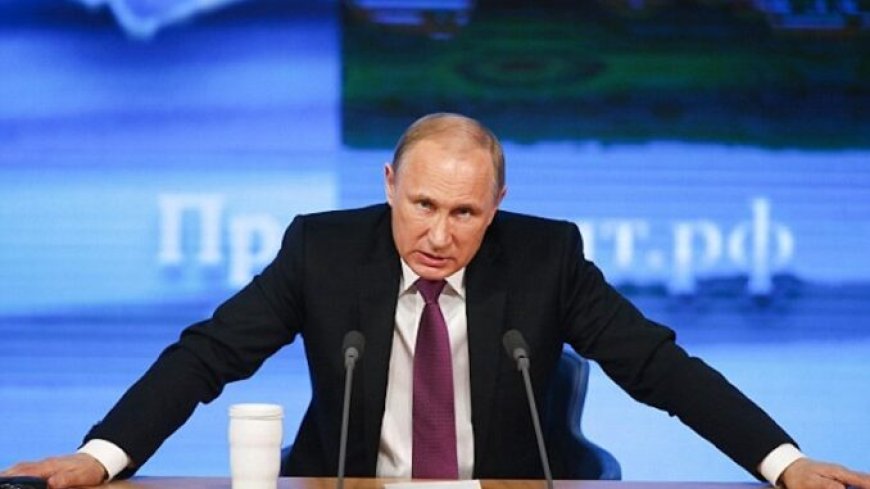
In a pivotal address at the 2025 Valdai Discussion Club, Russian President Vladimir Putin moved beyond rhetoric to present what he called a “practical blueprint” for dismantling the U.S.-led “New World Order” and replacing it with a multipolar system of shared sovereignty.
Titled “The Polycentric World: Instructions for Use,” this year’s speech marked a clear evolution from past Valdai appearances—transitioning from philosophical critique to institutional strategy.
“In today’s multipolar world, harmony and balance can only be achieved through joint work,” Putin declared, signaling that Russia no longer merely advocates for multipolarity—it is actively building its architecture.
From Idea to Infrastructure: BRICS and SCO as New Pillars
Where Putin once described Eurasia as a “mosaic of trade corridors,” he now frames it as a self-sufficient civilizational pole—capable of balancing global power and offering an alternative to Western-led globalization.
Central to this vision are institutions once dismissed as symbolic:
The Shanghai Cooperation Organization (SCO), which began as a border-security mechanism, is now a “trust-based platform for security and development.”
BRICS (Brazil, Russia, India, China, South Africa—and now expanded) functions as an economic and diplomatic counterweight to the G7.
The Eurasian Economic Union anchors regional integration from Moscow to Astana.
“These are not talking points,” Putin emphasized. “They are the scaffolding of a new global order.”
Rescuing—Not Rejecting—the Post-WWII System
Notably, Putin did not call for abolishing the United Nations. Instead, he argued the UN remains viable—but has been “hijacked” by Western powers who turned it into an instrument of dominance.
“The problem isn’t the UN itself,” he said. “It’s the nations that were meant to uphold it—but instead divided it.”
Russia’s stance, he clarified, is not anti-multilateralism, but anti-monopoly: international law must be freed from “Western gatekeeping” to serve all nations equally.
Gaza: Pragmatism Over Partisanship
On the Middle East, Putin reaffirmed Russia’s long-standing position: support for a two-state solution—Israel and Palestine—dating back to the Soviet Union’s 1947 UN vote.
Calling Gaza “a horrific chapter in modern history,” he cited UN Secretary-General António Guterres’ description of the enclave as “the world’s largest children’s cemetery”—a striking reference to a figure he noted has “pro-Western sympathies.”
Moscow, Putin stressed, remains open to any peace initiative—even one from Donald Trump—if it leads to genuine Palestinian statehood.
He expressed skepticism toward Western-led mediation, recalling a past proposal for an international Gaza administration under Tony Blair:
“I once had coffee with him in pajamas—and he’s hardly known as a peacemaker.”
Instead, Russia favors Palestinian-led governance, ideally under the Palestinian Authority, but crucially with Hamas’s consent.
“The main question is how Palestine views this,” Putin said. “We have contacts with Hamas, and both the PA and Hamas must support any plan.”
This reflects Moscow’s broader diplomatic posture: engagement with all actors, not just Western-approved ones.
A Civilizational Shift—Not Just Geopolitical
Putin’s 2025 address reveals a deeper transformation in Russian strategic thought:
2022: Focused on the collapse of the unipolar world.
2025: Focused on constructing a polycentric alternative rooted in civilizational identity, mutual respect, and institutional pluralism.
Eurasia is no longer a bridge between East and West—it is a center in its own right, with its own moral and strategic logic.
What This Means for the World
Russia’s vision poses a direct challenge to the notion that liberal democracy and market capitalism are the only legitimate global models. Instead, it offers a world where sovereignty, non-interference, and civilizational diversity form the basis of international order.
Whether this system can deliver stability, prosperity, and justice remains to be seen. But one thing is clear: the era of unchallenged Western hegemony is over—and Russia intends to shape what comes next.
What's Your Reaction?
 Like
0
 Dislike
0
 Love
0
 Funny
0
 Wow
0
 Sad
0
 Angry
0




Comments (0)