

Assam Flood Death Toll Hits 68 as Over 524,000 Remain Affected
Flooding in Assam has killed 68 people and left over 524,000 affected across five districts, though officials say the overall situation is improving.
Key Takeaways
- Flooding in Assam has killed 68 people and left over 524,000 affected across five districts, though officials say the overall situation is improving.
- Assam Flood Toll Rises to 68 as Recovery Efforts Continue The death toll from severe flooding in India's northeastern state of Assam climbed to 68 on Sunday after two more fata...
- Published: Jul 27, 2026 — South Asia

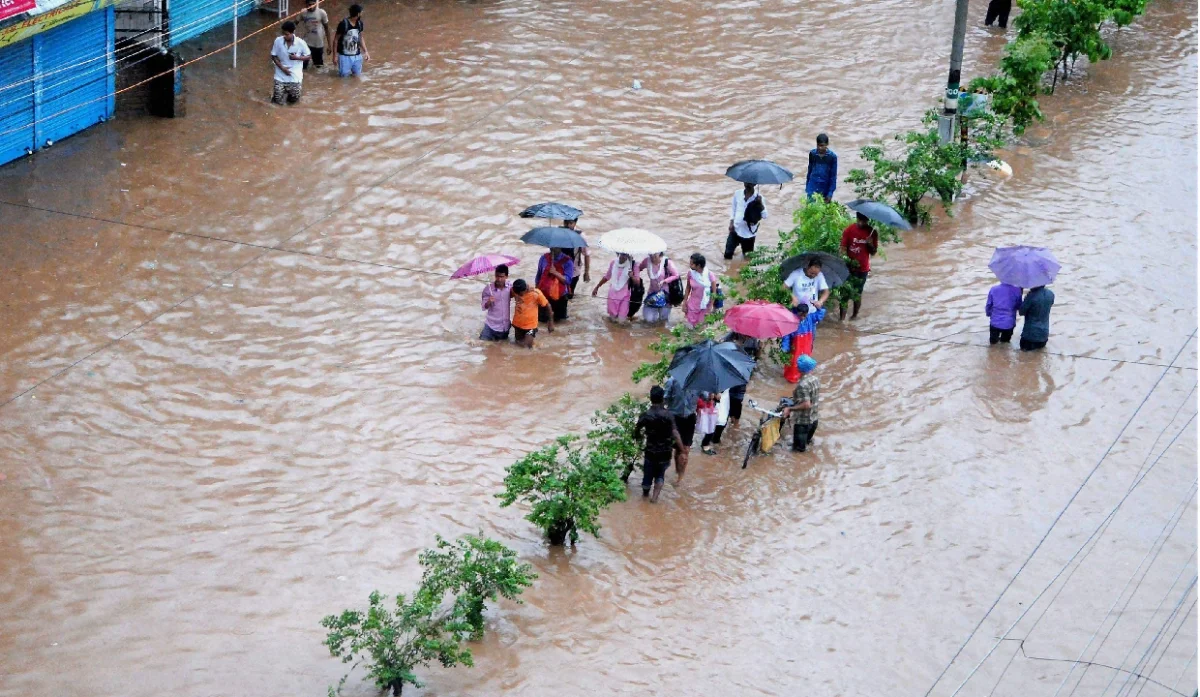
Assam Flood Toll Rises to 68 as Recovery Efforts Continue
The death toll from severe flooding in India's northeastern state of Assam climbed to 68 on Sunday after two more fatalities were reported in Charaideo district, even as officials said the overall flood situation was gradually improving with more than 524,000 people still affected across five districts. The Assam State Disaster Management Authority said the two latest deaths were both drownings in floodwaters, while more than 750 villages remained inundated and over 45,000 hectares of cropland had been damaged by the deluge, which was triggered by a suspected cloudburst in the foothills of neighboring Nagaland.
Sivasagar, Charaideo, Golaghat, Jorhat, and Nagaon districts have borne the brunt of the flooding, with Charaideo remaining the worst-affected area, where nearly 190,000 people were still reeling under water as of the weekend. Assam Chief Minister Himanta Biswa Sarma said Prime Minister Narendra Modi and Union Home Minister Amit Shah had remained in regular contact with the state government, monitoring relief, rescue, and rehabilitation efforts as they unfolded across the affected districts. State officials described the coordination between Delhi and Guwahati as continuous throughout the flood emergency, with regular briefings on the ground situation passed up through both state and federal disaster-management channels.
Relief Camps Shelter Tens of Thousands as Waters Recede
Authorities said 354 relief camps and aid distribution centers were operating across four districts, sheltering more than 37,700 displaced residents as of the weekend update. Multiple agencies, including the Indian Army, the National Disaster Response Force, the State Disaster Response Force, fire and emergency services, and police, were engaged in ongoing rescue and relief operations. Officials said key rivers including the Dikhou and Dhansiri had crossed their danger levels earlier in the flooding, pushing water into residential neighborhoods and farmland that rarely experiences flooding on this scale.
"As Assam steadily recovers from the floods, power restoration efforts continue across affected districts," Sarma said in a social media post over the weekend, describing crews carrying out safety inspections before restoring electricity in a phased manner across Sivasagar, Jorhat, Charaideo, Dhubri, Bongaigaon, and other affected areas. He added that the state remained "committed to restoring essential services at the earliest and ensuring every affected community returns to normalcy," with post-flood rehabilitation, including repairs to damaged schools and infrastructure, set to begin swiftly as waters continue to recede.
Livestock, Roads, and Farmland Bear Heavy Losses
The Assam State Disaster Management Authority reported that 88,240 domestic animals and poultry had been affected across the state, while more than 140 roads and 10 embankments sustained damage in the eastern parts of the state hit hardest by the deluge. Officials said food grains, including rice, were being dispatched continuously to affected areas, with medical teams actively managing health needs and essential supplies being air-dropped into locations cut off by the floodwaters. Several people remained reported missing as of the weekend, according to disaster management officials tracking the aftermath in the worst-hit districts.
Nearly 8 lakh people, or roughly 800,000 residents, have been affected across 12 districts when accounting for the flood's broader footprint beyond the five districts still classified as critically impacted, according to figures reported by Indian outlets tracking the disaster's full scope. Thousands of hectares of agricultural land have been completely destroyed in the worst-hit areas, leaving farmers facing steep losses heading into the harvest season, a blow that officials say will require separate compensation planning once the immediate rescue phase concludes.
Rainfall had begun easing across eastern Assam over the preceding 24 hours, with bright sunshine returning to many parts of the state, a shift that officials credited with the modest improvement in overall conditions even as the human and economic toll continued to mount. The India Meteorological Department has separately forecast an active spell of monsoon rain beginning this week across large parts of the country, raising concern that renewed heavy rainfall could complicate ongoing relief operations in Assam's already saturated districts.
Background & Context
Assam experiences destructive monsoon flooding nearly every year, with the Brahmaputra River and its tributaries regularly overflowing their banks between June and September. According to figures the Assam government previously furnished to India's Rajya Sabha, the state recorded 880 flood-related deaths over a five-year span, underscoring how this year's toll fits into a longer pattern of seasonal disaster that has repeatedly strained the state's disaster-response infrastructure. Climate researchers cited by Indian outlets covering this year's monsoon have pointed to a broader national pattern in which some regions face severe flooding while others simultaneously battle rainfall deficits, a contrast increasingly linked to a warming climate and shifting El Niño conditions.
Past flood years in Assam have seen death tolls ranging from under 100 to well over 200, depending on the severity and duration of the monsoon season, with 2022 recording 278 flood deaths and more recent years generally trending lower as embankment reinforcement and early-warning systems have improved. This year's toll of 68, while still severe, remains below some of the state's worst historical flood seasons, though officials caution that the final count could rise if the currently forecast fresh monsoon rain triggers additional flooding before the season concludes in September.
The India Meteorological Department has forecast continued heavy rainfall this week across Himachal Pradesh, Uttarakhand, Jammu and Kashmir, and Ladakh, alongside increased rain in Punjab, Haryana, Delhi, Uttar Pradesh, and Rajasthan, suggesting Assam's flood emergency is unfolding alongside a wider national pattern of monsoon disruption. Assam's government has said rehabilitation work, including embankment repairs and school reconstruction, will proceed once flood waters fully recede from the worst-affected districts, a process that in past years has taken weeks to complete given the scale of infrastructure damage.
For families in Charaideo and neighboring districts, the coming days will bring a slow transition from emergency rescue operations toward the longer work of rebuilding homes, restoring farmland, and recovering livestock lost to the deluge, even as forecasters warn that renewed monsoon rains could yet complicate the recovery already underway.
Frequently Asked Questions
What happened?
Flooding in Assam, triggered by a suspected cloudburst in Nagaland's foothills, has killed 68 people and left more than 524,000 affected across five districts, though conditions are gradually improving.
Why does this matter?
The flooding highlights Assam's recurring vulnerability to monsoon disasters and adds to a broader national pattern of uneven and disruptive rainfall across India this season.
Who is affected?
More than 37,700 people are sheltering in relief camps, tens of thousands of livestock have been affected, and hundreds of roads and embankments have sustained damage.
What happens next?
State authorities plan phased power restoration and rehabilitation of schools and infrastructure, even as forecasters warn of renewed heavy monsoon rain this week.
What's Your Reaction?
 Like
0
 Dislike
0
 Love
0
 Funny
0
 Wow
0
 Sad
0
 Angry
0
















Comments (0)