

Taliban Foreign Minister’s Visit to India Marks Historic Shift in South Asian Geopolitics
In a move once deemed unthinkable, Taliban Foreign Minister Amir Khan Muttaqi arrives in New Delhi for high-level talks with India—signaling a dramatic realignment in Afghanistan’s foreign policy and a strategic recalibration by India amid rising tensions with Pakistan.
Key Takeaways
- In a move once deemed unthinkable, Taliban Foreign Minister Amir Khan Muttaqi arrives in New Delhi for high-level talks with India—signaling a dramatic realignment in Afghanistan’s foreign policy and a strategic recalibration by India amid rising tensions with Pakistan.
- In a development that would have been inconceivable just three years ago, Taliban Foreign Minister Amir Khan Muttaqi has arrived in New Delhi for an eight-day diplomatic visit—t...
- Published: Oct 09, 2025 — South Asia

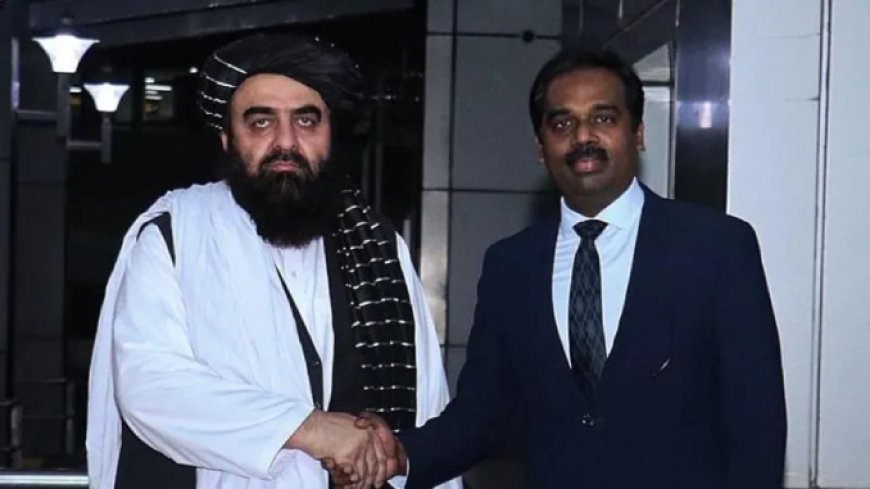
In a development that would have been inconceivable just three years ago, Taliban Foreign Minister Amir Khan Muttaqi has arrived in New Delhi for an eight-day diplomatic visit—the highest-level engagement between Afghanistan’s de facto rulers and India since the Taliban seized power in August 2021.
The visit—made possible by a temporary UN sanctions exemption—marks a turning point in South Asian geopolitics, reflecting both India’s pragmatic outreach and the Taliban’s strategic pivot away from Pakistan, its longtime patron.
From Enemies to Engaged Partners
India once stood as a staunch opponent of the Taliban, investing over $3 billion in Afghanistan’s Western-backed government through infrastructure, education, healthcare, and democratic institution-building. When Kabul fell in 2021, India shut its embassy, canceled visas for thousands of Afghans, and viewed the Taliban as a proxy of its archrival, Pakistan.
Yet within two years, Delhi quietly reopened a technical diplomatic mission in Kabul, resumed humanitarian aid, and began issuing visas to Taliban officials and their families. In 2023, it allowed the Taliban to appoint an envoy in New Delhi and open consulates in Mumbai and Hyderabad.
Now, Muttaqi is set to meet Indian Foreign Minister S. Jaishankar to discuss trade, regional connectivity, and security cooperation—including potential use of Iran’s Chabahar Port, a key Indian-backed gateway to Central Asia that bypasses Pakistani territory.
Why Now? The Pakistan Factor
The thaw between Delhi and Kabul coincides with a sharp deterioration in Taliban-Pakistan relations. Once allies, the two are now locked in a bitter dispute over cross-border militant activity. Pakistan accuses the Taliban of harboring the Tehreek-e-Taliban Pakistan (TTP), which has launched deadly attacks inside Pakistan. In response, Islamabad has conducted airstrikes on Afghan soil, which the Taliban condemn as violations of sovereignty.
For the Taliban, engaging India is a way to:
Reduce dependence on Pakistan
Signal legitimacy to the international community
Diversify diplomatic and economic partnerships
As analysts at India’s Observer Research Foundation note:
“This allows the Taliban to hedge their bets and carve out an identity separate from over-dependence on Islamabad.”
Strategic Gains for India
For India, the outreach is equally strategic:
Counterbalance Chinese and Pakistani influence in Afghanistan
Secure assurances that Afghan soil won’t be used by anti-India terror groups like Lashkar-e-Taiba or ISIS-K
Preserve its legacy as a major humanitarian and development partner in Afghanistan—a role that still earns it goodwill among ordinary Afghans
Notably, no country has formally recognized the Taliban government. But up to 40 nations, including China, Russia, and now India, maintain de facto or informal ties—a reality the Taliban is leveraging to gain incremental legitimacy.
A Cautious, Tactical Alliance
Despite warming relations, both sides remain cautious. India has not recognized the Taliban, and the Taliban continue to enforce policies—particularly on women’s rights—that draw global condemnation.
Yet as Michael Kugelman of the Wilson Center observes:
“The fact that this treatment is coming from India—a nation that never previously had friendly relations with the Taliban—makes this all the more significant, and also a diplomatic triumph for the Taliban.”
What Comes Next?
The Muttaqi-Jaishankar talks could pave the way for:
Expanded Afghan-Indian trade (especially in agriculture and minerals)
Joint counterterrorism coordination
Greater Indian involvement in Afghanistan’s reconstruction
But the relationship remains tactical, not ideological—driven by realpolitik, not trust.
As one Indian diplomat put it:
“Irrespective of the regime in Kabul—monarchical, communist, or Islamist—there has always been a natural warmth between Delhi and Kabul.”
In a region defined by rivalry, that warmth may now be Afghanistan’s best hope for stability—and India’s quiet path back into the heart of Central Asia.
What's Your Reaction?
 Like
0
Like
0
 Dislike
0
Dislike
0
 Love
0
Love
0
 Funny
0
Funny
0
 Wow
0
Wow
0
 Sad
0
Sad
0
 Angry
0
Angry
0














Comments (0)