

NASA Confirms Artemis IV Moon Mission Delayed to 2028 Due to Orion Heat Shield Issues
NASA officially confirmed on February 26 2026 that the Artemis IV crewed lunar landing mission has been delayed to no earlier than 2028 following the discovery of new structural vulnerabilities in the Orion spacecraft heat shield identified during post-mission analysis of Artemis III.
Key Takeaways
- NASA officially confirmed on February 26 2026 that the Artemis IV crewed lunar landing mission has been delayed to no earlier than 2028 following the discovery of new structural vulnerabilities in the Orion spacecraft heat shield identified during post-mission analysis of Artemis III.
- Artemis IV Moon Landing Slips to 2028 as NASA Grapples With Orion Heat Shield CrisisNASA confirmed Wednesday what insiders had been whispering for months. The Artemis IV crewed ...
- Published: Feb 25, 2026 — Science

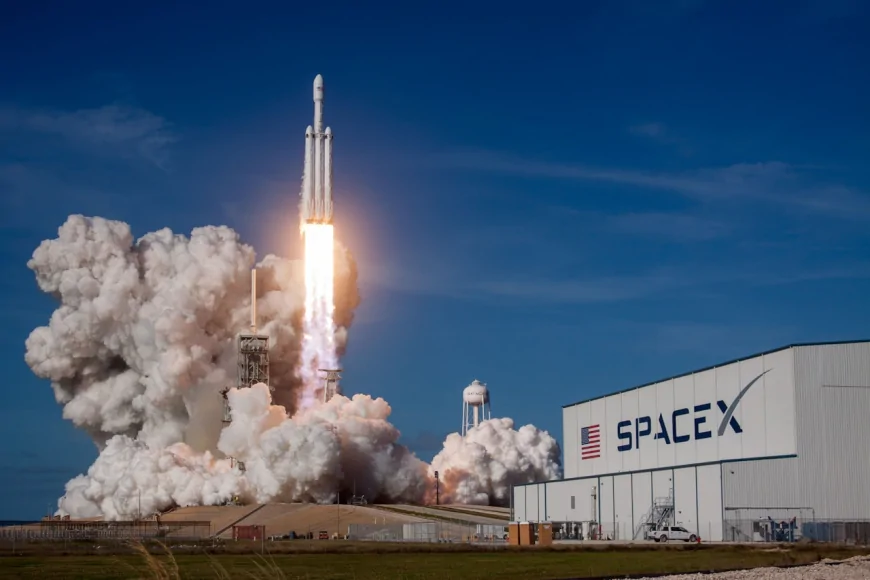
Artemis IV Moon Landing Slips to 2028 as NASA Grapples With Orion Heat Shield Crisis
NASA confirmed Wednesday what insiders had been whispering for months. The Artemis IV crewed lunar landing mission — originally scheduled to launch no earlier than late 2026 — has been officially pushed to no earlier than the first quarter of 2028. The reason: a more extensive and troubling set of findings from the post-mission analysis of Orion's heat shield performance during Artemis III than the agency had previously disclosed publicly.
The announcement came in a written statement from NASA Administrator Bill Nelson and was accompanied by a briefing at Johnson Space Center in Houston. Nelson struck a cautious but determined tone, acknowledging the delay while insisting that rushing humans to the Moon on hardware with unresolved safety questions was not acceptable under any political or competitive pressure.
What the Heat Shield Analysis Found
The Orion heat shield problems first attracted public attention after the Artemis I uncrewed test flight in 2022, when investigators found charring patterns that were deeper and less uniform than expected. During Artemis III, which returned a crew of four from lunar orbit in September 2025, heat shield degradation was again more significant than pre-mission models predicted. Internal agency analysis completed in January 2026 found that under certain re-entry trajectory conditions, localized regions of the heat shield could reach failure thresholds within a safety margin that NASA considered unacceptably narrow.
Redesigning the heat shield is not a straightforward task. The Orion capsule is built by Lockheed Martin, and the heat shield is manufactured by Honeywell Aerospace using an Avcoat ablative material. Any redesign requires re-qualification testing, thermal vacuum testing, and eventually a new uncrewed test flight before crew can fly again. Each step takes time.
According to Dr. Bhavya Lal, former associate administrator for technology, policy, and strategy at NASA, the core issue is that we were pushing this vehicle to the edge of its certified performance envelope, and the edge turned out to be closer than our models suggested. That is not a failure of the mission. That is what test flights are for. But it does require a responsible response.
What the Delay Means for the Moon Race Against China
The delay is politically uncomfortable because China's space program has set its sights on a crewed lunar landing by 2030. Chinese state media reported in January that the Long March 10 rocket, which will carry China's lunar crew, completed its first fully successful static fire test. A U.S. delay to 2028 compresses the timeline advantage NASA had been counting on to land Americans on the Moon well before China.
Members of Congress from both parties expressed frustration Wednesday. Senate Commerce Committee Chair Ted Cruz called the delay unacceptable and demanded a classified briefing on the full scope of the heat shield issues. Several House members called for an independent inspector general review of NASA's contractor oversight process.
SpaceX, which is providing the Human Landing System for Artemis IV under a contract valued at nearly $3 billion, confirmed Wednesday that its Starship lunar variant remains on track for its portion of the mission, underscoring that the delay is specific to the Orion capsule and not the broader mission architecture.
Whether NASA can execute an accelerated redesign, testing, and qualification process fast enough to meet a 2028 target — while managing budget pressures and political scrutiny — will be one of the defining tests of the agency's capabilities in the years ahead.
What's Your Reaction?
 Like
0
Like
0
 Dislike
0
Dislike
0
 Love
0
Love
0
 Funny
0
Funny
0
 Wow
0
Wow
0
 Sad
0
Sad
0
 Angry
0
Angry
0













Comments (0)