



















































NVIDIA Commits $4 Billion to Optical Photonics in AI Infrastructure Bet
NVIDIA announced $2 billion investments each in photonics companies Lumentum and Coherent on Tuesday, paired with multi-billion-dollar purchase commitments to dominate AI data center networking.
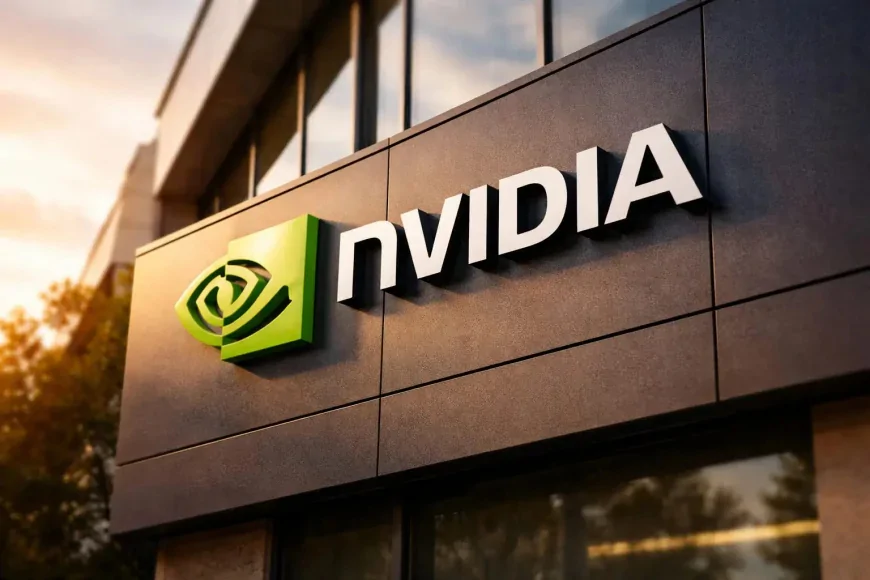
NVIDIA Moves to Control the Physical Backbone of AI With $4 Billion Photonics Play
NVIDIA made the most significant infrastructure bet of its young 2026 on Tuesday, announcing strategic partnerships and $2 billion investments each in photonics companies Lumentum Holdings and Coherent Corp — a combined $4 billion commitment to secure control over the optical components that move data inside the next generation of AI data centers. Both deals came with separate multi-billion-dollar purchase commitments and access rights for advanced laser and optical networking products, ensuring NVIDIA a privileged position in supply chains it has identified as the next critical bottleneck in scaling artificial intelligence infrastructure.
The announcements, made simultaneously through NVIDIA's official newsroom, described both agreements as multiyear non-exclusive strategic partnerships. In each case, NVIDIA committed to investing in U.S.-based manufacturing capabilities — a move that carries both supply chain logic and political significance at a moment when Washington has prioritised domestic semiconductor and technology manufacturing under multiple executive actions. Lumentum and Coherent will use the capital to build out fabrication capacity for next-generation laser components and optical networking products, with NVIDIA as the anchor customer.
The core technical argument for the investment is straightforward. Training and running large AI models is increasingly constrained not by the raw compute power of GPUs, but by how fast servers can move data between chips and across the clusters connecting them. Optical interconnects — which move data using light rather than copper — promise dramatically higher bandwidth with better energy efficiency. As AI clusters scale toward ever-larger configurations connected by advanced switches, the physics of copper networking become a ceiling. Photonics removes that ceiling.
A Supply Chain Strategy, Not Just a Technical Bet
Industry analysts described NVIDIA's move as a strategic repositioning that goes well beyond purchasing components. By making $2 billion equity investments in each supplier and locking in multi-year purchasing agreements simultaneously, NVIDIA is shaping the supply chain for the entire AI data center stack — from GPU compute to networking switches to the physical light-based interconnects linking them. The company is no longer just selling accelerators; it is attempting to become the indispensable architecture of the AI factory itself.
Lumentum is headquartered in San Jose, California, and operates manufacturing and R&D facilities worldwide. The company's core products — high-performance lasers, modules and optical subsystems — are already central to hyperscale cloud connectivity and telecom networks. Coherent, operating across more than 20 countries since its founding in 1971, brings what it describes as the industry's broadest technology stack in photonics, with particular depth in datacenter, communications and industrial applications.
The dual announcements landed the same day NVIDIA's newsroom also documented the company's recent partnerships with Alpamayo for AI-driven autonomous vehicle simulation using the DRIVE Orin and Thor platforms — a sign that NVIDIA is simultaneously expanding its footprint in physical AI applications beyond the data center.
Investment Comes as AI Infrastructure Race Intensifies
The photonics deals land in the context of an AI infrastructure spending cycle that shows no signs of slowing. Global sovereign cloud spending is forecast to hit $80 billion in 2026. Europe's EURO-3C platform, unveiled at Mobile World Congress Barcelona this week, represents a €75 million federated architecture connecting 13 countries with agentic AI as its core use case. Amazon was simultaneously reported to be pouring tens of billions into global data center expansion.
OpenAI plans massive future compute investments, and Samsung Electronics set an ambitious target Tuesday to double its footprint of Gemini AI-equipped devices to 800 million units by end of 2026. The breadth of the investment cycle reflects a collective bet across the technology industry that the physical infrastructure of AI — the chips, the optical links, the power systems, the buildings — is the next enduring source of competitive advantage.
According to Lisa Su, CEO of AMD, "The constraint in AI infrastructure has moved from software and model architecture to the physical systems that connect compute at scale — and the companies that control that layer will have structural leverage for the next decade."
Whether NVIDIA's photonics investments deliver the supply chain dominance the company is seeking — or whether they face competition from rival optical technology suppliers racing to serve the same hyperscaler customers — will become clearer as the AI data center buildout enters its next phase later in 2026.