

U.S. Diplomats Evacuated Across Middle East as Embassies Come Under Fire
The U.S. State Department ordered evacuations at embassies in Bahrain, Iraq and Jordan and urged Americans in 15 countries to depart immediately as Iranian drones struck the Riyadh compound.
Key Takeaways
- The U.S. State Department ordered evacuations at embassies in Bahrain, Iraq and Jordan and urged Americans in 15 countries to depart immediately as Iranian drones struck the Riyadh compound.
- State Department Orders Mass Evacuation of U.S. Missions Across the Middle EastThe U.S.
- Published: Mar 03, 2026 — U.S. News

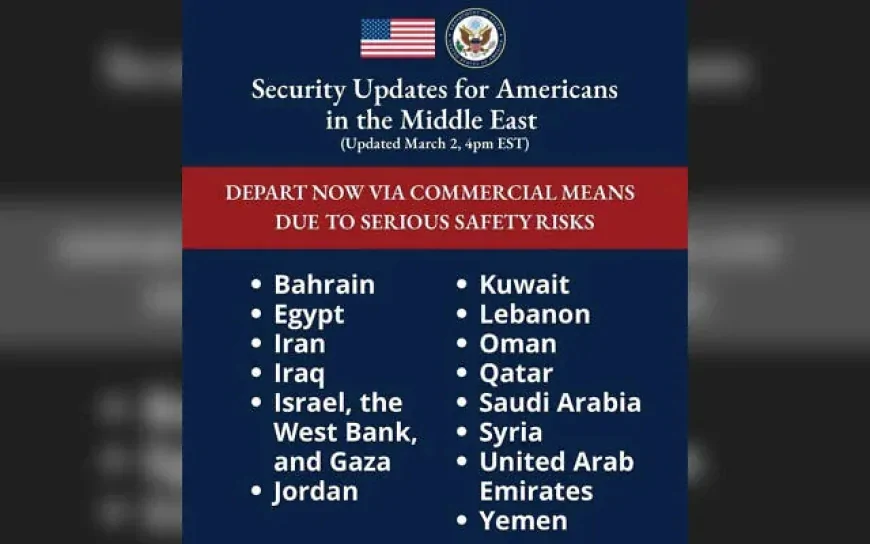
State Department Orders Mass Evacuation of U.S. Missions Across the Middle East
The U.S. State Department issued emergency evacuation orders for diplomatic facilities in Bahrain, Iraq and Jordan on Tuesday, and urged American citizens in more than 15 countries across the Middle East to leave immediately, as Iran's retaliatory campaign expanded to strike American government buildings on foreign soil. Two suspected Iranian drones hit the U.S. Embassy compound in Riyadh, causing what Saudi Arabia's defense ministry described as "limited fire and minor material damages." No injuries were reported at the Riyadh location.
The U.S. Embassy compound in Kuwait was also struck, according to multiple sources familiar with the situation. The State Department confirmed the Kuwait incident but declined to provide damage assessments in initial statements. In Jordan, the embassy was temporarily evacuated "out of an abundance of caution" due to an unspecified security threat — a designation that diplomatic officials said reflected the rapidly shifting threat environment across the region rather than a confirmed strike.
The breadth of the evacuation orders represented a level of diplomatic withdrawal from the Middle East not seen since the 2003 Iraq invasion period. Career Foreign Service officers described the pace of the drawdown as unprecedented in scale and speed, with some missions given fewer than 12 hours to complete non-emergency staff departures.
Commercial Vessels and Regional Infrastructure Also Targeted
Beyond diplomatic facilities, commercial vessels in the region came under direct fire. A vessel docked in Bahrain was struck by two projectiles on Monday, causing a fire to break out on board and forcing crew members to evacuate. The attack was claimed by an Iran-aligned faction and took place in the Salman Industrial City maritime area. A second vessel near the port was damaged by debris from an intercepted missile, according to Bahrain's Ministry of Interior.
Bahrain's international airport was targeted by a drone, the Ministry of Interior confirmed, resulting in material damage without loss of life. On Saturday night, several residential buildings in the Bahraini capital Manama were struck by Iranian drones. The Ministry of Interior confirmed that one person was killed and 32 others wounded in incidents across Sunday.
Iran's Islamic Revolutionary Guard Corps framed the embassy strikes as legitimate military responses under international law, citing its prior declarations that U.S. military facilities and government installations across the region would be treated as valid targets in any conflict. American and Saudi officials rejected that characterisation, with the State Department calling the attacks on diplomatic premises a "flagrant violation of international law."
Trump Refuses to Rule Out Ground Troops as War Grows
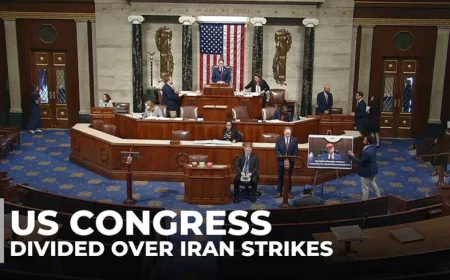
President Trump, speaking to reporters Tuesday, refused to rule out the deployment of U.S. ground forces inside Iran if the conflict required it. "If necessary" was the qualifier he used in two separate exchanges with journalists. Defense Secretary Pete Hegseth, meanwhile, stated that as of Tuesday no U.S. troops were operating on Iranian soil, but similarly declined to foreclose future options.
The posture stood in sharp contrast to assurances given to U.S. allies in the first days of the conflict, when senior officials framed the operation as a targeted air campaign with defined limits. According to a U.S. military official speaking on background, "The operational picture changes every 12 hours. What was true Monday morning may not be true Wednesday morning."
With embassies shuttered, American civilians urged to flee, and commercial infrastructure under attack, the Middle East of March 2026 is reshaping itself faster than diplomatic frameworks can track — and the consequences for the region's long-term stability may extend far beyond this particular conflict's resolution.
What's Your Reaction?
 Like
0
Like
0
 Dislike
0
Dislike
0
 Love
0
Love
0
 Funny
0
Funny
0
 Wow
0
Wow
0
 Sad
0
Sad
0
 Angry
0
Angry
0














Comments (0)