

Trump Tests MAGA Loyalty as US Enters Open-Ended War With Iran
President Trump is testing his MAGA coalition's tolerance for open-ended military conflict after promising an America First foreign policy with no new wars.
Key Takeaways
- President Trump is testing his MAGA coalition's tolerance for open-ended military conflict after promising an America First foreign policy with no new wars.
- Trump Faces Backlash From His Own Base Over Iran War With No Exit StrategyWhen Donald Trump launched strikes on Iran on February 28 alongside Israel, he did so without congressi...
- Published: Mar 03, 2026 — U.S. News

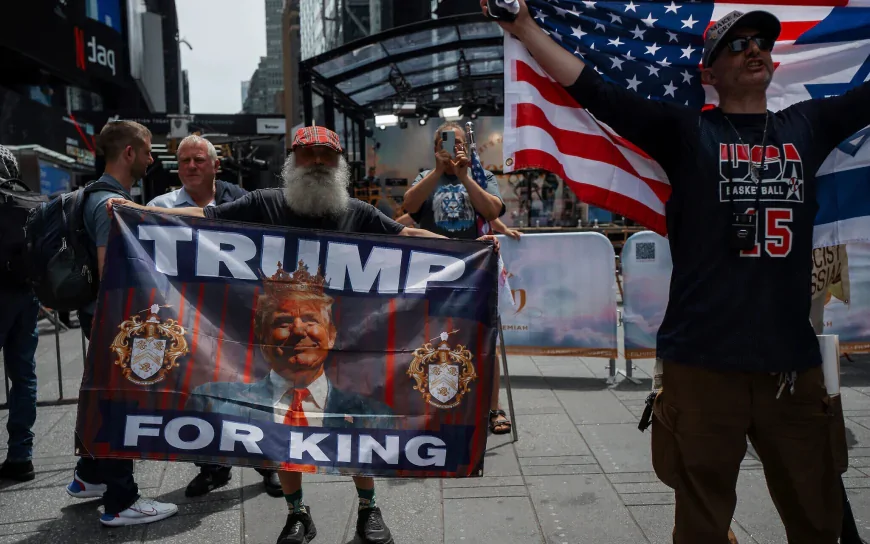
Trump Faces Backlash From His Own Base Over Iran War With No Exit Strategy
When Donald Trump launched strikes on Iran on February 28 alongside Israel, he did so without congressional authorisation, without a declared timeline, and without a single clearly articulated end state. Four days into the conflict, with six U.S. service members dead, embassies under fire across the Middle East, and Secretary of State Marco Rubio telling Congress "the hardest hits are yet to come," the president is confronting an unexpected front: the loyalty of his own political coalition.
Marjorie Taylor Greene, the Georgia Republican who built her political identity on the slogan "America First" and Trump's promise of "no new wars," broke sharply with the president after he ordered the strikes. Greene told supporters that Trump had abandoned the principles his 2024 campaign was built upon. She was not alone. Multiple conservative commentators and MAGA-aligned media figures who had echoed Trump's anti-interventionist rhetoric for years found themselves wrestling with how to reconcile his past promises with the current reality of a Middle Eastern war that shows no signs of a quick resolution.
Trump himself addressed the tension directly in an interview with CNN Monday, saying he would not guarantee a short conflict. "I hear the people saying you're going to have an endless war. You're not going to have an endless war," he said. But he also said he would not rule out ground troops if necessary — a position that deepened the fault lines in his base.
War Objectives Keep Shifting
One of the most politically damaging aspects of the Iran operation for the administration has been its inability to define a consistent goal. On Sunday alone, Trump and senior officials offered at least two separate objectives for the assault: eliminating Iran's nuclear program and forcing regime change. Those two objectives carry vastly different military requirements and diplomatic consequences, and the shifting language has given both congressional critics and allied governments reason to question whether the administration has a coherent endgame.
Senate Minority Leader Chuck Schumer emerged from a congressional briefing led by Rubio visibly frustrated. "I found their answers completely and totally insufficient," he told reporters. "That briefing raised many more questions than it answered." The White House announced that Rubio, Defense Secretary Pete Hegseth, Joint Chiefs Chairman Dan Caine and CIA Director John Ratcliffe would hold a full congressional briefing Tuesday — the first since the war began.
Israel's Prime Minister Benjamin Netanyahu, speaking to Fox News, projected confidence. "There's never been a president like him," Netanyahu said of Trump. "His resoluteness, his decisiveness, his clarity of thinking — the way he gets things, gets right to the crux of things." Netanyahu also declared there would be no "endless war."
Gaza Blockade Tightens as Iran War Widens
Inside Gaza, the consequences of the Iran escalation were immediate and severe. Israel closed all crossing points on Saturday, citing the war with Iran, halting the flow of fuel, food and humanitarian supplies into a territory already operating at the edge of collapse. Hospitals warned of imminent shutdowns. Water and sanitation systems were threatened. Israeli authorities said late Monday night that they would reopen the Kerem Shalom crossing from Israel to Gaza for "gradual entry of humanitarian aid," but UN officials said the promised volumes were insufficient.
Israeli settlers fatally shot two Palestinian brothers in the occupied West Bank on Monday, according to local witnesses and the Palestinian Ministry of Health. The killings drew condemnation from human rights organisations but received minimal attention in Western media amid the wider regional conflict.
According to Tess Bridgeman, Senior Editor at Just Security, "The length of America's military commitment depends on what the goals are — and they keep changing in ways that make it impossible for Congress, allies, or the public to hold the administration accountable."
Whether Trump's base eventually turns against a protracted Middle Eastern war — or whether MAGA nationalism reshapes itself around the conflict — may be the defining domestic political question of 2026.
What's Your Reaction?
 Like
0
Like
0
 Dislike
0
Dislike
0
 Love
0
Love
0
 Funny
0
Funny
0
 Wow
0
Wow
0
 Sad
0
Sad
0
 Angry
0
Angry
0










Comments (0)