

France Expands Nuclear Arsenal for First Time Since 1992 in Landmark Speech
French President Emmanuel Macron has ordered the first increase in France's nuclear warheads since 1992, unveiling a new strategy to deploy nuclear aircraft to European allies.
Key Takeaways
- French President Emmanuel Macron has ordered the first increase in France's nuclear warheads since 1992, unveiling a new strategy to deploy nuclear aircraft to European allies.
- Macron Orders Nuclear Warhead Increase in Historic Deterrence PivotFrance is going nuclear — in more ways than one. Standing beside the submarine Le Temeraire at the Ile Longue ...
- Published: Mar 02, 2026 — Europe
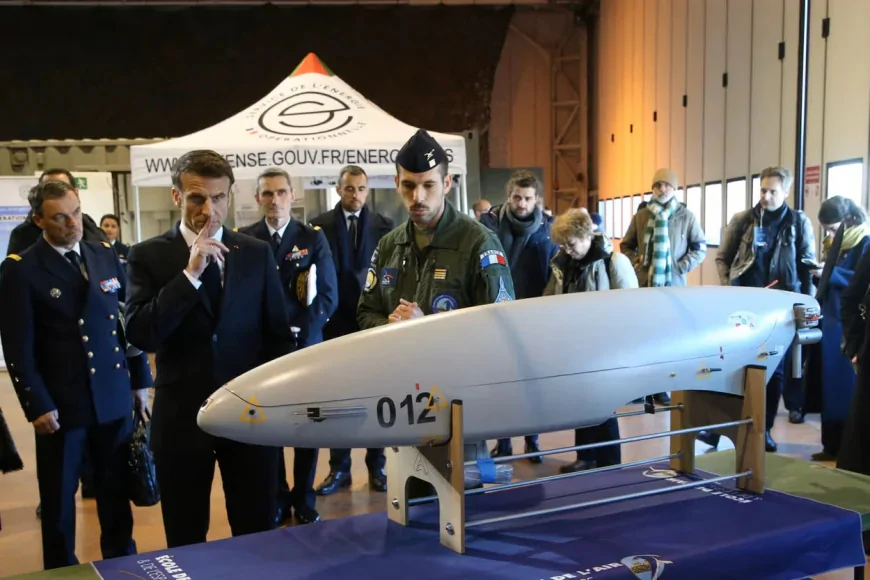
Macron Orders Nuclear Warhead Increase in Historic Deterrence Pivot
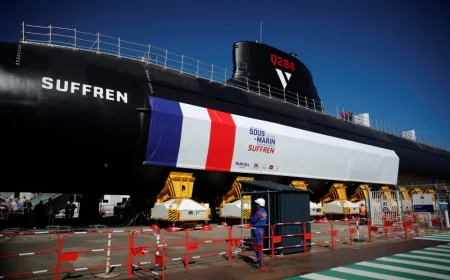
France is going nuclear — in more ways than one. Standing beside the submarine Le Temeraire at the Ile Longue naval base in Brittany, President Emmanuel Macron on Monday announced the most significant shift in French nuclear doctrine in three decades.
He has ordered an increase in the number of nuclear warheads in France's arsenal. He gave no figures. France previously held fewer than 300 warheads — its last confirmed increase came in 1992. From now on, Paris will also stop disclosing the size of its arsenal entirely.
"To be free, one must be feared," Macron said. "And to be feared, one must be powerful."
Advanced Deterrence: A New European Nuclear Architecture
Macron unveiled a concept he called "advanced deterrence" — a structured nuclear-security partnership with European allies that he described as complementary to, but distinct from, NATO's nuclear arrangements.
Eight countries have expressed interest in the framework: the United Kingdom, Germany, Poland, the Netherlands, Belgium, Greece, Sweden, and Denmark. These nations will be permitted to host elements of France's strategic air forces on a temporary deployment basis.
France and Germany immediately formalized the first step. In a joint statement issued within hours of Macron's speech, Paris and Berlin announced the creation of a "high-ranking nuclear steering group." German forces will participate in French nuclear exercises for the first time.
Why Now: Russia, China, and a Wavering America
Macron cited a hardening global security environment as the driving force behind the shift. Russia is using hypersonic nuclear weapons and threatening to deploy nuclear arms in space. China produces more weapons than any other country on earth. India, Pakistan, and North Korea are all expanding their arsenals.
European capitals have grown increasingly anxious about the reliability of US security guarantees under the Trump administration. France is the only nuclear-armed power inside the European Union since Britain's departure from the bloc in 2020.
According to Jean-Marie Collin, Director of the International Campaign to Abolish Nuclear Weapons' French office, "Increasing its arsenal reflects participation in an arms race, contradicting the spirit, if not the letter, of the Nuclear Non-Proliferation Treaty."
Macron pre-empted that criticism directly. "This is not about entering any arms race," he said. "No adversary, or any combination of adversaries, should be able to contemplate striking France without the certainty of suffering damage from which they would not recover."
No Sharing of the Final Decision
Despite the new cooperative framework, Macron drew sharp lines on sovereignty. France will not share what it calls its "vital interests." The final decision to deploy nuclear weapons remains solely with the French president — a constitutional requirement under de Gaulle's doctrine of strategic autonomy.
Paris, London, and Berlin will jointly develop very long-range missile projects as part of the European Long Range Strike Approach launched in 2024. France's next ballistic missile submarine, to be named Invincible, is scheduled to sail in 2036.
The speech was planned months in advance of the Iran crisis but landed with enormous geopolitical weight on a day when the Middle East was burning and US credibility as a European security guarantor was openly questioned in Berlin, Warsaw, and The Hague.
Whether Macron's deterrence overhaul will prove a stabilizing force or an accelerant in a nuclear world already under severe strain may be the defining security question of the coming decade.
What's Your Reaction?
 Like
0
Like
0
 Dislike
0
Dislike
0
 Love
0
Love
0
 Funny
0
Funny
0
 Wow
0
Wow
0
 Sad
0
Sad
0
 Angry
0
Angry
0


Comments (0)