

Japan's Kairos Rocket Attempts Historic Third Launch After Two Previous Failures
Japanese private company Space One will attempt the third-ever launch of its Kairos rocket today after both previous missions ended in failures, marking a critical test for Japan's commercial space sector.
Key Takeaways
- Japanese private company Space One will attempt the third-ever launch of its Kairos rocket today after both previous missions ended in failures, marking a critical test for Japan's commercial space sector.
- Japan's Kairos Rocket Makes Third Try as Commercial Space Sector Watches CloselyJapanese private space launch company Space One attempted the third flight of its Kairos rocket o...
- Published: Mar 03, 2026 — Science

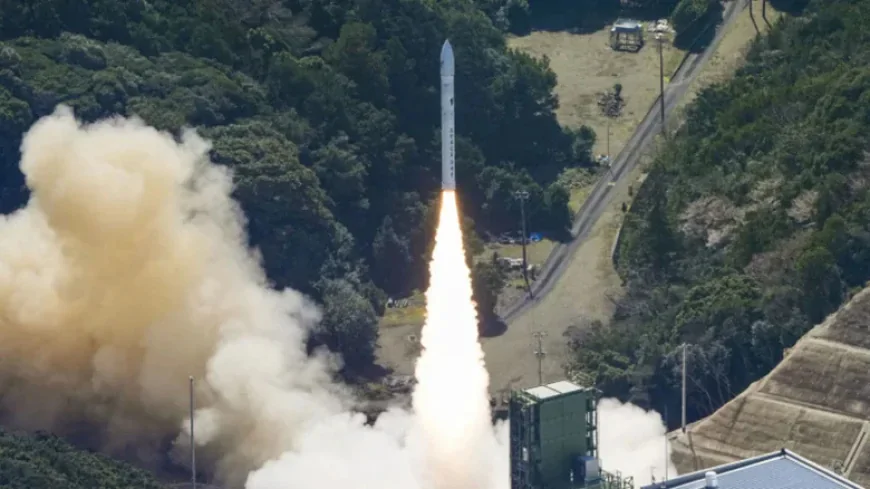
Japan's Kairos Rocket Makes Third Try as Commercial Space Sector Watches Closely
Japanese private space launch company Space One attempted the third flight of its Kairos rocket on Tuesday, a milestone that carries outsized significance for Japan's emerging commercial space industry after the rocket's two previous launch attempts both ended in failure. The launch was scheduled from the Kii Space Port facility in Wakayama Prefecture, with Space.com offering live coverage of what would be either a historic vindication of the company's persistence or a devastating third setback to its development programme.
Kairos is a small-to-medium solid-fuel rocket designed to place payloads of up to 250 kilograms into sun-synchronous orbit, targeting the rapidly growing commercial satellite deployment market. Space One was founded in 2018 with backing from Canon Electronics, IHI Aerospace, the Shimizu Corporation and the Development Bank of Japan — a consortium of established Japanese industrial names staking a position in a sector traditionally dominated by government agencies and major defence contractors.
The first Kairos launch, in March 2024, failed seconds after liftoff when the vehicle's flight termination system was automatically triggered after detecting an anomaly. A second attempt ended in another failure, reinforcing questions about the reliability of the rocket's propulsion and guidance systems. Space One's engineers spent the intervening period conducting an extensive fault analysis and redesign programme, and Tuesday's launch represented the first test of those corrections under real flight conditions.
Japan's Commercial Space Sector at a Crossroads
Japan has deep institutional expertise in space technology through JAXA, its national space agency, but the country has been slower than the United States, China and India to develop a robust private commercial launch sector. Space One's Kairos rocket represents one of the most visible efforts to change that. A successful flight Tuesday would provide critical market validation, opening doors for commercial contracts with satellite operators seeking an Asian alternative to SpaceX's Falcon 9 or Rocket Lab's Electron.
The Japanese government has backed commercial space development as a strategic priority, with the Cabinet Office's Space Policy Committee allocating expanded budget commitments to commercial launch infrastructure and orbital services. The development of domestic launch capability is seen as essential both for economic competitiveness and for national security considerations, particularly given the increasing role of satellites in military communications, reconnaissance and navigation.
SpaceX's Falcon 9 demonstrated on March 1 that it remained the workhorse of global commercial launch, putting 54 Starlink satellites into low Earth orbit from Vandenberg Space Force Base in California and Cape Canaveral simultaneously. That operational tempo — multiple launches per month, each placing dozens of satellites — sets a pace that no rival launch provider has yet matched at scale.
NASA's Additive Manufacturing Spring Milestone
Separately, Universe Today reported Tuesday that a novel spring designed at NASA's Jet Propulsion Laboratory using additive manufacturing — 3D printing — had successfully deployed aboard the commercial spacecraft Proteus Space's Mercury One in low Earth orbit, validated by onboard camera footage. The device, called the JPL Additive Compliant Canister, demonstrated that 3D-printed spring mechanisms could be used for future space antenna deployment, with implications for reducing the cost and mechanical complexity of satellite hardware.
The JPL development exemplified a broader shift in space hardware manufacturing toward additive techniques that reduce production time, lower costs and enable custom geometries impractical with conventional machining. Space One's engineers had their own variants of this challenge in mind as they counted down to Tuesday's Kairos launch: whether the manufacturing precision and testing thoroughness of the past months had corrected whatever caused two previous failures.
According to Hiroshi Yamakawa, president of JAXA, "Every commercial launch attempt in Japan adds to our national knowledge base, whether it succeeds or not — but a success today would accelerate the entire ecosystem."
Whether Kairos reached orbit on its third attempt is a question Japan's space industry will answer within hours. For Space One's investors and engineers, and for the broader narrative of Asian commercial space, the stakes of Tuesday's countdown could not be higher.
What's Your Reaction?
 Like
0
Like
0
 Dislike
0
Dislike
0
 Love
0
Love
0
 Funny
0
Funny
0
 Wow
0
Wow
0
 Sad
0
Sad
0
 Angry
0
Angry
0












Comments (0)