

Apollo Sample Reanalysis Rewrites Understanding of Lunar Formation History
A new analysis of rocks brought back by twelve Apollo astronauts has finally resolved one of planetary science's longest-running debates about how and when the Moon formed.
Key Takeaways
- A new analysis of rocks brought back by twelve Apollo astronauts has finally resolved one of planetary science's longest-running debates about how and when the Moon formed.
- Fifty-Year-Old Moon Rocks Finally Settle the Great Lunar Formation DebateThe rocks that twelve Apollo astronauts carried home from the Moon between 1969 and 1972 have been reana...
- Published: Mar 03, 2026 — Science

Fifty-Year-Old Moon Rocks Finally Settle the Great Lunar Formation Debate
The rocks that twelve Apollo astronauts carried home from the Moon between 1969 and 1972 have been reanalysed using techniques unavailable to the scientists who first studied them, and the results have rewritten the scientific community's understanding of when and how the Moon formed. A new study published in advance of its formal journal release Tuesday resolves what Universe Today described as "one of the most stubborn debates in planetary science" — and the answer turned out to be one that neither side of the decades-long argument was entirely correct about.
The Apollo programme returned approximately 382 kilograms of lunar material to Earth across six missions. These samples have been studied continuously since their return, and with each new generation of analytical instrumentation, they have yielded fresh discoveries. The latest reanalysis applied isotopic dating techniques and mineral phase analysis developed in the past five years to samples from three separate Apollo landing sites, allowing researchers to cross-reference geological markers with greater precision than any previous study.
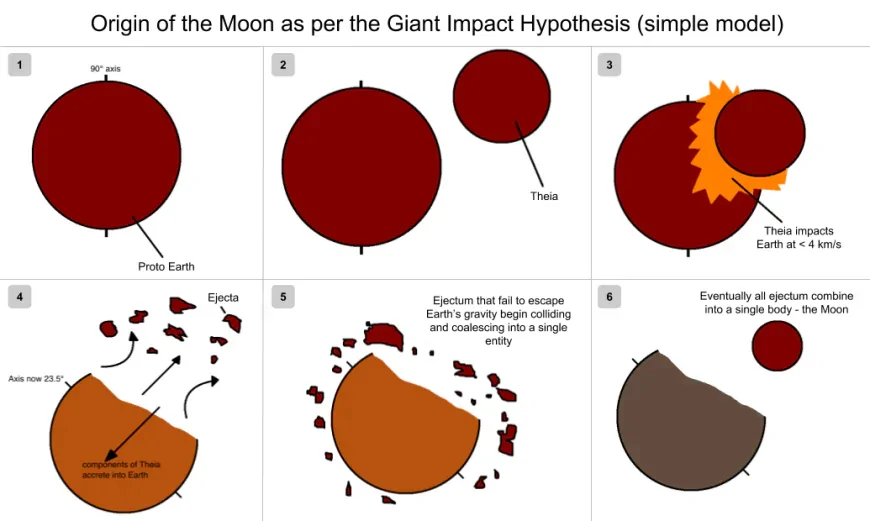
The results challenged both the dominant "giant impact" model of lunar formation and the specific timeline attached to it. Current scientific consensus held that the Moon formed approximately 4.5 billion years ago when a Mars-sized body called Theia collided with the proto-Earth, ejecting material that coalesced into the Moon. The new Apollo sample data shifts key aspects of that timeline and modifies the compositional model of the early Moon's crust formation — details that have significant implications for our understanding of Earth's early geological and climatic history as well.
What the Rocks Actually Revealed
The key finding centred on the crystallisation history of the lunar magma ocean — the global molten layer that covered the early Moon after formation. Previous models suggested the magma ocean solidified in a relatively uniform sequence over a period of between 10 million and 100 million years after the giant impact. The new analysis of Apollo samples from the Apollo 12, 15 and 17 sites found evidence of a more extended and episodic solidification process, with distinct geological events not captured in prior dating attempts.
This episodic history helps resolve a long-standing inconsistency between the ages derived from different types of lunar minerals, which had produced conflicting dates that the two sides of the debate used selectively. The new methodology shows why both sets of dates were partially correct and partially incomplete — neither was measuring exactly the same geological event.
The findings also have implications for the lunar surface we see today. The distribution of craters, highlands and mare basalt plains on the Moon's near side has been debated in terms of its relationship to the Moon's internal geological history. The revised timeline makes some aspects of that distribution easier to explain and introduces new puzzles about others.
Implications for Understanding Early Earth
Because the Moon's formation event was also Earth's most catastrophic impact event, revising the lunar record revises the Earth record. The energy delivered by the Theia impact was sufficient to melt a significant portion of Earth's surface and drive off much of its early atmosphere. Understanding precisely when and how the Moon solidified constrains models of when Earth's surface became habitable — a question with direct relevance to the origins of life.
The study's authors were careful to note that the revised timeline does not fundamentally undermine the giant impact hypothesis but rather refines its parameters. The Moon still formed from the debris of a colossal collision. The details of that collision — its timing, the composition of the impactor, and the precise sequence of events that followed — are now somewhat better understood.
According to Dr. Noah Petro, project scientist for NASA's Lunar Reconnaissance Orbiter, "Every time we bring new analytical tools to the Apollo samples, we get new answers — and new questions. The Moon is still teaching us."
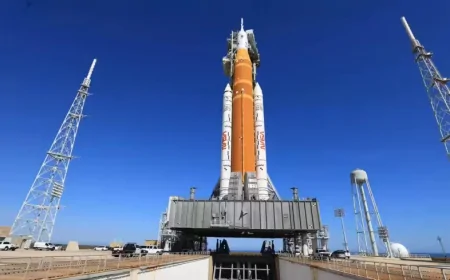
With NASA's Artemis II mission targeting a lunar flyby in coming weeks pending technical resolution of a helium flow issue that has complicated preparations at the Kennedy Space Center launch pad, the timing of this scientific revelation carries an unusual resonance: humans may be preparing to return to the Moon even as the rocks brought back by those who first visited it continue to surprise us.
What's Your Reaction?
 Like
0
Like
0
 Dislike
0
Dislike
0
 Love
0
Love
0
 Funny
0
Funny
0
 Wow
0
Wow
0
 Sad
0
Sad
0
 Angry
0
Angry
0













Comments (0)