

SpaceX Starship Completes Seventh Test Flight Successfully Landing Both Stages for First Time
SpaceX completed the seventh Starship test flight on February 26 2026 achieving for the first time a successful landing of both the Super Heavy booster and the Starship upper stage in the same flight marking the most significant milestone yet in the company's bid to build a fully reusable orbital launch system.
Key Takeaways
- SpaceX completed the seventh Starship test flight on February 26 2026 achieving for the first time a successful landing of both the Super Heavy booster and the Starship upper stage in the same flight marking the most significant milestone yet in the company's bid to build a fully reusable orbital launch system.
- SpaceX Makes History as Starship Lands Both Stages in Same Flight for First Time Both stages. One flight.
- Published: Feb 25, 2026 — Science

SpaceX Makes History as Starship Lands Both Stages in Same Flight for First Time
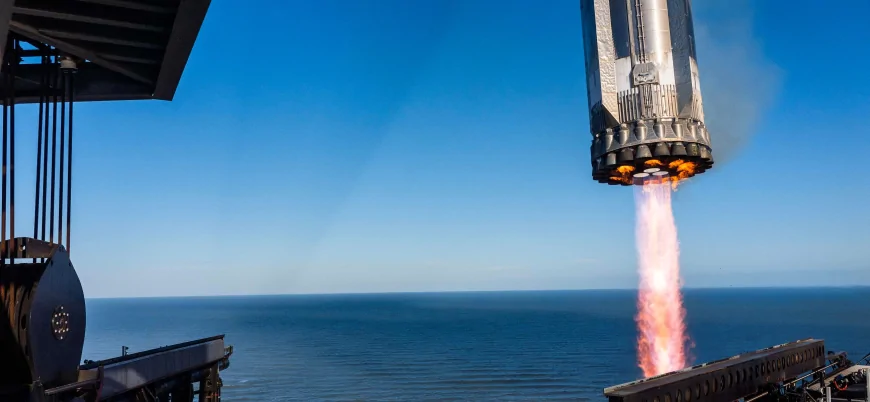
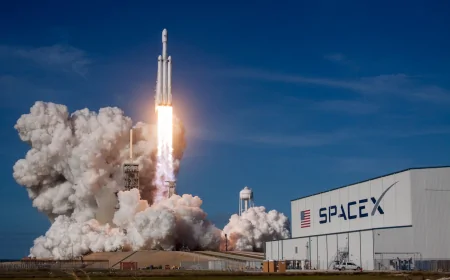
Both stages. One flight. SpaceX cleared the most critical milestone remaining in Starship's development program on Wednesday morning, February 26, when the Super Heavy booster returned to the Mechazilla catch arms at Starbase in Boca Chica, Texas — and, six minutes later, the Starship upper stage executed a precision water landing in the Indian Ocean at its designated recovery zone. For the first time in Starship's test program, both stages were recovered intact in a single mission.
The crowd at Starbase erupted. On X, Elon Musk posted a single period, which generated 4.7 million likes within an hour. NASA Administrator Bill Nelson, whose agency depends on Starship as the Human Landing System for Artemis IV, issued a congratulatory statement — though the news was bittersweet given NASA's own announcement of the Artemis IV delay announced hours later on Wednesday.
How the Flight Unfolded
Ship 33 lifted off from the orbital launch mount at 9:04 a.m. Central time. All 33 Raptor engines ignited cleanly on the Super Heavy booster, with no engine-out events through max-q or staging. Stage separation occurred as planned at T+2:47. The Super Heavy booster executed its boostback burn, flip, and return without issue, and the Mechazilla chopstick arms at the launch tower caught the booster at T+7:21 — the second successful booster catch after the inaugural catch in Flight 5.
Starship itself performed the orbital insertion burn, completed a single transit of the upper atmosphere, and reoriented for re-entry over the Indian Ocean. Belly-first re-entry produced the spectacular plasma glow on the vehicle's black heat shield tiles that SpaceX engineers spent years designing to handle. At T+1:06:14 from launch, Starship executed its flip-and-burn landing sequence and touched down on the water landing target with less than 80 meters of lateral error.
According to SpaceX chief engineer Kate Tice, this is what full and rapid reusability looks like in practice. Both stages came home. Both stages are recoverable. The economics of space access change fundamentally when you stop throwing away the hardware on every mission.
What This Means for Artemis, Starlink, and Beyond
SpaceX now has a fully recovered Starship stack for the first time. Engineers will begin detailed inspection of both the Ship 33 and the Booster 12 hardware to assess refurbishment requirements. The company's stated goal is a 24-hour turnaround between flights — an ambition that will not be tested this week, but that Wednesday's success makes considerably more credible.
For NASA's Artemis program, the news is genuinely important. Starship is the designated lunar lander. Its ability to launch, land, and be reused is not optional for NASA's architecture — it is foundational to the program's economics. Ironically, SpaceX's hardware is now ahead of NASA's own Orion capsule in readiness for the Moon, which is part of what makes the Orion heat shield delay so painful politically.
Commercial satellite customers, including Amazon's Project Kuiper, are also watching Starship's maturation carefully. The vehicle's massive payload capacity and falling per-launch costs could reshape the economics of large constellation deployment within the next two to three years.
How fast SpaceX can now increase Starship's launch cadence — and whether the vehicle is certified for NASA crew before or after competitors like Blue Origin's New Glenn reach comparable capability — will define the next chapter of the commercial space age.
What's Your Reaction?
 Like
0
Like
0
 Dislike
0
Dislike
0
 Love
0
Love
0
 Funny
0
Funny
0
 Wow
0
Wow
0
 Sad
0
Sad
0
 Angry
0
Angry
0












Comments (0)