

Artemis II Moon Mission Faces New Helium Flow Problem That Could Delay April Launch
NASA's Artemis II mission to send four astronauts around the Moon faces a potential rollback to the Vehicle Assembly Building after an interrupted helium flow problem emerged at the launch pad.
Key Takeaways
- NASA's Artemis II mission to send four astronauts around the Moon faces a potential rollback to the Vehicle Assembly Building after an interrupted helium flow problem emerged at the launch pad.
- Artemis II Faces Technical Setback as Helium Problem Threatens March Launch WindowNASA's Artemis II mission — the first crewed lunar voyage since Apollo 17 in 1972 — faced a new...
- Published: Mar 03, 2026 — Science

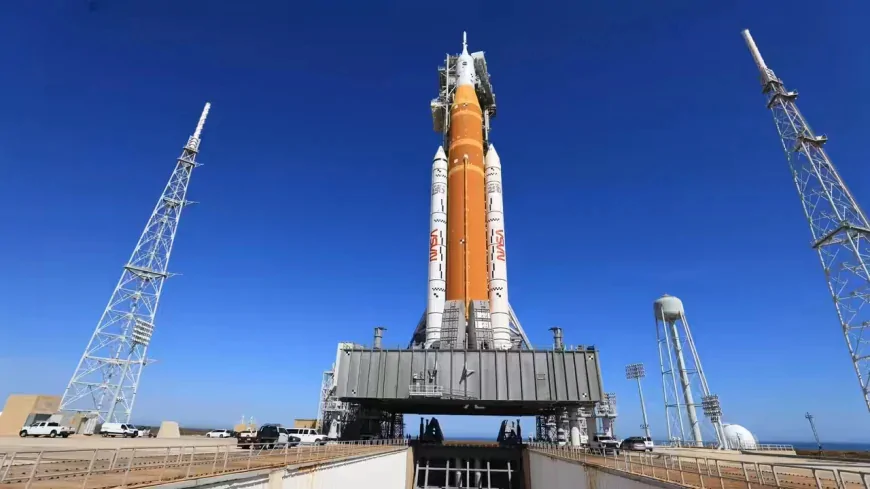
Artemis II Faces Technical Setback as Helium Problem Threatens March Launch Window
NASA's Artemis II mission — the first crewed lunar voyage since Apollo 17 in 1972 — faced a new technical complication Tuesday after the space agency disclosed an "interrupted flow" of helium to the rocket's propellant pressurisation system at the Kennedy Space Center launch pad in Florida. The problem, which emerged after NASA had already been eyeing a potential March 6 launch date, could require the Space Launch System rocket to be rolled back to the Vehicle Assembly Building for additional testing and repairs. If that rollback occurs, NASA confirmed, the mission's launch would be pushed to April at the earliest.
Artemis II is designed to carry four astronauts — Commander Reid Wiseman, Pilot Victor Glover, Mission Specialist Christina Koch and Canadian Space Agency astronaut Jeremy Hansen — on a ten-day journey that will loop them around the Moon and return them to Earth. The mission will travel more than 600,000 miles total and carry humans further from Earth than any human mission since the final Apollo landing. No landing is planned; the flight is primarily designed to test the Orion spacecraft and its life support systems in the deep space environment before Artemis III attempts an actual lunar landing.
Helium is used in the Space Launch System to pressurize propellant tanks and maintain proper flow dynamics in the rocket's propulsion system at cryogenic temperatures. An interrupted flow disrupts the engineering confidence required before committing to countdown, and NASA's conservative approach to crewed mission safety means the agency will not proceed until the problem is fully understood and resolved.
Mission Significance Cannot Be Overstated
The broader significance of Artemis II extends well beyond the technical details of its preparation. The mission represents the culmination of more than a decade of development and billions of dollars of investment in the Space Launch System rocket, the Orion spacecraft and the ground support infrastructure at Kennedy Space Center. A successful mission would validate the entire Artemis programme architecture and set the stage for the first Moon landing attempt under Artemis III, currently targeting 2027.
Canada's participation through Jeremy Hansen — the first Canadian astronaut to fly to the Moon — carries political and diplomatic weight for the broader international partnership that NASA has assembled around the Artemis programme. Fourteen countries have signed the Artemis Accords, the framework governing peaceful space exploration and lunar resource utilisation. A high-profile technical failure at this stage would not collapse those partnerships but would extend the timeline at which the broader programme begins delivering its most consequential milestones.
NASA's lunar science programme received additional context Tuesday from a new study reanalysing Apollo rock samples that revised key aspects of the Moon's geological formation history. The confluence of fresh scientific findings from 50-year-old samples and a new crewed mission preparing to fly creates an unusual narrative convergence — the Moon is simultaneously more scientifically understood and more immediately approachable by human explorers than at any point since the Apollo era.
A Challenging Moment for U.S. Space Policy
The Artemis technical delay arrives at a moment when U.S. space policy is navigating competing pressures. The Trump administration has expressed strong interest in space exploration and the Pentagon recently airlifted a small nuclear reactor from California to Utah in a demonstration of deployable nuclear power technology relevant to long-duration space missions. But federal budget pressures and the administration's broader spending review posture have created uncertainty about the long-term funding stability of major NASA programmes.
SpaceX's operational Starship programme — which would carry Artemis astronauts from lunar orbit to the surface under the Human Landing System contract — is meanwhile conducting its own aggressive flight test programme, with a new orbital test scheduled for the coming months.
According to Dr. Pam Melroy, NASA Deputy Administrator, "Every day we spend at the pad working through a technical issue is a day we're learning more about this vehicle — and that knowledge makes the mission safer when we do fly."
Whether the helium problem resolves itself quickly enough to preserve any March launch opportunity, or whether Artemis II joins the long history of important missions that slipped from their original windows, will become clear within days of the engineers completing their assessment at the Kennedy Space Center.
What's Your Reaction?
 Like
0
Like
0
 Dislike
0
Dislike
0
 Love
0
Love
0
 Funny
0
Funny
0
 Wow
0
Wow
0
 Sad
0
Sad
0
 Angry
0
Angry
0













Comments (0)