


























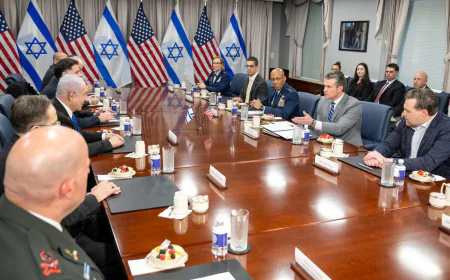








Israel Launches Ground Incursion Into Lebanon as Hezbollah Declares Open War
Israeli ground forces entered southern Lebanon on Tuesday as Hezbollah declared open war, killing at least 40 people and displacing 30,000 within 24 hours.
Israeli Troops Cross Into Lebanon as a Second Front Ignites
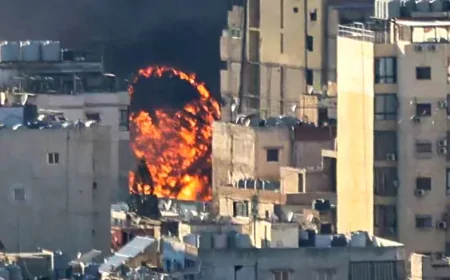
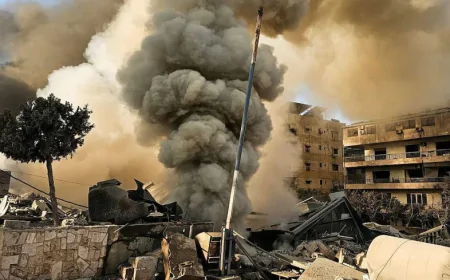
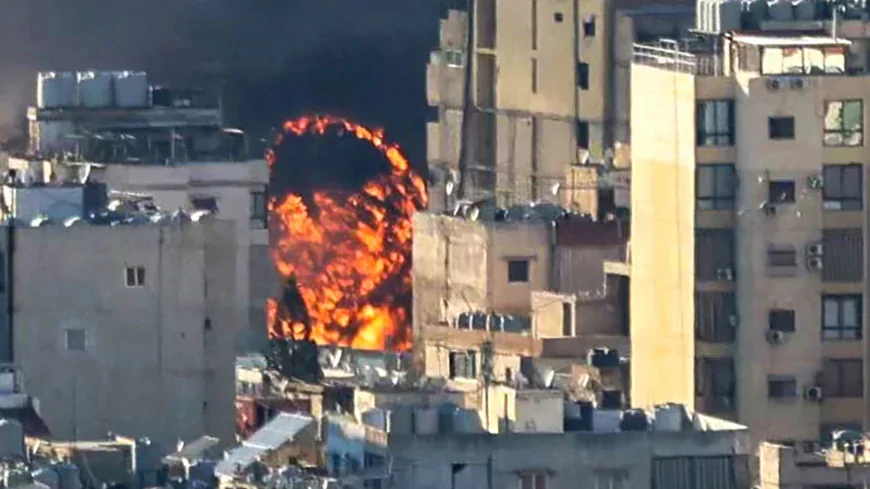
Israeli ground forces entered southern Lebanon on Tuesday in what the Israeli military called a "forward defence" operation, igniting a second major front in the regional war sparked by the U.S.-Israeli attacks on Iran that began February 28. Plumes of smoke rose over Beirut's southern Dahiyeh suburb from concentrated Israeli air strikes, and the Lebanese army confirmed it had withdrawn its troops from at least seven advanced border positions to protect them from the expanding bombardment. Lebanese military officials told Al Jazeera the pullback was carried out "to ensure their safety amid an escalation in Israeli attacks."
Hezbollah issued a statement of historic significance, declaring "the era of patience has ended" and that Israel had wanted "open war — so let it be an open war." The militant group had already fired six projectiles at a military base in northern Israel Monday in retaliation for the killing of Supreme Leader Khamenei. Israel's retaliatory wave of strikes killed at least 40 people and wounded at least 246, according to Lebanon's Ministry of Health, which described hospital infrastructure as severely stretched.
The United Nations High Commissioner for Refugees confirmed that at least 30,000 displaced people had sought shelter in emergency facilities across Lebanon within 24 hours of the new escalation. UNHCR spokesperson Babar Baloch described the displacement as "sudden and acute," and warned that shelter capacity was being tested.
Israeli Military Issues Mass Evacuation Warnings
The Israeli military issued evacuation orders on Tuesday for dozens of locations across Lebanon, including specific warnings for residents of two southern Beirut neighbourhoods ahead of what the military described as an imminent operation. Residents in the targeted areas had hours to leave, with many taking only what they could carry before fleeing north toward Beirut's city centre and the Bekaa Valley. Reports from the ground described packed highways and scenes of panic in neighbourhoods adjacent to designated strike zones.
Israel's air force has been conducting strikes in Lebanon since Monday, with the latest wave targeting what Israeli commanders described as Hezbollah weapons storage facilities, command centres, and infrastructure links used for resupply from Iran. The strikes follow a pattern consistent with operations during previous escalation cycles, though military analysts said the ground incursion marked a qualitative escalation beyond anything seen in the current conflict period.
Iranian-backed militias across the region interpreted the Lebanon escalation as an opportunity to stretch U.S. and Israeli military resources further. Multiple drone and missile salvos from Iraq-based factions targeted Israeli-adjacent positions, and Yemen's Houthi movement issued a statement promising renewed strikes on Red Sea shipping in solidarity with Iran and Hezbollah.
Diplomatic Channels Effectively Silent
International efforts to broker a ceasefire or humanitarian pause remained essentially inactive on Tuesday. Qatar and the UAE were reported by Bloomberg to be in dialogue with Washington seeking a reduction in the scale of the Iran operation, but no formal talks were underway. European Union foreign ministers scheduled an emergency session for Wednesday to coordinate a response, though analysts said the EU had limited leverage over either Washington or Tel Aviv.
According to Lina Khatib, Director of the Middle East and North Africa Programme at Chatham House, "What Lebanon is experiencing right now is the secondary implosion of a regional war — the country is being pulled back into a conflict it had no agency in starting."
The Lebanese government formally requested an emergency UN Security Council session Tuesday. Whether the council can agree on any resolution — given U.S. veto power — and whether any resolution would have binding effect on Israeli military operations are questions Lebanon's fragile political leadership has no immediate answer to.