

Samsung Targets 800 Million Gemini AI Devices in 2026 Galaxy Push
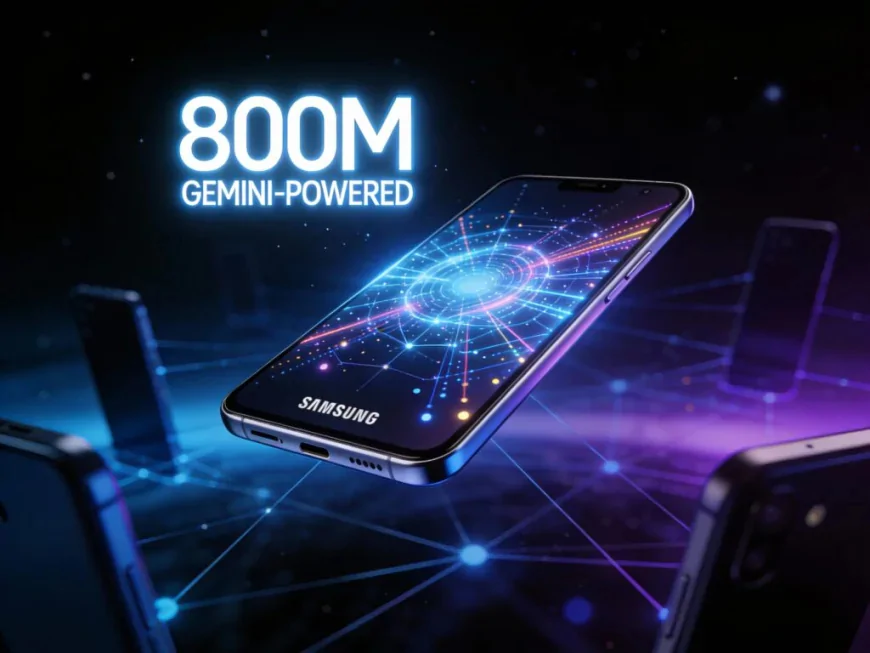
Samsung Electronics plans to double its Google Gemini-powered device fleet to 800 million units in 2026, deepening its alliance with Google and accelerating pressure on Apple in the global AI race.
Key Takeaways
- Samsung Electronics plans to double its Google Gemini-powered device fleet to 800 million units in 2026, deepening its alliance with Google and accelerating pressure on Apple in the global AI race.
- Samsung Doubles Down on Gemini in Bid to Put AI in 800 Million HandsEight hundred million devices. That is Samsung's target for Google Gemini AI integration by the end of 2026.
- Published: Mar 02, 2026 — Technology

Samsung Doubles Down on Gemini in Bid to Put AI in 800 Million Hands
Eight hundred million devices. That is Samsung's target for Google Gemini AI integration by the end of 2026. It is a doubling of the 400 million Gemini-powered mobile products the South Korean company deployed last year — and one of the most ambitious AI distribution plays in consumer technology history.
Samsung co-CEO TM Roh confirmed the target in his first media interview since taking the role in November. "We will apply AI to all products, all functions, and all services as quickly as possible," Roh told Reuters. The plan spans smartphones, tablets, televisions, and home appliances — what Samsung is calling its "Connect Future" vision.
Galaxy AI awareness among consumers has already jumped from 30% to 80% within a single year, according to Samsung's own surveys. The company wants that number to mean something in every market segment — not just premium flagships.
The Google Alliance and Its Strategic Implications
The Samsung push is Google's most powerful distribution channel for Gemini outside of its own apps and services. Pre-installed, default AI embedded in the world's largest Android device fleet bypasses the need for users to discover or download anything. It is ambient intelligence built into the button press.
Apple confirmed a multiyear deal reportedly worth $1 billion annually to use Google Gemini models for a revamped Siri — but that rollout has faced delays, with some features pushed to May or September. Samsung's Galaxy S26, available for pre-order with general availability March 11, means Gemini's most advanced agentic capabilities will reach consumers first through Samsung handsets.
The Galaxy S26 marks a meaningful technical step beyond its predecessor. Gemini can now take autonomous action inside third-party apps — not just Samsung's native software. The AI agent can handle multi-step tasks in the background across the full app ecosystem.
Memory Chip Shortage Casts Shadow on Expansion
Roh acknowledged that no company is immune to the global memory chip shortage, which is pressuring profit margins on the smartphone business. He did not rule out price increases, calling some impact "inevitable" from rising chip costs. Samsung shares closed up 7.5% on Monday, ahead of a fourth-quarter earnings report flagging a profit jump driven by chip demand.
Chinese rivals are simultaneously pushing Gemini-competing AI features into their own devices. The mid-range battleground — where AI features have traditionally been stripped out in favor of lower prices — is where Samsung sees the 800 million target as winnable. Its Galaxy A-series devices will carry Gemini AI for the first time in 2026.
According to TM Roh, "Even though the AI technology might seem a bit doubtful right now, within six months to a year, these technologies will become more widespread."
What 800 Million Devices Actually Means
The 800 million figure is not primarily a product story. It is a distribution story. Pre-installed, default AI that activates when a user opens a camera, writes a message, or makes a request is fundamentally different from an AI app someone chooses to download. Samsung has become the single most important consumer distribution channel for Google's AI model in the physical world.
Apple commands roughly 25% of the global active smartphone installed base. Samsung holds approximately 18%. iPhone users spend significantly more on apps and services. The Apple-Gemini deal is worth more per user. But Samsung is where Google gets to prove its AI works at scale — right now, in the hands of hundreds of millions of real people across dozens of countries.
How the 800 million device target plays out over the next nine months will tell us more about the future of mobile AI than any benchmark or product launch — and whether Samsung can use Gemini to reclaim the smartphone crown it lost to Apple two years ago.
What's Your Reaction?
 Like
0
Like
0
 Dislike
0
Dislike
0
 Love
0
Love
0
 Funny
0
Funny
0
 Wow
0
Wow
0
 Sad
0
Sad
0
 Angry
0
Angry
0














Comments (0)