

Apple Launches Redesigned AI-Powered Siri With iOS 26.4 This Month
Apple is rolling out a completely redesigned AI-powered version of Siri this month with iOS 26.4, featuring on-screen awareness and deep app integration powered by Google's Gemini model.
Key Takeaways
- Apple is rolling out a completely redesigned AI-powered version of Siri this month with iOS 26.4, featuring on-screen awareness and deep app integration powered by Google's Gemini model.
- Apple's Rebuilt AI Siri Arrives With iOS 26.4, Powered by Google GeminiApple is remaking its most iconic feature. The company has officially launched a completely redesigned, AI...
- Published: Mar 02, 2026 — Technology

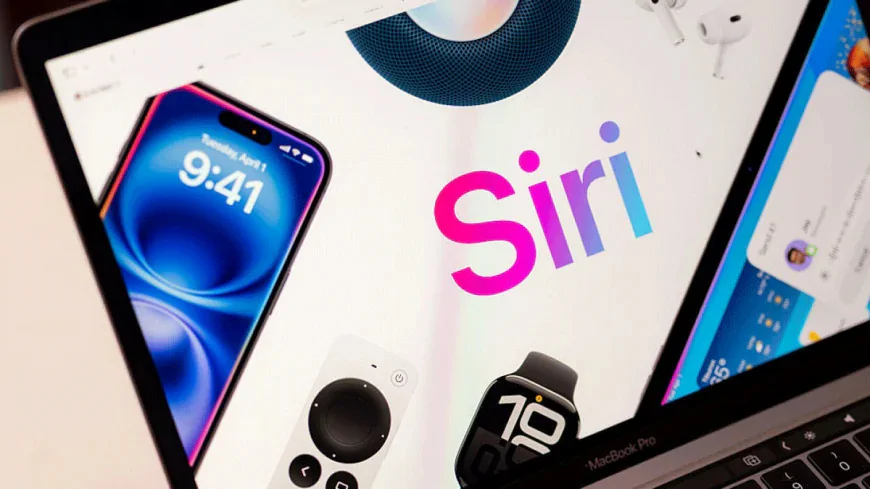
Apple's Rebuilt AI Siri Arrives With iOS 26.4, Powered by Google Gemini
Apple is remaking its most iconic feature. The company has officially launched a completely redesigned, AI-powered version of Siri with the release of iOS 26.4, marking the most significant overhaul of the voice assistant since its debut in 2011. The new Siri understands what is happening on screen in real time, integrates across apps seamlessly, and speaks with a substantially more natural conversational voice.
The new Siri runs on Google's 1.2 trillion-parameter Gemini AI model — a partnership that surprised industry observers given Apple's longstanding commitment to building its own proprietary AI systems. Apple has integrated Gemini into its Private Cloud Compute infrastructure, a privacy-preserving architecture that routes sensitive queries to Apple-controlled servers rather than Google's cloud, ensuring user data does not leave Apple's ecosystem.
The update began rolling out to compatible devices on iOS 26.4 on Sunday, March 1, 2026. Supported devices include iPhone 15 and newer models, iPad Pro with M2 chip or later, and Mac computers running macOS Sequoia 15.4 or later. Older devices will receive a limited version of the updated interface without the advanced reasoning and on-screen awareness capabilities.
On-Screen Awareness Changes How Siri Operates
The headline capability of the new Siri is what Apple calls "on-screen awareness." Previous versions of Siri operated largely in isolation from what was displayed on the device screen. The rebuilt assistant actively reads and understands on-screen content in real time, enabling genuinely contextual interactions that previous versions could not support.
A user reading a long email can ask Siri to summarize it, reply to a specific point, or check whether a referenced document exists in their files — all without copying text, switching apps, or spelling out context. A user watching a video can ask Siri about the person speaking, request a transcript segment, or add an event from the video to their calendar, all in a single conversational exchange.
According to Ben Wood, Chief Analyst at CCS Insight, "Apple is arriving at a moment when consumer patience with AI assistants that don't actually understand context is running out. If on-screen awareness works as demonstrated, this is Apple closing a capability gap with Google Assistant and Amazon Alexa that has been embarrassing the company in analyst briefings for three years."
Privacy Architecture Designed to Neutralize Google Partnership Concerns
The decision to partner with Google for Siri's core AI capabilities inevitably raised privacy concerns among Apple customers and advocates, given Google's advertising-driven business model and its history of extensive data collection. Apple moved preemptively to address those concerns with a detailed technical briefing published on its security research blog, explaining exactly how Private Cloud Compute routes, processes, and deletes sensitive queries.
Apple CEO Tim Cook emphasized in a pre-launch statement that no Siri conversation data is accessible to Google engineers or used to train Google's models. The data processing occurs on Apple-controlled servers, and the on-device processing component handles the most personal queries entirely on the user's device without any cloud contact.
Whether consumers accept Apple's privacy architecture assurances — or whether regulators in the European Union, where stricter AI oversight rules apply, raise objections to the Google partnership — will determine how smoothly the new Siri rolls out globally and whether it can finally close the perception gap between Apple's AI capabilities and those of its key competitors.
What's Your Reaction?
 Like
0
Like
0
 Dislike
0
Dislike
0
 Love
0
Love
0
 Funny
0
Funny
0
 Wow
0
Wow
0
 Sad
0
Sad
0
 Angry
0
Angry
0











Comments (0)