














































Alysa Liu Reflects on Olympic Gold After Becoming First US Figure Skater Since 2002
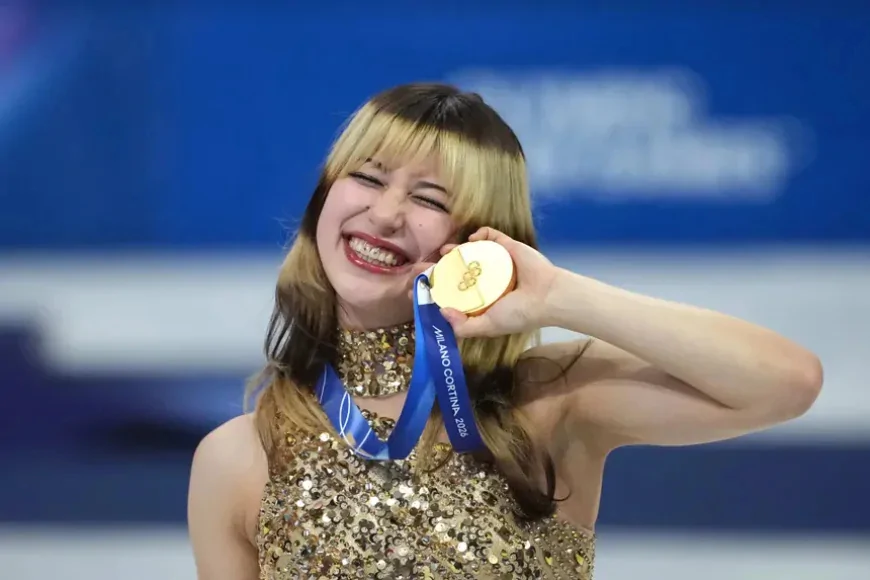
At 20 years old, Alysa Liu has opened up about life after winning Olympic figure skating gold at Milan Cortina 2026, becoming the first American woman to claim the title since 2002.
Alysa Liu at 20: Life After Making Figure Skating History at Milan Cortina
She is 20 years old. She is the 2026 Olympic women's figure skating champion. And for the first time since Sarah Hughes stood on the top step of the podium in Salt Lake City in 2002, an American woman holds figure skating's most coveted prize.
Alysa Liu is talking about what comes after. After the skates. After the medals. After the moment at the Arena di Verona during the Milan Cortina Winter Games closing ceremony that her sport had waited 24 years to see repeated by an American woman.
The competitive path to gold is only part of the story. Liu turned professional at 15. She has been in elite athletic environments since childhood. The discipline, the sacrifice, the relentless repetition of programs designed for peak performance under the most pressurized conditions — these are not abstract concepts to her. They are Tuesday. They are Thursday. They are every morning before school, and years before that, before anyone else in the house was awake.
The Programs and the Performance
Liu's short program and free skate at Milan Cortina were considered by judges and commentators as among the most technically complete performances by an American woman at the Olympic level in the post-Sasha Cohen era. Her jump consistency — quad Lutz, triple Axel combination, landing percentage across competitions — had reached a level of reliability that coaches and sports scientists identify as the characteristic separating champions from contenders.
The margin of victory was narrow. Russian-born skaters competing under neutral flags pushed Liu to deliver both programs without error. She did. The scores reflected it. When her free skate totals were announced and it became clear she had won, the reaction from US figure skating's fan base — muted for years by a string of near-misses and fourth-place finishes at previous Games — was immediate and loud.
The Question Everyone Is Asking
Will she continue competing? Will she turn fully professional and pursue an ice show career? Will she attempt to defend the title at the French Alps 2030 Games? Liu has not committed publicly to a specific path, and at 20, she does not have to.
What she said this week is that she wants time. Real time, not a scheduled recovery week before training resumes. Time to feel like a person whose entire life is not organized around a four-minute performance. Time to visit friends, eat meals without caloric calculations, sleep without an alarm set for pre-dawn ice time.
According to Cindy Stuart, former US Figure Skating national coach, "What Alysa did at Milan Cortina was not luck. It was the product of a decade of commitment that very few athletes at any age are capable of sustaining. What she does next will be entirely her choice, and the right answer is whatever keeps her love of skating alive."
What Her Win Means for the Sport
American figure skating had gone 24 years without an Olympic women's gold medal. In that span, Russian skaters — and skaters trained in Russian-influenced programs — dominated the discipline at every World Championship and Games cycle. The emergence of quad jumps as a scoring prerequisite reshaped the competitive landscape in ways that American training programs were slow to adapt to.
Liu's win, built on quad literacy and artistic maturity developed well before her 20th birthday, represents a structural shift rather than a one-time result. The US Figure Skating pipeline includes multiple younger skaters training similar technical packages. The era of American irrelevance in women's singles skating appears to be ending.
Whether Liu competes at the next World Championships in March, takes a season away, or announces a professional transition, her place in the sport's history is written. The question for the next four years is whether she chooses to write more of it — or passes the torch she has just picked up to whoever comes next.