




















Putin Threatens EU Gas Cutoff, Exploiting Iran War Energy Disruption
Vladimir Putin threatened to cut Russian gas supplies to Europe on Wednesday, exploiting the Iran war's disruption to global energy markets to pressure the EU.
Putin Turns Iran War Into an Energy Ultimatum Against the European Union
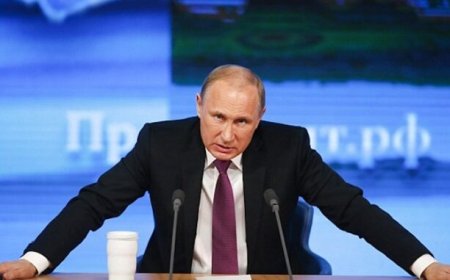
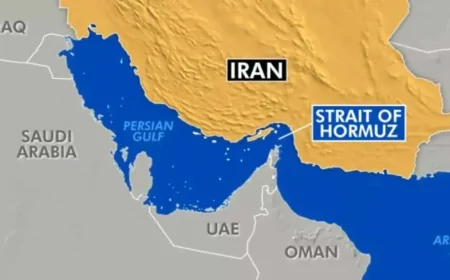
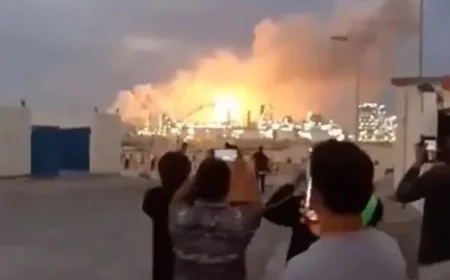
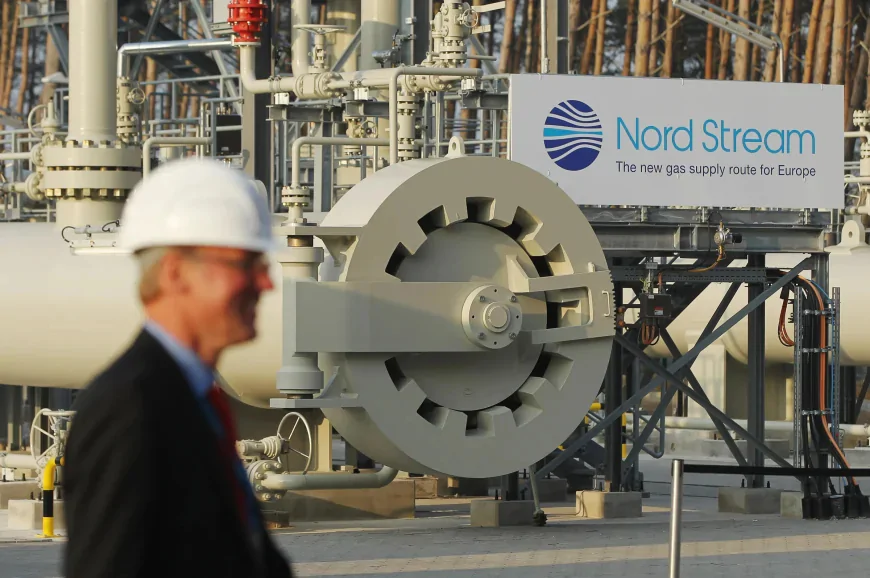
Vladimir Putin moved Wednesday to exploit the energy disruption generated by the US-Iran war, threatening to cut Russian natural gas supplies to Europe unless the European Union reversed its ban on Russian liquefied natural gas and pipeline gas. The threat, reported by the Kyiv Independent citing Russian state media, arrived on the same day that drone strikes shut down Saudi Arabia's Ras Tanura oil terminal — a confluence of energy shocks that has driven European gas futures to their highest levels since the winter of 2022.
The political logic of Putin's move is transparent. Global energy markets are already under acute stress from the Iran conflict. European governments, facing pressure from domestic consumers and energy-dependent industries, are politically vulnerable to supply arguments in a way they were not when Russian gas was a matter of principle rather than price. Putin is betting that the combination of fear and economic pain will fracture the EU consensus that has sustained the gas ban since Brussels first imposed it as part of the sanctions regime following the 2022 invasion of Ukraine.
EU member states that once depended heavily on Russian gas — Germany, Hungary, Austria, and Slovakia — have all completed the formal transition away from Russian supply through infrastructure diversification, US LNG imports, and demand reduction. But that transition was expensive, painful, and politically divisive, and the memory of cheap Russian energy has not faded among European governments facing re-election.
The Sanctions Architecture Putin Is Targeting
The European Union's ban on Russian LNG imports, phased in through successive sanctions packages beginning in 2022, represents one of the most economically consequential foreign policy decisions in modern EU history. Russian gas once supplied roughly 40 percent of European consumption; that figure has now fallen to single digits through a combination of sanctions, infrastructure investment, and long-term supply contracts with Norway, the United States, Qatar, and North Africa.
Putin's threat to cut off even that residual supply is calibrated rather than total. Russia continues to supply gas to Hungary and Serbia through the TurkStream pipeline, arrangements that Budapest and Belgrade have loudly defended as legitimate commercial relationships. Slovak Prime Minister Robert Fico, whose government has been the most explicitly pro-Russian within the EU, has been particularly vocal in pushing for sanctions relief. Fico's claims on Wednesday about satellite imagery of the Druzhba pipeline appear designed to support exactly the kind of sanctions reversal argument that serves Moscow's strategic interest.
According to Dr. Simone Tagliapietra, Senior Fellow at the Bruegel economic think tank in Brussels, "Putin has tried this pressure before and it failed because European solidarity held. What's different now is the simultaneity: the Middle East energy shock, rising consumer prices, and political fatigue with Ukraine support have all converged at the same moment. That's not an accident."
European Response and the Risk of a Fracture
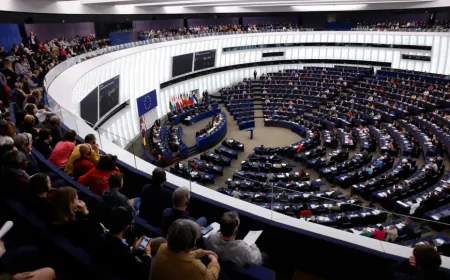
The European Commission issued no immediate response to Putin's gas threat as of Wednesday evening Brussels time. The institution has consistently maintained that the energy transition away from Russian supply is irreversible and that member states' infrastructure investments have made the bloc resistant to exactly this type of coercion. The gap between that official position and the political anxiety inside several member state capitals is, however, measurable.
Hungary's Prime Minister Viktor Orbán, who has maintained the most explicitly pro-Moscow position of any EU head of government, is expected to use the energy pressure as use as use in upcoming EU Council negotiations over the continuation of financial support to Ukraine. The Czech Republic, Poland, and the Baltic states have indicated they will resist any sanctions relief regardless of energy price pressure.
Whether Putin's ultimatum cracks EU consensus or hardens it depends heavily on how long the Iran conflict continues to drive energy prices. A brief conflict with a rapid diplomatic resolution would relieve the immediate pressure and reinforce European solidarity. A protracted war — one in which oil prices remain elevated for months — creates exactly the conditions under which European political unity is most historically fragile.
The Long Game: Can Europe Actually Resist Putin's Energy Coercion?
The structural argument that European energy infrastructure is now resilient enough to withstand Russian supply cutoffs without catastrophic economic consequences is broadly supported by the evidence of the past three years. European gas storage entered the 2025-2026 winter season at near-capacity levels; LNG import terminals built or expanded since 2022 have provided genuine supply diversity; and European industrial demand has adjusted downward in energy-intensive sectors in ways that have reduced structural dependence on high-volume Russian supply. The crisis of 2022-2023, when Europe faced genuine energy security threats, was weathered — expensively but successfully.
That resilience has limits. The Iran war has driven up global LNG prices and created competition for spot cargoes between European buyers and Asian markets. US LNG export terminals are operating at near-capacity, limiting incremental supply growth. Norwegian pipeline capacity is stretched. The margin of safety in European energy balances that was comfortable in late 2025 is narrower today than it was three months ago — not alarmingly so, but enough to give Putin's threat meaningful political traction in the capitals most exposed to price pressure.
The political test is whether Europe's institutional commitment to Russia sanctions survives the combination of energy price pressure, domestic political friction, and the fatigue of four-plus years of managing an energy transition under wartime conditions. Every European election since 2022 has featured energy cost as a major issue; in the countries with the most exposed political situations — Germany, France, Hungary — the pressure on governments to find relief, by any means, continues to build. Putin is betting on that pressure. He has been wrong before. Whether he is wrong again depends on political choices that no energy infrastructure investment can fully determine.