



































Ethiopia PM Abiy Issues Final Warning to Eritrea Over Border
Ethiopian PM Abiy Ahmed issued an unprecedented public warning to Eritrea, stating that any further attempt to harm Ethiopia would be 'the last,' raising fears of renewed war.
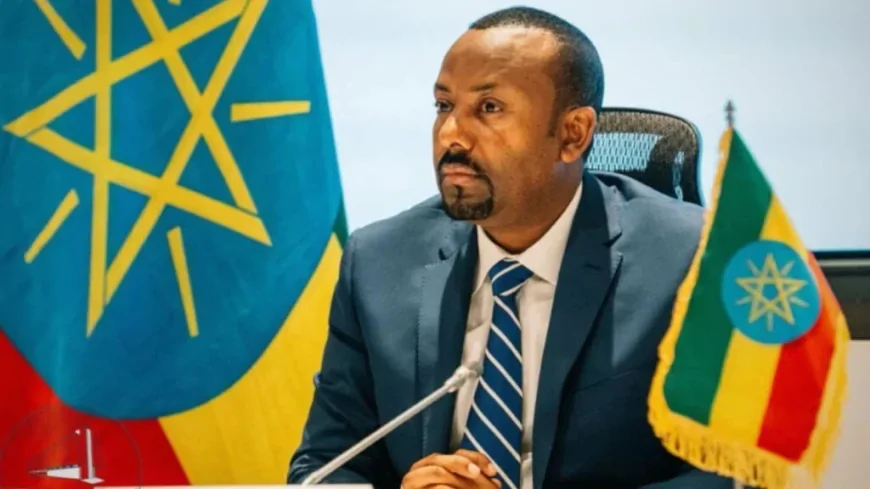
Abiy's 'Final Warning' to Eritrea Raises Specter of Renewed Horn of Africa War
Ethiopian Prime Minister Abiy Ahmed issued what he described as a final warning to Eritrea on Thursday, stating in a nationally broadcast address that any further attempt by Asmara to harm Ethiopia "will be the last." The language was extraordinary by the diplomatic standards of either country — blunt, public, and unambiguous in its implication that Ethiopia would respond militarily to further provocations. It was the strongest statement by an Ethiopian leader toward Eritrea since the end of the Tigray war in 2022, when the Pretoria Peace Agreement formally ended three years of conflict that killed an estimated 600,000 people.
The Ethiopian government did not specify the exact nature of the Eritrean provocations that prompted the warning. State media cited "hostile activities" and "destabilizing interference" along the northern border. Addis Standard, Ethiopia's independent news outlet, reported that the warning follows a series of incidents in which Eritrean-linked forces are alleged to have provided material support to armed groups operating in Ethiopia's Amhara and Afar regions — areas that have experienced renewed unrest since late 2024.
Eritrea's government has not responded publicly to Abiy's statement. The government of President Isaias Afwerki maintains strict control of its public communications and rarely engages with Ethiopian government pronouncements through official channels. Silence from Asmara is, in itself, the standard diplomatic response to Ethiopian political pressure.
The Tigray Peace Agreement and Its Fragile Status
The Pretoria Agreement, signed in November 2022, ended active hostilities between the Ethiopian government and the Tigray People's Liberation Front. Eritrea was not a signatory to the agreement — Asmara's participation in the war as an ally of Addis Ababa was never formally acknowledged by either government, even as evidence of Eritrean forces operating in Tigray was extensive and well-documented by UN investigators and human rights organizations.
That ambiguity has shaped the post-conflict environment. Eritrean forces withdrew from most of Tigray following the agreement but maintained a presence in areas they had occupied since 2020 in what the Ethiopian and Eritrean governments described as "bilateral security arrangements." The TPLF and Tigrayan civil society have repeatedly accused Eritrea of continuing interference in their region. The UN Human Rights Council's International Commission of Human Rights Experts on Ethiopia documented alleged ongoing abuses by Eritrean forces in its 2024 report.
According to William Davison, senior analyst on Ethiopia at the International Crisis Group, "Abiy's public warning is significant because it breaks with the careful studied ambiguity that both governments have maintained about the nature of their relationship since 2022. Something has clearly shifted in Addis Ababa's assessment of Asmara's intentions, and the decision to deliver this message publicly rather than through back channels suggests Abiy is either genuinely alarmed or is seeking to create political pressure domestically and internationally."
The Regional and International Dimension
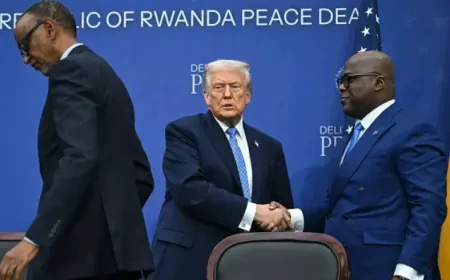
The Ethiopia-Eritrea tension is one of several active fault lines in the Horn of Africa that the broader global preoccupation with the Iran war risks leaving without the international diplomatic attention they require. Sudan's civil war continues to produce one of the world's worst humanitarian crises with no resolution in sight. Kenya faces political pressure from multiple directions. The DRC-Rwanda-M23 conflict has intensified in recent months with significant external backing from Kigali, which the United States sanctioned this week for the first time.
For Abiy, who won the Nobel Peace Prize in 2019 for the rapprochement with Eritrea that he himself initiated, the open confrontation with Asmara represents a painful reversal of his signature diplomatic achievement. The relationship between the two countries has deteriorated steadily since 2021, when Eritrea's unexpected participation in the Tigray war alongside Ethiopia and the documentation of atrocities by Eritrean forces put Abiy's Nobel prize under intense scrutiny. A renewed armed conflict between Ethiopia and Eritrea would be the region's second major war in four years — and would occur while the international community's bandwidth is consumed entirely by the Middle East.
The International Dimension: Great Power Competition in the Horn
The Ethiopia-Eritrea dynamic cannot be fully understood outside the context of great power competition in the Horn of Africa. Russia, through the Wagner Group's successor organization Africa Corps, has been deepening its engagement with several Sahelian states and maintaining relationships with various Horn of Africa governments. China has significant investments in both Ethiopia and Eritrea. The United States, preoccupied with the Middle East and the Indo-Pacific, has reduced its diplomatic footprint in the Horn since withdrawing from Mogadishu's primary embassy function in 2021.
That reduced US presence has created space for other actors. The UAE has emerged as a significant player, with investments and security relationships in Ethiopia, Eritrea, and Somalia. Turkey has maintained its Somalia presence and has developed commercial ties with both Ethiopia and Djibouti. The competition for influence in one of the world's most strategically located regions — straddling the Red Sea, the Gulf of Aden, and the overland routes between sub-Saharan Africa and North Africa — is intensifying precisely as the regional powers' internal conflicts create opportunities for outside actors to expand their footprints.
Abiy's warning to Eritrea is partly a message to his domestic audience and partly a signal to those external actors: Ethiopia will not allow its strategic position to be undermined by a neighbor backed by powers who calculate that Ethiopian distraction serves their regional interests. Whether the warning produces a change in Eritrean behavior, or whether it escalates a confrontation that produces the renewed armed conflict everyone nominally wants to avoid, depends on whether back-channel diplomacy — from the African Union, from the UAE, from the UN Secretary-General's office — can open space for a de-escalation that Abiy's public posture has left very little room for.