

Iranian Drone Hits UK Cyprus RAF Base in War's First NATO Hit
An Iranian drone struck a UK Royal Air Force base in Cyprus, marking the first direct attack on NATO sovereign territory in the Iran war and triggering calls to invoke Article 5.
Key Takeaways
- An Iranian drone struck a UK Royal Air Force base in Cyprus, marking the first direct attack on NATO sovereign territory in the Iran war and triggering calls to invoke Article 5.
- Iran Strikes UK's RAF Akrotiri in Cyprus, Crossing the NATO Threshold An Iranian drone struck the United Kingdom's Royal Air Force base at Akrotiri in Cyprus, according to Briti...
- Published: Mar 05, 2026 — U.K. News

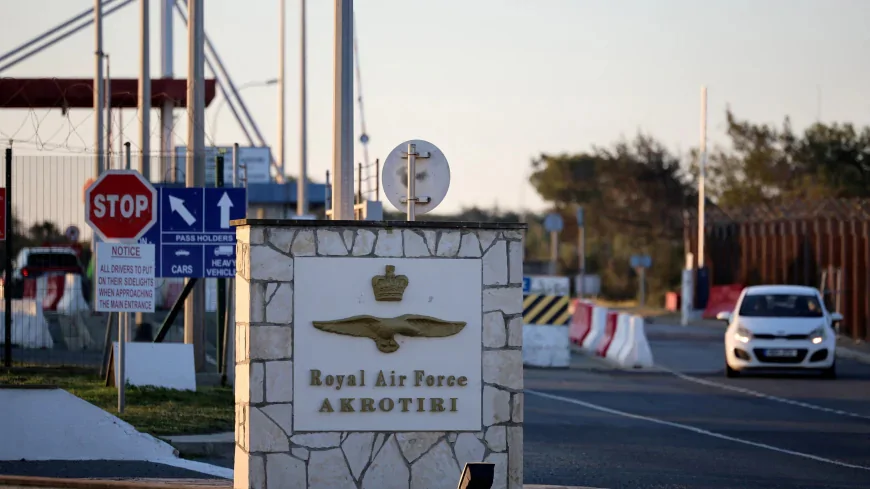
Iran Strikes UK's RAF Akrotiri in Cyprus, Crossing the NATO Threshold
An Iranian drone struck the United Kingdom's Royal Air Force base at Akrotiri in Cyprus, according to British defense officials who confirmed the attack on Thursday, marking the first direct attack on NATO sovereign territory since the US-Israeli war on Iran began February 28. The UK maintains sovereignty over two military base areas in Cyprus under the 1960 Treaty of Establishment — a colonial-era arrangement that makes Akrotiri and Dhekelia legally British territory, and therefore NATO territory, regardless of their location on the island.
The Ministry of Defence confirmed the strike caused material damage but no British fatalities. US and British forces had been using the Cyprus base as part of their operational infrastructure for the Iran campaign. Iranian state media described the strike as a "measured" response to the use of British facilities in support of the "criminal aggression against the Iranian nation."
The attack triggered immediate calls within NATO for an emergency council meeting and renewed debate about whether Article 5 — the alliance's collective defense clause — had been triggered. Article 5 states that an armed attack against one NATO member shall be considered an attack against all. Its invocation is not automatic; it requires a political determination by the North Atlantic Council. Several NATO member governments said Thursday they were consulting their legal teams.
The Article 5 Question: Has NATO Been Drawn Into the War?
The legal and political question of whether the Cyprus strike constitutes an attack on NATO territory is less straightforward than it appears. British sovereignty over the Akrotiri base is a recognized legal fact — Cyprus joined the EU as a sovereign state while British sovereignty over the base areas was preserved. NATO's Article 5 mechanism, however, has never been invoked in response to a strike on an overseas base or territory; its sole previous invocation was after the September 11, 2001 attacks on the continental United States.
NATO Secretary-General Mark Rutte convened an emergency call among foreign ministers on Thursday. The communiqué from that call was carefully worded to avoid any explicit Article 5 determination while condemning the attack in the strongest terms and pledging to "consult on appropriate responses." NATO simultaneously announced it was raising its missile defense posture after Turkey intercepted an Iranian missile traveling toward Turkish airspace — the first time NATO air defenses had engaged an Iranian weapon targeting a member state's territory.
According to Malcolm Chalmers, deputy director-general of the Royal United Services Institute in London, "The Akrotiri strike is a calculated Iranian escalation designed to test whether Britain will be drawn more deeply into the war on terms that generate political pressure at home. Iran knows that invoking Article 5 would be politically explosive inside NATO — it would formalize the alliance's participation in a war that several members have not endorsed and some have explicitly criticized."
British Parliamentary Pressure and the Starmer Government's Dilemma
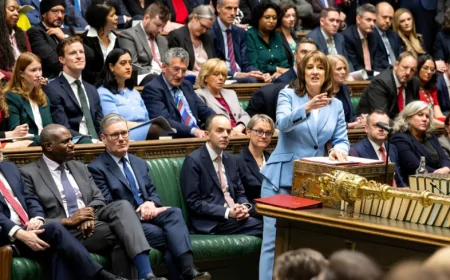
Prime Minister Keir Starmer's government has faced growing parliamentary rebellion over Britain's role in the Iran war. Several hundred protesters gathered outside Downing Street on Thursday following news of the Cyprus strike. The Labour Party's own backbenches include a significant faction that has long opposed military engagement in the Middle East and has been increasingly vocal since the strikes on Iran began.
Starmer has walked a narrow line — expressing support for the operation's stated goal of preventing Iranian nuclear proliferation while stopping short of committing British forces to active combat roles. The Cyprus strike complicates that position substantially. If the attack on sovereign British territory does not trigger a British response, it signals that attacks on UK installations abroad are tolerable. If it does trigger a response, Britain becomes a co-belligerent in a war Parliament has not authorized. The government has six days of debate scheduled for next week. How it justifies its posture — and whether Starmer's coalition holds — will determine Britain's role in what may prove to be the defining geopolitical event of the decade.
The Domestic Political Fallout in Britain
Starmer's government has been managing a Labour Party rebellion over the Iran war that predates Thursday's Cyprus strike. More than 80 Labour MPs had signed a letter before the conflict began calling for the government to oppose any use of British facilities in an attack on Iran without explicit parliamentary authorization. Since the strikes began, that number has grown. The Cyprus strike is now certain to intensify parliamentary pressure for a full debate and a formal vote on Britain's role.
The opposition Conservative Party has taken a broadly supportive position on the Iran operation, meaning that Starmer, if he brings the matter to the House of Commons, would likely win a vote — but only by relying on Conservative support, which would deepen the rupture within Labour and create an unusual parliamentary dynamic in which the government's foreign policy is sustained by the opposition rather than its own MPs. British politics has seen stranger configurations, but they are never comfortable.
International law experts note that the Cyprus strike, whatever the Article 5 determination, creates a specific legal question under the Charter of the United Nations: does Iran's attack on British sovereign territory constitute an act of war that gives the UK the right of individual or collective self-defense under Article 51? If the answer is yes, Britain's legal posture changes substantially — from a country permitting allied use of facilities on its territory to one that has itself been attacked and may legitimately respond. Whether the Starmer government invokes that right, or whether it tries to keep British involvement below the threshold that would require formal parliamentary authorization for combat operations, is the next critical decision facing Downing Street.
What's Your Reaction?
 Like
0
Like
0
 Dislike
0
Dislike
0
 Love
0
Love
0
 Funny
0
Funny
0
 Wow
0
Wow
0
 Sad
0
Sad
0
 Angry
0
Angry
0















Comments (0)