

Israel Moves to 'Next Phase' of Iran War After 2,500 Strikes Delivered
Israel's military chief announced a new operational phase after 2,500 strikes destroyed 80% of Iran's air defenses, as the death toll in Iran topped 1,100 civilians.
Key Takeaways
- Israel's military chief announced a new operational phase after 2,500 strikes destroyed 80% of Iran's air defenses, as the death toll in Iran topped 1,100 civilians.
- IDF Chief Orders 'Next Phase' Against Iran as Civilian Death Toll Passes 1,100 Israel Defense Forces Chief of Staff Lieutenant General Eyal Zamir announced Thursday evening that...
- Published: Mar 05, 2026 — Middle east

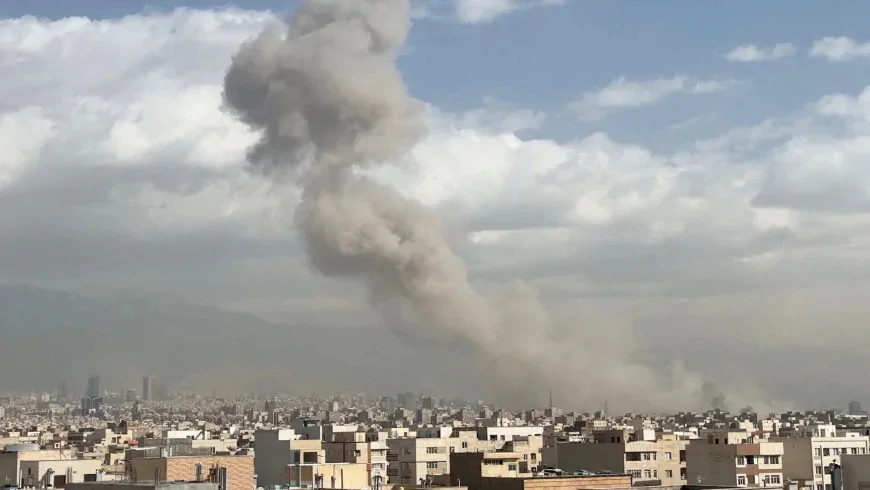
IDF Chief Orders 'Next Phase' Against Iran as Civilian Death Toll Passes 1,100
Israel Defense Forces Chief of Staff Lieutenant General Eyal Zamir announced Thursday evening that his military is transitioning to what he described as the "next phase" of its war against Iran, declaring the surprise-strike phase complete after more than 2,500 strikes deploying over 6,000 weapons since the conflict began on February 28. Zamir said those strikes had destroyed 80 percent of Iran's air defense systems and 60 percent of its ballistic missile launchers — figures the IDF described as necessary to achieve air superiority over Iranian territory.
"We are now moving to the next phase of the operation," Zamir said in a video statement released Thursday night. "In this phase, we will further dismantle the regime and its military capabilities. We have additional surprises ahead which I do not intend to disclose."
The announcement came as the civilian death toll inside Iran climbed past 1,100, according to a US-based human rights organization, with Iran's state-affiliated Islamic Republic News Agency reporting a higher figure of at least 1,230 killed. The World Health Organization on Thursday confirmed it had documented 13 attacks on Iranian health infrastructure since the start of the conflict, including the bombing of a girls' school in southeastern Iran on March 1 that killed 165 people — many of them students — a strike the Pentagon says it is investigating but has not attributed.
The Scope of Destruction and the Question of Civilian Harm
Iran's Ministry of Foreign Affairs has accused the United States and Israel of striking 33 civilian sites across the country, including hospitals, schools, residential neighborhoods in Tehran, the Tehran Grand Bazaar, and the historic Golestan Palace complex. The IDF and the US Central Command have rejected characterizations of widespread civilian targeting while acknowledging specific incidents are under review.
US President Donald Trump, speaking at the White House on Thursday, said the military was "far ahead of schedule" and described the joint operation as proceeding at "levels that people have never seen before." He did not address the civilian casualty figures or the WHO documentation of health facility strikes.
The Kurdish dimension of the conflict escalated sharply Thursday. Kurdish-Iranian armed groups launched what military analysts described as a coordinated ground offensive in northwest Iran, exploiting the degradation of Iranian government forces by the US-Israeli air campaign. US officials, speaking on background, confirmed that Iraq's Kurdish regional government forces had been asked by Washington to assist in potential cross-border operations and were currently on standby.
Regional Escalation and What Comes Next
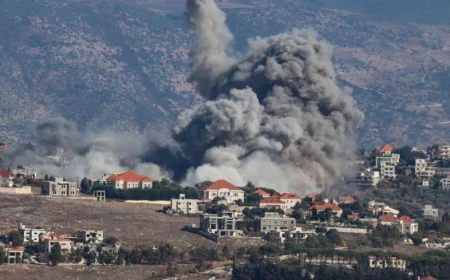
The "next phase" declaration came simultaneously with an IDF order to push deeper into Lebanon. In the past 48 hours, Israel has issued mass evacuation warnings for all areas south of the Litani River, southern Beirut's suburbs, and parts of the Beqaa Valley — a scope of displacement not seen since the 2006 Lebanon war. On Thursday, Israel struck the northern Lebanese city of Tripoli for the first time since the conflict began.
According to Dr. Yezid Sayigh, senior fellow at the Carnegie Middle East Center in Beirut, "The expansion of Israeli operations into Lebanon simultaneously with the acceleration of the Iran campaign reflects a strategic logic: eliminate Hezbollah's capacity to complicate the endgame in Tehran before ground operations, if any, begin. The evacuation orders are either preparation for a major ground push or a psychological operation designed to collapse Hezbollah's rear. Possibly both."
US forces have struck nearly 2,000 Iranian targets since February 28, according to the US Central Command. Iran's retaliatory capacity has diminished dramatically — the volume of Iranian missile launches has dropped 86 percent and drone strikes 73 percent compared to the first day of the war, according to General Dan Caine, the top US military commander for the operation. But diminished is not eliminated. Iran continued to fire missiles toward Israel overnight Thursday, according to the Israeli military, and Iranian attacks on Gulf state infrastructure — including a missile strike on an oil refinery in Bahrain — showed that Tehran retains meaningful offensive capability. What the "next phase" produces in the coming hours will shape not just the battlefield in Iran but the political calculus of every government watching from the sidelines.
The Human Cost and the Question of Military Necessity
Behind the language of "next phase" and operational statistics lies a human reality that the IDF and Pentagon briefings do not address directly. More than 1,100 civilians killed in six days. Thirteen attacks on health infrastructure. A girls' school bombed, 165 dead. Cities without electricity and water as facilities are damaged. An economy already running on 68 percent inflation absorbing the shock of wartime supply disruption. The human cost of the Iran campaign is accumulating faster than any official account acknowledges.
The question of military necessity — whether the scale of civilian harm is proportionate to the stated objectives — is one that international humanitarian law requires be answered in real time, not retrospectively. The Rome Statute of the International Criminal Court, to which neither the United States nor Israel is a party but whose norms are relevant to all states under customary international law, establishes the principle of proportionality as a binding legal requirement in armed conflict. Several European governments have publicly raised this question. None has taken formal legal action.
For Israel's military leadership, the "next phase" announcement carries its own risk calculus. Each new wave of strikes brings the IDF closer to a point where the stated objectives — Iran's military incapacitation, regime change, nuclear program elimination — must be assessed against what has actually been achieved. If Iran's regime survives in some form, if a new supreme leader is selected, if the country's nuclear knowledge (as opposed to its physical infrastructure) remains intact, the question of what six days of unprecedented bombing has actually accomplished will demand answering.
What's Your Reaction?
 Like
0
Like
0
 Dislike
0
Dislike
0
 Love
0
Love
0
 Funny
0
Funny
0
 Wow
0
Wow
0
 Sad
0
Sad
0
 Angry
0
Angry
0











Comments (0)