

ICC Opens Preliminary Examination Into U.S.-Israel Iran Strikes Civilian Casualties
The International Criminal Court's prosecutor opened a preliminary examination into civilian casualties from U.S. and Israeli strikes on Iran, raising jurisdiction questions given that neither country is an ICC member.
Key Takeaways
- The International Criminal Court's prosecutor opened a preliminary examination into civilian casualties from U.S. and Israeli strikes on Iran, raising jurisdiction questions given that neither country is an ICC member.
- ICC Opens Iran Civilian Casualties Probe, Testing the Court's Reach Against Non-MembersThe International Criminal Court's Office of the Prosecutor confirmed Thursday that it had...
- Published: Mar 04, 2026 — Middle east

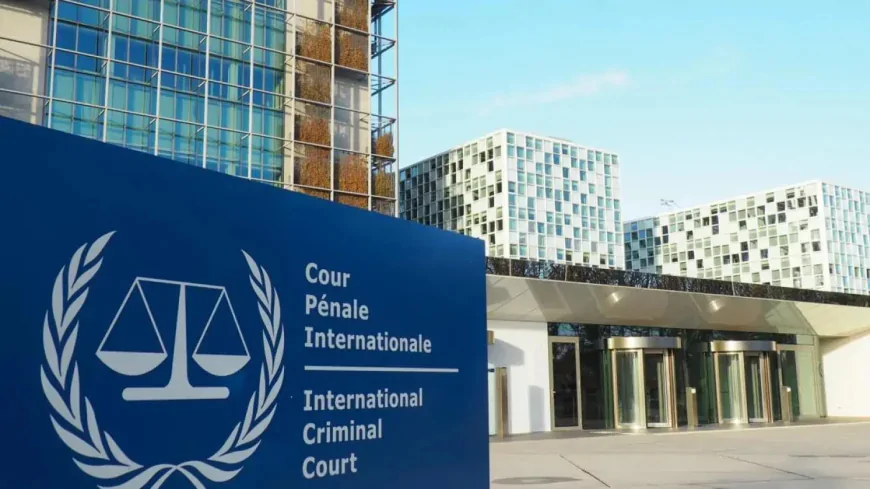
ICC Opens Iran Civilian Casualties Probe, Testing the Court's Reach Against Non-Members
The International Criminal Court's Office of the Prosecutor confirmed Thursday that it had opened a preliminary examination into civilian casualties caused by U.S. and Israeli military strikes on Iran since February 28, 2026. The announcement, published in a statement by the ICC Prosecutor Karim Khan, represents the court's most direct engagement yet with the conduct of two states — the United States and Israel — that are not members of the Rome Statute and therefore do not accept the court's jurisdiction over their nationals' actions.
The preliminary examination is the lowest formal step in the ICC's investigative hierarchy — below a full investigation, it is a review of available information to determine whether the court has jurisdiction and whether there is a reasonable basis to believe crimes within the court's mandate have been committed. Its opening does not constitute an accusation, a finding of wrongdoing, or a decision to prosecute. But its symbolic significance is substantial: the ICC is formally examining the conduct of American and Israeli military forces in the Iran operation for the first time, applying international humanitarian law standards to strikes that U.S. officials have consistently described as lawful and proportionate.
Iran acceded to the Rome Statute in 2016, giving the ICC jurisdiction over crimes committed on Iranian territory regardless of the nationality of the perpetrators. That jurisdictional hook — the territorial principle — is the legal mechanism the prosecutor is relying upon to examine U.S. and Israeli conduct inside Iran. The United States formally withdrew from the ICC process during the Trump administration's first term and sanctioned ICC officials who attempted to investigate U.S. conduct in Afghanistan. Israel's relationship with the court has been defined by the court's existing investigation into the situation in Palestine, under which arrest warrants for Prime Minister Benjamin Netanyahu were issued in 2024.
What the Preliminary Examination Will Examine
The preliminary examination will assess whether U.S. and Israeli strikes have caused civilian casualties disproportionate to anticipated military advantage — the central proportionality test of international humanitarian law — and whether there is evidence of deliberate targeting of civilian objects including hospitals, markets, and residential buildings. The Human Rights Activists News Agency's preliminary death toll of more than 1,000 people, combined with reports of strikes on 24 of Iran's 31 provinces and more than 1,200 munitions dropped in 24 hours, provides the factual foundation for the examination.
The IAEA's statement that Iran was not within days or weeks of a nuclear weapon — directly contradicting the U.S. justification for the strikes — is also relevant to the examination, because an unlawful use of force that causes civilian casualties cannot invoke the self-defence exception to both the jus ad bellum prohibition on the use of force and the jus in bello proportionality requirements of the Geneva Conventions.
Iran's government formally referred the situation to the ICC in a filing submitted Monday, requesting the prosecutor examine the strikes as potential war crimes and crimes against humanity. The referral from an affected state party is not required for the prosecutor to act — the territorial jurisdiction hook is sufficient — but it adds political weight and provides the court with Iran's official documentation of the strikes' effects.
U.S. and Israeli Responses: Rejection and Threats
The U.S. State Department rejected the ICC's preliminary examination in terms that echoed the Trump administration's first-term response to the Afghanistan investigation. A spokesperson described the court as lacking jurisdiction over U.S. nationals, called the examination "politically motivated," and warned that the United States would respond to any further escalation of the process. Secretary of State Rubio told reporters that the administration would consider reimposing the sanctions on ICC officials that the Biden administration had removed.
Israel's Foreign Ministry issued a parallel statement, noting that Israel's Supreme Court provides independent judicial review of military targeting decisions and that Israel's armed forces operate under the laws of armed conflict as interpreted by Israeli legal advisors. The statement did not engage with the IAEA's contradiction of the nuclear threat justification.
According to Professor Claus Kreß, Director of the Institute of International Peace and Security Law at the University of Cologne and a leading scholar of international criminal law, "The territorial jurisdiction principle is well-established in the Rome Statute and was affirmed by the Appeals Chamber in the Afghanistan situation. The United States and Israel may not recognise the court's authority, but the legal basis for the examination is solid — and that creates long-term consequences for how these strikes are treated in international law."
Whether the ICC's preliminary examination escalates to a full investigation — and whether any resulting warrants could ever be enforced against U.S. or Israeli nationals — depends on political developments that extend far beyond the court itself. But the examination's opening ensures that the legal dimension of the Iran war will persist in international fora long after the military phase concludes.
What's Your Reaction?
 Like
0
Like
0
 Dislike
0
Dislike
0
 Love
0
Love
0
 Funny
0
Funny
0
 Wow
0
Wow
0
 Sad
0
Sad
0
 Angry
0
Angry
0










Comments (0)