

Mojtaba Khamenei Emerges as Iran Supreme Leader Front-Runner
Ayatollah Ali Khamenei's son Mojtaba has emerged as the leading candidate to succeed his father as Iran's Supreme Leader after Israeli strikes killed the clerical body.
Key Takeaways
- Ayatollah Ali Khamenei's son Mojtaba has emerged as the leading candidate to succeed his father as Iran's Supreme Leader after Israeli strikes killed the clerical body.
- Khamenei's Son Positioned for Supreme Leadership as Iran's Regime Struggles to Survive Mojtaba Khamenei, the 55-year-old son of Iran's late Supreme Leader Ayatollah Ali Khamenei...
- Published: Mar 05, 2026 — Middle east

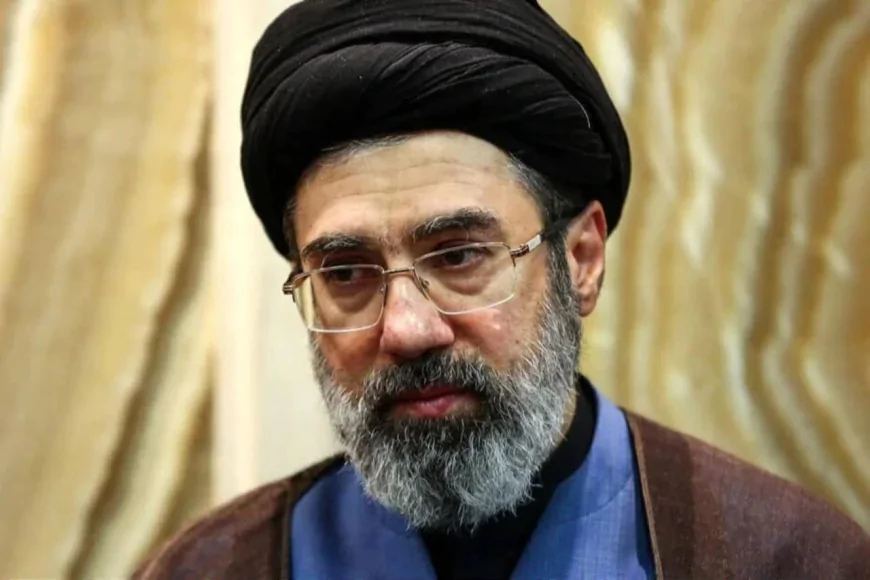
Khamenei's Son Positioned for Supreme Leadership as Iran's Regime Struggles to Survive
Mojtaba Khamenei, the 55-year-old son of Iran's late Supreme Leader Ayatollah Ali Khamenei, has emerged as the leading contender to assume the country's top post, according to multiple senior Western intelligence officials and analysts monitoring the succession process. His positioning reflects years of deliberate influence-building within the Islamic Revolutionary Guard Corps and within the clerical establishment — a dual network that makes him, in the current chaos, the path of least institutional resistance.
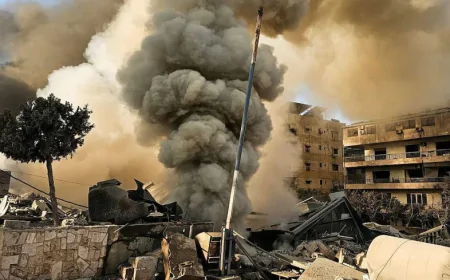
The succession process was thrown into extraordinary disarray by the US-Israeli strikes that began February 28. Khamenei himself was killed in the opening assault. The Assembly of Experts — the constitutional body of senior clerics empowered to select the Supreme Leader — was bombed by Israel while in an emergency session on March 3. Multiple assembly members were killed. Those who survived have been meeting virtually, their locations undisclosed, in an environment of pervasive fear that any gathering will be targeted.
Israel made its position explicit. Prime Minister Benjamin Netanyahu said publicly that any new supreme leader would be "an unequivocal target for elimination." That threat has introduced a morbid logic into the succession calculus: the person who assumes the office may not survive it.
Who Is Mojtaba Khamenei?
Mojtaba Khamenei has operated largely in the shadows of Iranian politics for two decades. He commands no formal government position and holds no title in the Islamic Republic's constitutional structure. His power derives entirely from his relationships — with IRGC commanders, with the Basij paramilitary forces, and with the hardline clerical networks his father cultivated over 35 years in power.
His elevation would not be unprecedented in Iranian history. The Islamic Republic has never had a hereditary transfer of supreme power, and the constitutional framework explicitly does not provide for dynastic succession. Critics of the system — including reformist clerics inside Iran — have argued that his selection would represent the de facto transformation of the theocracy into a dynasty, corroding the ideological foundations of the Islamic Republic.
There is at least one powerful structural obstacle. Traditional Shia Islamic jurisprudence requires the Supreme Leader to hold the status of a Grand Ayatollah — a title requiring decades of scholarly accomplishment. Mojtaba is not a Grand Ayatollah. His elevation would require the Assembly of Experts to use a constitutional provision allowing the selection of a lesser-ranked cleric in cases of necessity — a provision invoked once before, when Ali Khamenei himself was selected in 1989.
The Political Stakes of Who Rules Iran
The selection of the next Supreme Leader will determine the trajectory of the Islamic Republic in conditions unlike any it has previously faced. The state broadcaster has been destroyed. Multiple senior IRGC commanders have been killed. The military's missile and drone arsenal has been significantly degraded. The internet is blocked. The economy, already collapsing under inflation rates exceeding 60 percent, is being hammered by war-driven supply disruptions.
According to Dr. Ali Vaez, Iran Project Director at the International Crisis Group, "The succession process is happening under conditions of genuine regime fragility. Mojtaba's IRGC connections give him the coercive backing that matters most right now — but installing him risks alienating the reformist and technocratic factions that the regime will need for any post-war reconstruction. The choice of successor is simultaneously a choice about what kind of Iran emerges from this war, if the regime survives at all."
The mourning ceremony for Ayatollah Khamenei was cancelled on Wednesday — a reversal of the three days of national mourning that had been announced. The regime characterized it as a security measure. Critics read it differently: as evidence of a government too destabilized to perform the rituals of its own continuity. The next supreme leader, whoever that person turns out to be, will inherit an Islamic Republic that looks nothing like the one Ali Khamenei spent 35 years building.
The Succession's Implications for the Iran-US-Israel Endgame
The succession question is not merely an internal Iranian matter — it has direct implications for the endgame of the current military campaign. Israel's Prime Minister Netanyahu has stated explicitly that any new supreme leader will be targeted for elimination. That threat, if operationalized, would mean that selecting a successor becomes itself a death sentence. No senior cleric can accept the role knowing that Israel regards the position as an assassination target.
That dynamic creates an extraordinary dilemma for the Islamic Republic's governing institutions. The constitution requires a supreme leader. The leadership cannot function without one. But installing one under current conditions may be impossible — either because the Assembly of Experts lacks quorum, because potential candidates refuse the role, or because any gathering to formalize a selection will be bombed. The result is a system in suspended animation, governing by inertia rather than by legitimate succession.
Some Iran analysts argue that this is precisely the intended effect of the Israeli threat: not merely to kill a specific individual but to make the Islamic Republic's constitutional succession process itself impossible, thereby accelerating the regime's collapse. Whether that calculation is correct — whether the Islamic Republic collapses without a supreme leader or finds ways to continue functioning through informal authority structures — will determine the ultimate outcome of the military campaign. The answer may come within days.
The Broader Geopolitical Contest Over Iran's Future
The succession crisis is also a contest between competing visions of what Iran becomes. The IRGC faction backing Mojtaba Khamenei represents continuity of revolutionary ideology — hostility to the United States, support for regional proxies, resistance to any nuclear deal that constrains Iran's program. Reformist and technocratic circles, including former president Hassan Rouhani's networks, have argued privately that the post-Khamenei moment represents an opportunity for a genuine political opening — if the country survives the current military assault.
Neither faction can act freely under current conditions. The IRGC's senior leadership has itself been decimated by the US-Israeli strikes — several of its most senior commanders were killed in the opening hours of the operation. Whatever coercive authority the IRGC would normally bring to a succession dispute has been significantly reduced by the attrition of the past six days. That creates a paradoxical opening: the body most committed to a hard-line successor is the one most damaged by the war that is forcing the succession question.
What's Your Reaction?
 Like
0
Like
0
 Dislike
0
Dislike
0
 Love
0
Love
0
 Funny
0
Funny
0
 Wow
0
Wow
0
 Sad
0
Sad
0
 Angry
0
Angry
0





Comments (0)