

Iran War Day 5: Death Toll Passes 1,000 as UN Watchdog Contradicts U.S. Strike Rationale
More than 1,000 people have been killed in Iran since Saturday as the UN nuclear watchdog told CNN that Iran was not close to a weapon, directly contradicting the U.S. justification for its strikes.
Key Takeaways
- More than 1,000 people have been killed in Iran since Saturday as the UN nuclear watchdog told CNN that Iran was not close to a weapon, directly contradicting the U.S. justification for its strikes.
- Iran's Death Toll Crosses 1,000 as IAEA Disputes Core U.S. Rationale for WarThe conflict between the United States, Israel, and Iran entered its fifth day on Thursday with the d...
- Published: Mar 04, 2026 — Middle east

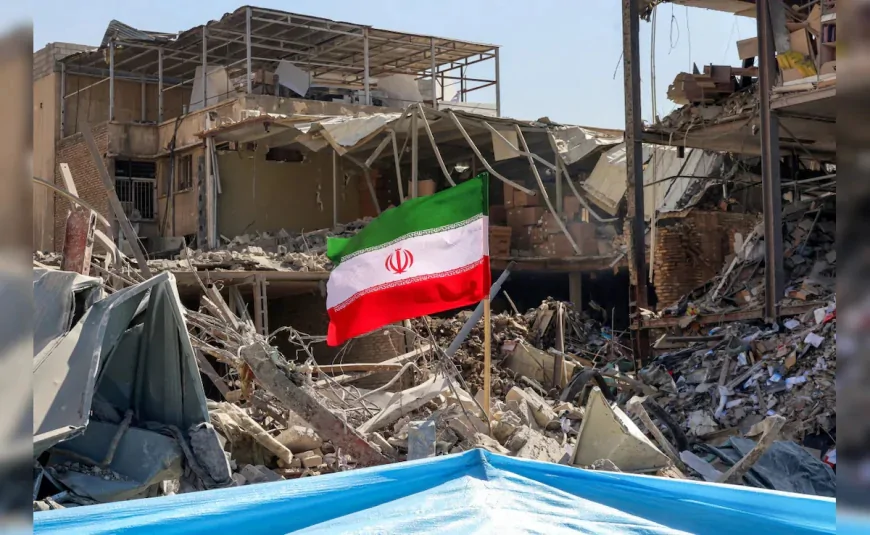
Iran's Death Toll Crosses 1,000 as IAEA Disputes Core U.S. Rationale for War
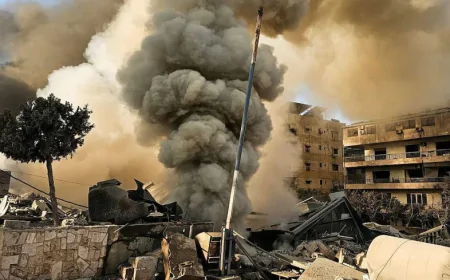
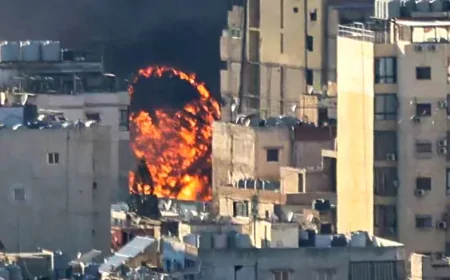
The conflict between the United States, Israel, and Iran entered its fifth day on Thursday with the death toll exceeding 1,000 — a preliminary figure from the U.S.-based Human Rights Activists News Agency that the organisation acknowledged could rise as communications from inside Iran remain severely restricted. Iran has been under an internet blackout for more than 100 consecutive hours, making independent verification of casualty figures, military damage assessments, and civilian conditions across 24 of the country's 31 provinces exceptionally difficult for journalists and human rights monitors outside the country.
Israel's military announced a "broad wave of strikes" in Tehran on Wednesday morning. U.S. officials described the operation's early phase as producing significant gains against Iran's air defence network, nuclear-adjacent facilities, and command infrastructure. President Donald Trump told reporters he expected the hardest phase of the military campaign was "yet to come."
The International Atomic Energy Agency, the UN's nuclear watchdog, told CNN that Iran was not, in the days before the strikes began, within days or weeks of possessing a nuclear weapon. The IAEA's statement directly contradicted one of the two justifications offered by American and Israeli officials for the timing and scale of the assault. Trump himself further complicated the official rationale when he said in a separate context that Iran's nuclear program had already been "obliterated" by U.S. strikes the previous summer — a claim that raised questions about the urgency of the current operation if the nuclear threat had already been addressed months earlier.
Democrats and a Handful of Republicans Demand Congressional Accountability
On Capitol Hill, the political backlash gathered weight on Thursday. A bipartisan group of lawmakers — led by Senate Democrats and joined by a small number of Republican members who had built their political identities around Trump's earlier America First, anti-interventionist messaging — demanded the White House provide a legal basis for the strikes under the War Powers Resolution. No formal authorisation from Congress was sought before the operation began on February 28.
Marjorie Taylor Greene of Georgia became the most visible Republican critic, telling supporters that Trump had abandoned the "no new wars" commitment that was central to his 2024 campaign. Her public break was notable because it occurred within days of the strikes and preceded any significant casualty figures — a sign that her objection was ideological rather than reactive to battlefield setbacks.
Senate Minority Leader Chuck Schumer, emerging from a classified briefing led by Secretary of State Marco Rubio, told reporters the administration's answers were "completely and totally insufficient." Rubio, Defense Secretary Pete Hegseth, Joint Chiefs Chairman Dan Caine, and CIA Director John Ratcliffe were scheduled to deliver a full congressional briefing Thursday — the first comprehensive legislative engagement since the operation began five days earlier.
Iran's Retaliatory Campaign Widens Across the Gulf
Iran's Islamic Revolutionary Guard Corps continued retaliatory strikes across the Gulf on Thursday, targeting U.S. military facilities in Kuwait, Bahrain, and Saudi Arabia. Two suspected Iranian drones struck the U.S. Embassy compound in Riyadh. The Ministry of Interior in Bahrain confirmed that its international airport was struck by a drone, causing material damage without fatalities. Bahrain's 5th Fleet headquarters in the Juffair district was separately targeted.
Jordan's armed forces reported intercepting 49 drones and ballistic missiles, with fragments causing localised damage. The U.S. State Department issued "depart now" advisories for American citizens in 15 Middle Eastern countries and ordered the evacuation of diplomatic facilities in Bahrain, Iraq, and Jordan. An estimated 300,000 British nationals and 30,000 German tourists remained stranded in Gulf states as Dubai, Abu Dhabi, and Doha airports remained closed.
The Strait of Hormuz was formally declared closed by the IRGC, with at least 150 vessels anchoring outside the strait's entrance and five tankers reporting damage. Brent crude futures were trading toward $85 to $90 per barrel. Global aviation body EASA imposed a conflict zone ban across 11 Middle Eastern countries.
According to Trita Parsi, Executive Vice President of the Quincy Institute for Responsible Statecraft, "The IAEA's statement goes to the heart of the legal and moral justification for this war. If Iran was not weeks away from a weapon, the administration owes Congress and the American public an explanation for why this operation could not have been handled through diplomacy."
Whether the administration's shifting objectives — which have ranged from nuclear disarmament to regime change depending on which official is speaking — can be reconciled into a coherent endgame before the conflict's costs become politically unsustainable is the central question hovering over Washington as the war enters its sixth day.
What's Your Reaction?
 Like
0
Like
0
 Dislike
0
Dislike
0
 Love
0
Love
0
 Funny
0
Funny
0
 Wow
0
Wow
0
 Sad
0
Sad
0
 Angry
0
Angry
0









Comments (0)