

Tinubu Appoints Tunji Disu as Nigeria's Inspector-General of Police
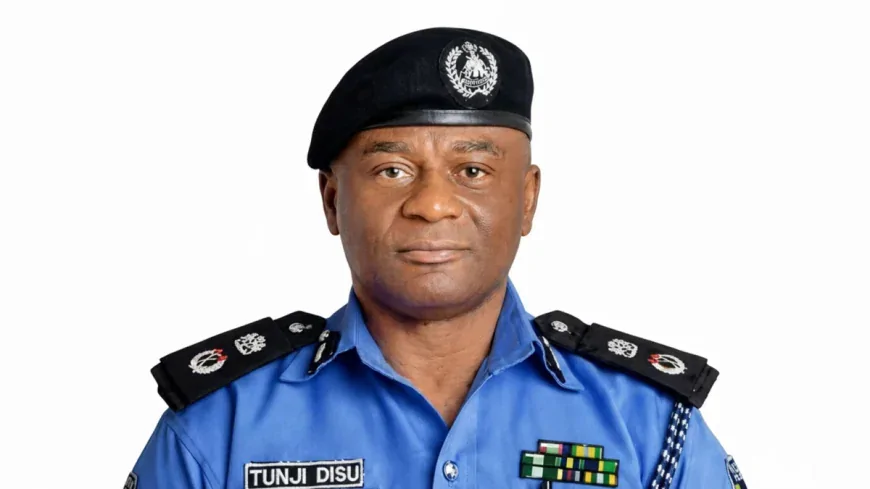
Nigerian President Bola Tinubu swore in Kayode Tunji Disu as the country's 23rd Inspector-General of Police, signaling a new direction in Nigeria's security approach.
Key Takeaways
- Nigerian President Bola Tinubu swore in Kayode Tunji Disu as the country's 23rd Inspector-General of Police, signaling a new direction in Nigeria's security approach.
- Tinubu Swears In Disu as IG of Police, Reshaping Nigeria's Security Leadership President Bola Tinubu swore in Kayode Tunji Disu as Nigeria's 23rd Inspector-General of Police in ...
- Published: Mar 05, 2026 — World News

Tinubu Swears In Disu as IG of Police, Reshaping Nigeria's Security Leadership
President Bola Tinubu swore in Kayode Tunji Disu as Nigeria's 23rd Inspector-General of Police in a formal ceremony in Abuja on Thursday, installing the former Lagos State Commissioner of Police and Deputy Inspector-General into the country's top law enforcement role at a moment of sustained insecurity across multiple Nigerian regions. Disu, who built a reputation during his Lagos tenure for operational assertiveness against organized crime and kidnapping networks, arrives at police headquarters with a mandate the presidency has framed around restoring public confidence in a force that opinion surveys consistently identify as one of Nigeria's least trusted institutions.
The appointment was not without controversy. Several civil society organizations had called for a transparent public selection process rather than a presidential appointment. The Nigerian Bar Association noted that the process of selecting and confirming the IG has historically lacked the independence and scrutiny that the sensitivity of the role demands.
Disu replaces Olukayode Egbetokun, who held the post since August 2023. Egbetokun's tenure was marked by continuing attacks on police facilities across the southeast by the Indigenous People of Biafra's Eastern Security Network, the persistent challenge of banditry in the northwest, and a broader recruitment and training crisis that has left the 370,000-strong Nigeria Police Force chronically understaffed relative to the country's more than 220 million population.
The Security Context: Multiple Crises Converging
Disu's appointment comes as Tinubu's government faces compounding security pressure on multiple fronts. In the southeast, the sit-at-home orders enforced by IPOB affiliates continue to paralyze economic life in Anambra, Imo, and Enugu states on Mondays, with residents caught between the armed enforcers of the order and a police force that has been unable to restore normalcy after years of effort. In the northwest, armed groups known locally as bandits have conducted mass kidnappings, including the abduction of more than 280 schoolchildren in Zamfara State in February — a tragedy that briefly dominated national headlines before being eclipsed by the Middle East war.
In the northeast, Boko Haram and the Islamic State West Africa Province continue to operate in the Lake Chad basin despite years of military operations by the Multinational Joint Task Force. The police's role in counter-terrorism is formally secondary to the military's, but the frontier between police and military jurisdiction in Nigeria's crisis zones has become increasingly blurred.
According to Chidi Odinkalu, professor and senior advisor at the Open Society Justice Initiative, "The question is not who leads the police — it is whether the structural conditions for accountability and professional independence exist. Nigeria's police has been 'reformed' on paper many times. The pattern is change at the top, no change at the bottom. Disu has operational credibility, but credibility is not a substitute for institutional transformation."
The Political Dimension of the Appointment
Tinubu, who built his political base in Lagos, has a long association with Disu that dates to the period when Tinubu was Lagos State Governor. Disu served as Commissioner of Police in Lagos — a posting that places a senior officer squarely within the sphere of the governor who is simultaneously the most powerful political figure in the state. Critics have noted that pattern of proximity and questioned whether the IG appointment reflects merit, political loyalty, or both.
For Tinubu, who faces a 2027 re-election environment shaped by the harsh economic consequences of his fuel subsidy removal and naira devaluation policies, security is both a governance imperative and a political liability. Nigerians who are unable to travel safely between states, who pay ransoms for kidnapped relatives, or whose businesses have been ransacked by armed groups are not voters inclined to reward incumbency. How Disu performs in the first six months of his tenure — and whether the president grants him the operational independence to act without political interference — will determine whether the appointment represents genuine security reform or yet another choreographed display of leadership change without structural consequence.
Nigeria's Electoral Stakes and the Long Road to 2027
Tinubu's security appointments carry weight beyond their immediate operational consequences because they will shape the political landscape for the 2027 general election. In Nigeria, the Inspector-General of Police commands an institution that plays a role in managing the logistics and security environment of elections. The perception — and the reality — of police impartiality during election periods is a persistent concern in Nigerian democracy, documented by international election observers across multiple electoral cycles since 1999.
The appointments that Tinubu makes now, including Disu's installation as IG, will define the security infrastructure within which the 2027 elections are conducted. Opposition parties have consistently accused successive governments of using police and security services to tilt electoral outcomes, particularly in states where the ruling party faces genuine competition. Disu's past association with Lagos — where Tinubu's political network has deep roots — will be watched closely by opposition parties who regard the appointment with pre-emptive suspicion.
Tinubu's approval ratings have been under sustained pressure since the fuel subsidy removal of May 2023, which drove up the cost of transport and food across a country where a significant portion of the population already lived below the poverty line. The currency devaluation that followed compounded the economic shock. Security improvements — real or perceived — are one of the few areas where the government can demonstrate tangible governance gains that resonate with ordinary Nigerians whose daily experience of the state is mediated primarily through encounters with police and security forces. Disu arrives with a mandate and a political expectation. Whether he can satisfy both simultaneously is the challenge that awaits him.
What's Your Reaction?
 Like
0
Like
0
 Dislike
0
Dislike
0
 Love
0
Love
0
 Funny
0
Funny
0
 Wow
0
Wow
0
 Sad
0
Sad
0
 Angry
0
Angry
0





Comments (0)