
































Ukraine-Russia Abu Dhabi Talks Stalled as Iran War Consumes U.S. Diplomatic Bandwidth
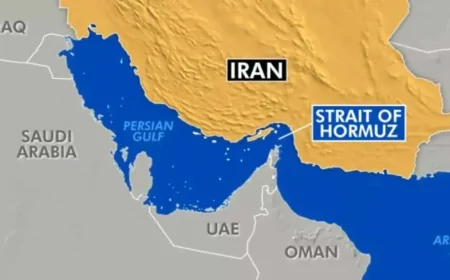
Zelenskyy said the next round of Ukraine-Russia-U.S. trilateral talks tentatively set for March 5-6 in Abu Dhabi faced serious doubts due to the U.S.-Iran conflict consuming diplomatic and military resources.
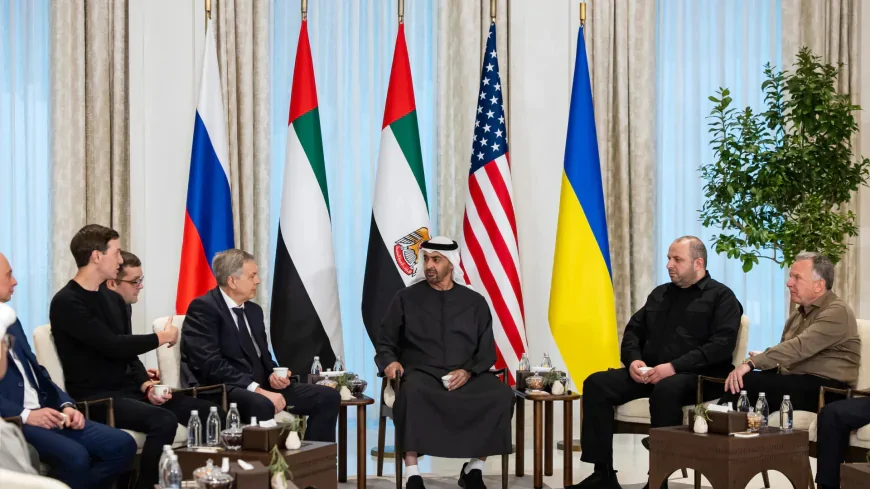
Iran War Derails Ukraine Peace Momentum as Abu Dhabi Talks Hang in the Balance
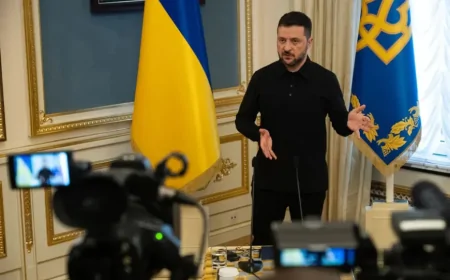
The painstaking diplomatic architecture that U.S. Special Envoy Steve Witkoff and Jared Kushner had been constructing through three rounds of trilateral talks in Abu Dhabi and Geneva ran into a geopolitical wall this week, as President Volodymyr Zelenskyy publicly acknowledged on March 2 that the next scheduled round of negotiations — tentatively set for March 5-6 in Abu Dhabi — was in serious doubt because of the U.S.-Israel military operation against Iran. Ukraine's government said the Trump administration's military engagement in the Middle East had shifted American attention, resources, and political capital away from the Ukraine peace process at a critical moment when both sides were understood to be within reach of a ceasefire monitoring framework.
The timing is operationally significant. Three previous rounds of trilateral talks — in Abu Dhabi in January and in Geneva in February — had, according to multiple diplomatic sources, produced constructive progress on the technical dimensions of ceasefire monitoring: drones, sensors, satellite verification, and the mechanics of a multinational observation force. Progress on the politically explosive question of territory — specifically Russia's demand for Ukrainian recognition of its control over the Donetsk, Luhansk, Zaporizhzhia, and Kherson regions — remained minimal. Russia's chief negotiator Vladimir Medinsky had been described by Western diplomatic sources as "uncompromising" on territorial questions, while Zelenskyy said publicly that Russia "wants our Donbas, and we do not want to give away our Donbas."
A pause in the negotiating process, even a temporary one, risks losing momentum in a diplomatic track that has been advancing faster than any comparable effort to end the Ukraine war since Russia's full-scale invasion began in February 2022. Zelenskyy had told reporters before the Iran conflict erupted that he believed 90 percent of a potential peace deal had been agreed. The remaining 10 percent — territorial control and security guarantees — is the hardest 10 percent, and it requires sustained American engagement that the White House is currently directing elsewhere.
European Coalition Deepens Commitment While Washington Is Distracted
In the absence of U.S. leadership on the Ukraine file this week, European nations moved to consolidate the security guarantee architecture independently. France and the United Kingdom had already signed, in January, a declaration of intent to deploy forces to Ukraine in the event of a ceasefire — the first formal European security commitment of this scale since the war began. At a January summit in Paris convened under the banner of the "coalition of the willing," 35 countries including 27 heads of state agreed to participate in a U.S.-led ceasefire monitoring and verification mechanism, with the United States providing the technological backbone through drones, sensors, and satellite coverage.
Germany's Chancellor Friedrich Merz signalled a more cautious posture, saying German forces could participate in monitoring a ceasefire but would be based in a neighbouring country rather than on Ukrainian soil — a distinction driven by domestic political constraints and the continued sensitivity of German military deployments abroad. Belgium, Croatia, and the Czech Republic offered complementary commitments through naval assets and air force support.
The coalition's January statement also established a U.S.-Ukraine coalition coordination cell in Paris, a bureaucratic foundation that, analysts noted, gives the European security commitment an institutional anchor even if American political attention fluctuates. The question of binding financial commitments — how much each country would contribute to sustaining Ukrainian military capability in a post-ceasefire environment — remains unresolved.
The Humanitarian Dimension No Peace Plan Has Answered
Beyond the diplomatic machinery, the fundamental humanitarian question at the heart of any Ukraine peace deal has received almost no political attention: the fate of approximately six million Ukrainian citizens living in Russian-occupied territories. The 20-point peace plan developed by Ukraine and the United States — whose contents Zelenskyy disclosed in December 2025 — contains only a single point addressing this population, focused on prisoner exchanges and the return of deported children. It says nothing about the political status, civil rights, or physical safety of the millions of Ukrainians who would remain under Russian authority if the current front lines were frozen.
Karolina Hird, a National Security Fellow at the Institute for the Study of War, noted that any ceasefire deal "is just going to consign six million people to live under Russian occupation." The plan's silence on this dimension, she argued, reflects not indifference but a deliberate choice to avoid a question that neither Russia nor Ukraine is prepared to answer honestly in a negotiating room.
Ukraine's constitution further complicates any territorial compromise: any decision to cede territory requires a nationwide referendum, which Zelenskyy said could potentially be organized if there were a genuine ceasefire of at least 60 days. Running a referendum while hundreds of thousands of Ukrainian soldiers are at the front and millions of refugees are displaced across Europe would be an administrative and political challenge of the first order.
According to Richard Gowan, UN Director at the International Crisis Group, "The Iran war hasn't killed the Ukraine peace process, but it has introduced exactly the kind of distraction that gives hardliners in Moscow the opportunity to run out the clock on an American administration whose attention is now split."
Whether Witkoff and Kushner can restart the Abu Dhabi talks later in March — or whether the Iran conflict's duration and complexity makes a sustained return to the Ukraine file impossible before the summer — will determine whether the tentative diplomatic progress of early 2026 translates into an actual ceasefire or simply the next phase of a war that has already cost more than a million lives.