

EU-India Trade Deal Creates Free Zone of 2 Billion People, Reshaping Global Commerce
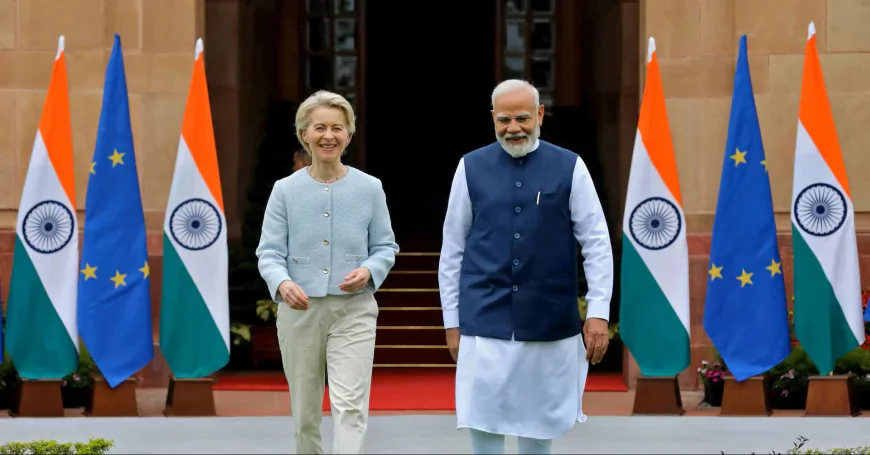
The EU and India concluded a historic free trade agreement days after Davos 2026, creating a trading zone of two billion people and marking Europe's most significant trade diversification from the U.S. and China.
Key Takeaways
- The EU and India concluded a historic free trade agreement days after Davos 2026, creating a trading zone of two billion people and marking Europe's most significant trade diversification from the U.S. and China.
- EU-India Trade Deal Creates History's Largest Free Trade Zone by PopulationThe European Union and India concluded negotiations on a historic free trade agreement in the days imm...
- Published: Mar 04, 2026 — Europe

EU-India Trade Deal Creates History's Largest Free Trade Zone by Population
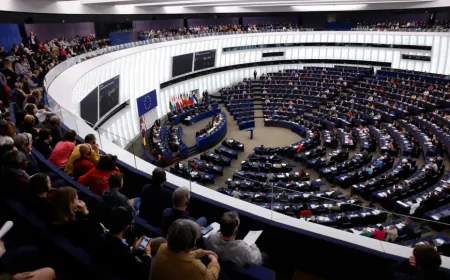
The European Union and India concluded negotiations on a historic free trade agreement in the days immediately following the World Economic Forum's annual meeting in Davos in January 2026, creating what trade analysts have described as the world's largest free trade zone by population — a market of more than two billion people that represents a fundamental reorientation of global commerce at a moment when the established trade architecture of the post-1945 era is fracturing under the combined pressure of U.S. tariffs, Chinese economic nationalism, and the supply chain disruptions of the U.S.-Iran war.
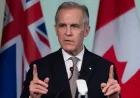
European Commission President Ursula von der Leyen used the Davos platform to frame the deal in explicitly strategic terms, saying Europe wanted "to do business with the growth centres of today and the economic powerhouses of this century, from Latin America to the Indo-Pacific and far beyond." Canadian Prime Minister Mark Carney, also speaking at Davos, characterised the global moment as "a rupture, not a transition" — language that gave the EU-India deal a geopolitical significance that extended well beyond its specific trade provisions.
The deal had been under negotiation for more than a decade, repeatedly stalling over disagreements on tariffs for European wine and spirits, market access for European financial services, data localisation requirements that India's government has treated as sovereign prerogatives, and — most persistently — automotive tariffs that European manufacturers sought access to and Indian policymakers guarded as protection for a domestic industry they regard as strategically central. That it concluded now reflects both sides' recognition that the geopolitical environment of 2026 makes the cost of continued delay higher than the cost of compromise.
What the Deal Contains and What It Changes
The EU-India agreement includes phased tariff reductions on industrial goods across both markets over a 10-year implementation period, expanded market access for European professional services in India, and reciprocal provisions for Indian technology and pharmaceutical companies in the EU single market. Data flows — a point of persistent contention — were addressed through a framework that falls short of the full data adequacy agreement EU standards require, but that establishes a structured pathway toward alignment over a five-year period.
For India, the deal delivers something Prime Minister Narendra Modi's government has sought since the 2014 election: a legitimising trade partnership with the world's largest single market that signals India's arrival as a rule-of-law, commercially reliable destination for European capital. Modi's government has simultaneously been navigating a delicate situation vis-à-vis the U.S.-Iran war: India's refusal to condemn the strikes — consistent with its policy of preserving strategic relationships with both Washington and Tehran — has, in the words of the Indian press, "diminished India's stature in the eyes of the world" in some international forums.
For Europe, the deal reduces its dependence on U.S. and Chinese trading partners at exactly the moment when both relationships are under stress. The Trump administration's tariff regime has imposed significant costs on European exporters. The U.S.-Iran conflict has disrupted Middle East supply chains and raised European energy costs in ways that underscore the fragility of dependence on any single trading corridor.
The Strategic Dimension: Critical Minerals and Defence
Beyond the trade provisions, the EU-India deal includes provisions for cooperation on critical minerals supply chains — a dimension that addresses Europe's acute vulnerability in rare earth elements, currently dominated by China through its export control regime. India has significant rare earth deposits and a growing refining capacity that European battery and semiconductor manufacturers are watching closely as an alternative to Chinese supply. The strategic minerals provisions give the trade deal a security dimension that makes it relevant to NATO planning as well as to European commercial interests.
India's domestic political context adds complexity to the deal's implementation. While Modi's government negotiated the agreement, its ratification and implementation will require sustained political will through what is likely to be a contentious domestic debate about the opening of protected Indian sectors to European competition. Farmers' groups, which exercised significant political pressure during the previous farm law protests, will require careful management when the deal's agricultural provisions — which include limited access for European dairy products — become publicly known.
According to Amitendu Palit, Senior Research Fellow at the National University of Singapore's Institute of South Asian Studies, "The EU-India deal is the most consequential trade agreement of the decade — not because of its immediate trade flows, which will take years to materialise, but because it establishes a new axis of economic partnership between two democratic powers that will shape the global trade architecture for a generation."
Whether the EU-India trade deal survives its ratification process intact — or whether domestic opposition in both markets extracts concessions that hollow out its most significant provisions — will determine whether the rupture Carney described at Davos produces a genuinely new global trade architecture or simply a new layer of complexity on top of the old one.
What's Your Reaction?
 Like
0
Like
0
 Dislike
0
Dislike
0
 Love
0
Love
0
 Funny
0
Funny
0
 Wow
0
Wow
0
 Sad
0
Sad
0
 Angry
0
Angry
0







Comments (0)