














































Meta Locks In Millions of Nvidia Chips as the AI Arms Race Escalates to a New Level
Meta has secured one of the largest single Nvidia GPU orders in history, committing to millions of chips to power its next generation of AI models and social media systems, as the battle for AI compute supremacy intensifies among Big Tech.
Meta Goes All-In on Nvidia: A Chip Order That Signals Where the AI War Is Headed
Mark Zuckerberg has made his bet. Meta Platforms has secured a massive order for Nvidia's latest-generation GPU chips — a commitment that sources familiar with the deal describe as running into the millions of units and multiple billions of dollars. The order is one of the largest single AI hardware purchases in the history of the technology industry.
And it tells you everything about where the competition is headed.
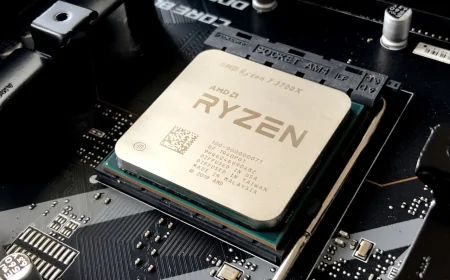
The chips — primarily Nvidia's Blackwell B200 and the next-generation Rubin architecture units — will be deployed across Meta's data centers in the United States, Europe, and Asia. They will power the company's Llama family of open-source AI models, its recommendation and content ranking systems, its ad targeting infrastructure, and, according to people briefed on the company's roadmap, a new generation of AI-powered features across Facebook, Instagram, and WhatsApp that have not yet been publicly announced.
Why This Order Matters Beyond Meta
GPU availability has become the defining constraint of the AI era. Every major technology company — Google, Microsoft, Amazon, Apple — is competing for the same limited supply of advanced chips. Nvidia produces the vast majority of the world's AI training chips, and its manufacturing capacity runs through Taiwan Semiconductor Manufacturing Company, which has finite production capacity for the most advanced process nodes.
When Meta locks in millions of chips on forward contracts, it is not just making a capital allocation decision. It is securing a strategic resource that its competitors cannot access. It is, in effect, buying time and capability that rivals will have to wait for.
According to Patrick Moorhead, CEO and chief analyst at Moor Insights and Strategy, the chip order is a declaration. Meta is saying: we intend to be a top-three player in AI capabilities globally, and we are willing to commit the capital to back that up. This is not a company hedging. This is a company going for it.
The Geopolitical Dimension of Silicon
Meta's chip order also carries a geopolitical dimension that the company's leadership is acutely aware of. US export controls restrict the sale of advanced Nvidia chips to China. China's own semiconductor industry, while advancing rapidly, cannot yet match the performance of Nvidia's latest architectures. Meta, by securing a large forward allocation of Nvidia's best chips, is positioning itself on the right side of the technology fence at a moment when that fence is being reinforced by Washington.
The new 15% tariff order signed by President Trump on Monday complicates the picture — semiconductor hardware is not explicitly exempted, and the industry is lobbying hard for a carveout. But for now, Meta's order is proceeding, and Nvidia's stock, despite Monday's broader market selloff, managed to limit its losses to under 2% — a sign that investors view the chip giant's order book as essentially bulletproof for the foreseeable future.
Zuckerberg has spoken publicly about his goal of building artificial general intelligence. Whether or not that goal is achievable, the infrastructure he is assembling to pursue it is very, very real.