

Forensic Experts Prove DOJ Edited ‘Raw’ Epstein Prison Video from Multiple Files
Forensic Experts Prove DOJ Edited ‘Raw’ Epstein Prison Video from Multiple Files
Key Takeaways
- Forensic Experts Prove DOJ Edited ‘Raw’ Epstein Prison Video from Multiple Files
- What the U.S. Department of Justice this week described as “full raw” surveillance footage from outside Jeffrey Epstein’s prison cell has now been forensically proven to have be...
- Published: Jul 13, 2025 — U.S. News

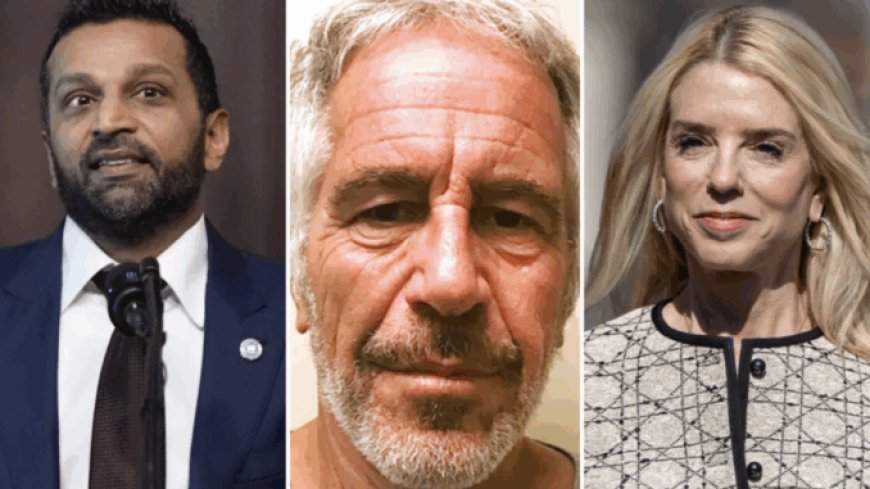
What the U.S. Department of Justice this week described as “full raw” surveillance footage from outside Jeffrey Epstein’s prison cell has now been forensically proven to have been edited—casting serious doubt on the government’s official narrative and reigniting suspicions about Epstein’s death.
Metadata embedded in the footage and analyzed by WIRED in collaboration with two independent digital forensics experts confirms the video was not a direct, unaltered export from the prison’s surveillance system. Instead, the file was processed using Adobe Premiere Pro, saved multiple times, and appears to be a composite assembled from at least two different source clips.
Forensic traces—including Adobe’s proprietary metadata fields and references to specific project files—make clear this was not untouched surveillance footage. It was, in effect, a produced video.
“If a lawyer brought me this file and asked if it was suitable for court, I’d say no. Go back to the source. Do it right. Do a direct export from the original system—no monkey business,” said UC Berkeley professor and media forensics expert Hany Farid, who reviewed the metadata.
Presented as a final word on the matter, the DOJ’s release of nearly 11 hours of surveillance footage was intended to put lingering conspiracy theories to rest. Instead, it has done the opposite. The supposedly “raw” footage released on the DOJ’s own public website shows unmistakable signs of professional post-production—leaving critics and experts alike asking: Why edit raw evidence at all?
The file’s metadata logs multiple saves within a 23-minute span by a Windows user account labeled “MJCOLE~1”. Adobe Premiere’s own internal schema also logs “ingredients”—in this case, two original video files: 2025-05-22 21-12-48.mp4 and 2025-05-22 16-35-21.mp4, stitched together to create the final export.
There is no clear explanation for where in the timeline those clips are spliced, nor any DOJ acknowledgment that the footage had been edited. Even the aspect ratio fluctuates during playback—another glaring sign of post-processing.
Hany Farid emphasized that digital evidence, just like physical evidence, must maintain a clear chain of custody. Once that chain is broken—or obscured by unexplained editing—the evidence loses credibility. “Why am I suddenly seeing a different aspect ratio?” Farid asked. “That’s not something you expect from a raw surveillance file. That’s something you expect from a compilation.”
The Missing Minute Still Haunts the Timeline
While the forensic discovery of editing is the new bombshell, one older mystery remains unresolved: a one-minute gap in the surveillance feed, from 11:58:58 p.m. to 12:00:00 a.m. on the night of Epstein’s death. The DOJ claims this is a “routine flaw” in the camera system’s daily cycle, insisting that one minute is missing from every night’s recording. But no technical documentation has been provided to support this.
With the footage now proven to have been processed in Premiere, some observers are beginning to ask whether that missing minute was truly ever recorded—or if it was simply removed.
According to the DOJ’s own internal oversight reports, half of the cameras inside Epstein’s detention facility went down weeks before his death. Repairs were scheduled for the very night he died—August 9, 2019—but the technician couldn’t complete the job because the guard assigned to escort him was about to end their shift. Only two operational camerasremained near Epstein’s cell, and neither captured the door to his unit.
And now, it turns out, even the limited footage that was captured was quietly edited and spliced before being released to the public.
At a Tuesday press conference, attorney general Pam Bondi reiterated the DOJ’s conclusions: that Epstein died by suicide, that no one entered his tier during the critical hours, and that the footage backs up the official timeline. But she also admitted that the department would not be commenting further on anything related to Epstein: Case closed.
To critics, the silence speaks volumes.
“This doesn’t feel like an accident,” said one anonymous media forensics expert, who reviewed the metadata and corroborated WIRED’s findings. “It looks suspicious—but not as suspicious as the DOJ refusing to answer basic questions about it.”
Even Mike Rothschild, a prominent skeptic of conspiracy theories, conceded the edited footage will only deepen public suspicion. “Whatever your flavor of Epstein conspiracy is, the video will help bolster it,” he said.
Alex Jones took it further, posting on X: “Next the DOJ will say, ‘Actually, Jeffrey Epstein never even existed.’”
What's Your Reaction?
 Like
0
Like
0
 Dislike
0
Dislike
0
 Love
0
Love
0
 Funny
0
Funny
0
 Wow
0
Wow
0
 Sad
0
Sad
0
 Angry
0
Angry
0









Comments (0)