

World Reacts to Khamenei's Killing: Shock, Condemnation, and Calls for Restraint
World leaders and international organizations reacted with alarm to the killing of Iran's Supreme Leader Khamenei, with Russia and China demanding a UN Security Council emergency session.
Key Takeaways
- World leaders and international organizations reacted with alarm to the killing of Iran's Supreme Leader Khamenei, with Russia and China demanding a UN Security Council emergency session.
- Global Leaders React to Khamenei's Death With Alarm and Calls for RestraintThe killing of Iran's Supreme Leader Ayatollah Ali Khamenei triggered a cascade of international react...
- Published: Mar 02, 2026 — World News

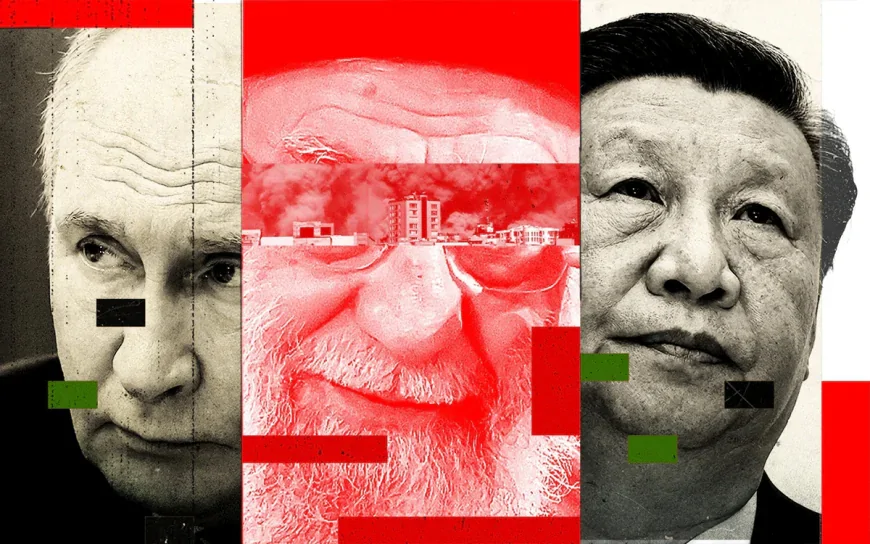
Global Leaders React to Khamenei's Death With Alarm and Calls for Restraint
The killing of Iran's Supreme Leader Ayatollah Ali Khamenei triggered a cascade of international reactions Saturday and Sunday that exposed deep divisions between Western powers and the rest of the world. Russia and China led the chorus of condemnation. Most European governments called for restraint. Several regional powers found themselves walking a careful diplomatic tightrope between their US alliance and their economic relationships with Tehran.
Russia's Foreign Ministry called the strikes "a flagrant violation of international law and the UN Charter" and demanded an immediate emergency session of the UN Security Council. China issued a joint statement with Russia characterizing the operation as "a unilateral act of military aggression that threatens global stability." Both countries hold veto power on the Security Council, and both indicated they would push for a resolution condemning the strikes.
The White House dismissed the Russian and Chinese statements as "predictable propaganda from authoritarian regimes that support Iran's destabilizing behavior." No US ambassador to the UN attended Sunday's informal Security Council consultations, according to diplomatic sources at the UN headquarters in New York.
Europe Urges De-Escalation While Avoiding Direct Condemnation
European Union foreign policy chief Kaja Kallas called Sunday for "all parties to step back from the brink" and urged the immediate protection of civilians. She did not directly condemn the US-Israeli strikes, a choice that drew criticism from several EU member states, including Ireland, Spain, and Belgium, whose foreign ministries issued sharper individual statements.
British Prime Minister Keir Starmer said the UK was "deeply concerned about the regional implications" of the strikes and was working through diplomatic channels to promote de-escalation. He stopped short of condemning the operation explicitly, reflecting London's awkward position as a close US ally that was not consulted before the strikes began.
France's President Emmanuel Macron spoke directly with Trump by phone Sunday morning. The Élysée Palace confirmed the call lasted 45 minutes and that Macron "expressed his very serious concerns about the risk of regional conflagration." Whether France will move to formally condemn the strikes in the UN Security Council — breaking with its traditional reticence to split publicly from Washington — remains a key diplomatic question.
Regional Actors Navigate Explosive New Reality
Turkey's President Recep Tayyip Erdogan condemned the strikes as "a dangerous violation of sovereignty" and offered Ankara as a neutral mediation venue. Turkish officials have historically maintained backchannel relationships with both Washington and Tehran, giving Ankara an unusual — and potentially valuable — diplomatic role in the days ahead.
India expressed "deep concern" and called for an immediate ceasefire without specifying who bore responsibility for the escalation. India imports a significant portion of its oil from Iran and has built substantial economic ties with Tehran over the years.
According to Richard Haass, President Emeritus of the Council on Foreign Relations, "The international isolation of the United States on this action is more pronounced than on any military operation since the 2003 invasion of Iraq. Whether that isolation translates into meaningful diplomatic or economic pressure on Washington is the central geopolitical question of this week."
What's Your Reaction?
 Like
0
Like
0
 Dislike
0
Dislike
0
 Love
0
Love
0
 Funny
0
Funny
0
 Wow
0
Wow
0
 Sad
0
Sad
0
 Angry
0
Angry
0




Comments (0)