

Netanyahu’s Corruption Trial: Court Rejects Testimony Reduction Amid Rising Political and Legal Storm
Jerusalem court denies Netanyahu’s request to reduce testimony days in corruption trial, intensifying Israel’s political and legal crisis.
Key Takeaways
- Jerusalem court denies Netanyahu’s request to reduce testimony days in corruption trial, intensifying Israel’s political and legal crisis.
- Netanyahu’s Bid to Reduce Corruption Trial Testimony Rejected by Israeli Court Amid Intensifying Legal and Political Crisis The Jerusalem District Court has firmly rejected Pri...
- Published: Oct 27, 2025 — Middle east

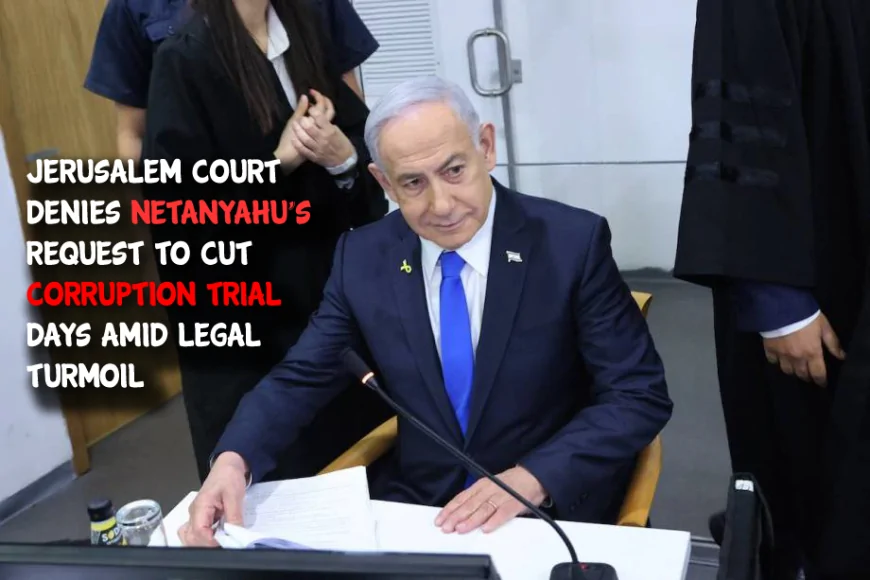
Netanyahu’s Bid to Reduce Corruption Trial Testimony Rejected by Israeli Court Amid Intensifying Legal and Political Crisis
The Jerusalem District Court has firmly rejected Prime Minister Benjamin Netanyahu’s defense team’s request to reduce the mandated number of testimony days for the ongoing corruption trial, setting the stage for a prolonged and contentious legal battle. This decision has far-reaching implications for the Israeli political landscape at a time of great volatility.
Court Upholds Rigorous Testimony Schedule Against Netanyahu’s Request
On Sunday, Judge Rivka Friedman-Feldman, who presides over the panel managing Netanyahu’s case, dismissed the prime minister’s request to testify three days a week instead of four. The judge emphasized, “The hearings will proceed as planned,” signaling the court’s commitment to maintaining the trial’s intensity and schedule.
This ruling directly challenges efforts from Netanyahu’s legal team to reduce the court burden on the sitting prime minister and maintain political stability. Local Israeli media outlet Yedioth Ahronoth reported extensively on the court’s firm stance, underscoring the judiciary's unwillingness to relax trial procedures for Netanyahu's case.
International and Domestic Pressures Mount
Netanyahu’s political and legal troubles exist amid deepening tension both domestically and internationally. Notably, on October 13, 2025, U.S. President Donald Trump addressed Israel’s Knesset, urging Israeli President Isaac Herzog to grant Netanyahu a pardon on the corruption charges. This intervention highlights the international political dimension surrounding Netanyahu’s legal saga.
Meanwhile, Israel’s Ministerial Committee for Legislation is preparing to review a draft bill designed to allow indefinite delays in Netanyahu’s trials. Sources from the Times of Israel suggest that if passed, this bill would be forwarded to the full Knesset for debate. However, Attorney General Gali Baharav-Miara has voiced strong opposition to the proposal, arguing it would dangerously permit “political considerations to gain a foothold in the criminal process.”
Background on Netanyahu’s Corruption Trial
The cases against Netanyahu involve allegations in three key files, identified as cases 1000, 2000, and 4000. These cover a spectrum of legal accusations ranging from bribery to fraud. Netanyahu has categorically denied all charges. His trial, which commenced on May 24, 2020, marks a unique precedent as he is the first sitting Israeli prime minister to stand as a criminal defendant.
Legal observers note this trial’s significance not only for Netanyahu but for Israeli democracy, as the judiciary navigates the delicate balance between accountability and political stability.
Parallel Legal Challenges: International Criminal Court Arrest Warrants
Adding to Netanyahu’s legal woes, the International Criminal Court (ICC) issued arrest warrants in November 2024 against both Netanyahu and former Defense Minister Yoav Gallant. The warrants accuse them of war crimes and crimes against humanity related to actions during the Gaza conflict, where over 68,000 people, primarily women and children, have died since October 2023.
This development escalates the legal pressure on Israel’s leadership, extending the scope of challenges beyond domestic law into international arenas.
An Investigative Look at Political Maneuvering and Judicial Independence
The timing of Netanyahu’s court appeal and the legislative moves to delay his trial raises questions about potential political interference in judicial proceedings. Reports from multiple sources reveal intense negotiations within Israeli political circles seeking ways to shield Netanyahu from legal accountability through legislative tools. Such maneuvers risk undermining judicial independence—a cornerstone of democratic governance.
Attorney General Baharav-Miara's firm opposition highlights concerns within the legal establishment about preserving the integrity of the criminal justice process against political manipulation.
The Stakes for Israeli Democracy and Governance
Netanyahu’s trial, combined with ICC charges, places Israel at a critical juncture. The government's ability to maintain rule of law while navigating political loyalty and international scrutiny will shape its democratic institutions’ future strength.
Observers warn that prolonged political instability fueled by legal battles could deepen public divisions and impact regional security. As Netanyahu remains a central figure campaigning for continued leadership, the court’s decision to uphold a rigorous trial schedule reflects the judiciary’s resolve to hold political leaders accountable regardless of their status.
What's Your Reaction?
 Like
0
Like
0
 Dislike
0
Dislike
0
 Love
0
Love
0
 Funny
0
Funny
0
 Wow
0
Wow
0
 Sad
0
Sad
0
 Angry
0
Angry
0









Comments (0)