

Senegal Political Crisis: PM Sonko Threatens to Pull Party From Government
Senegalese Prime Minister Ousmane Sonko said he was willing to leave the government and return to opposition if President Faye breaks from their shared political vision.
Key Takeaways
- Senegalese Prime Minister Ousmane Sonko said he was willing to leave the government and return to opposition if President Faye breaks from their shared political vision.
- Senegal's Unity Government Fractures as Sonko Issues Ultimatum to PresidentSenegal's Prime Minister Ousmane Sonko escalated a simmering power struggle inside the country's rulin...
- Published: Mar 03, 2026 — World News

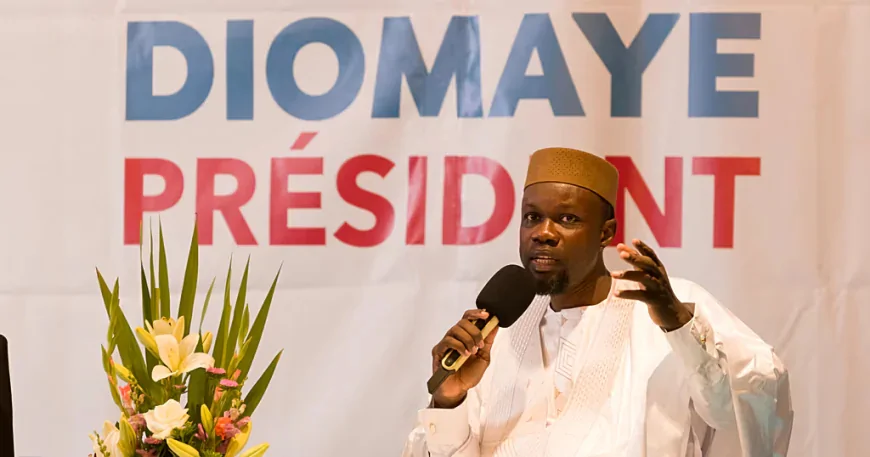
Senegal's Unity Government Fractures as Sonko Issues Ultimatum to President
Senegal's Prime Minister Ousmane Sonko escalated a simmering power struggle inside the country's ruling coalition on Tuesday, telling reporters he was willing to withdraw his party from the government and return to opposition if President Bassirou Diomaye Faye deviated from their shared political programme. The statement, reported by Reuters, marks the most direct public warning yet from Sonko — whose Patriotes Africains du Sénégal pour le Travail, l'Éthique et la Fraternité party was instrumental in bringing Faye to power — that the alliance between the two most prominent figures of Senegal's 2024 political transformation is under serious strain.
Faye and Sonko rose together from opposition politics, with Sonko's grassroots anti-corruption movement galvanising the vote that elevated Faye to the presidency in March 2024. Sonko was subsequently appointed Prime Minister, a role he has used to advance an assertive economic sovereignty agenda, including renegotiating hydrocarbon contracts and pushing back against French economic influence. Rumours of divergence between the two men over governance style and policy priorities have circulated for months inside Dakar's political circles, but Tuesday's statement represents the first time Sonko has framed the tension in public, with explicit consequences attached.
The timing is significant. Senegal is in a delicate moment economically, navigating the implications of new offshore oil and gas production coming online and managing relationships with multilateral lenders while attempting to build out domestic industrial capacity.
Roots of the Rupture
Sources close to the prime minister's office told Reuters that the friction centres on Faye's perceived willingness to moderate the coalition's original reform programme under pressure from business interests and international financial institutions. Sonko, who built his political identity around uncompromising anti-corruption messaging and pan-African economic independence, reportedly views any softening of the programme as a betrayal of the mandate that brought them both to power.
Faye's team has publicly denied any ideological rift, with the presidency releasing a statement affirming the "unity and coherence" of the government. But the denial came hours after Sonko had already framed the issue in public — an unusual sequence that suggested the two camps were not coordinating their communications effectively.
Analysts in Dakar pointed to a structural tension that was always latent in the alliance: Faye, as president, must manage Senegal's relationships with the International Monetary Fund, World Bank, France, and regional partners. Sonko, as Prime Minister, answers primarily to the street constituency that elected them. Those two audiences have different expectations, and they are now pulling in different directions.
Implications for Senegal's Stability
Senegal has long been regarded as one of West Africa's most stable democracies, a distinction that has attracted foreign investment and regional diplomatic credibility. A public collapse of the governing coalition would be the most significant political rupture in the country in a decade, with unpredictable consequences for the legislative programme and investor confidence at a critical moment for the country's energy-driven growth trajectory.
The National Assembly, where PASTEF holds a significant bloc, would face questions about its ability to pass legislation if the party withdrew from the coalition. Opposition parties, who had largely been outmanoeuvred in the 2024 cycle, would see an opening to regroup.
According to Rama Salla Dieng, a Senegalese political scientist at the University of Edinburgh, "What Sonko is doing is reminding Faye — and the public — who owns the street. This is a pressure tactic, but pressure tactics in coalition politics can spiral quickly into the thing they were meant to prevent."
Whether Faye and Sonko find a way to publicly reconcile their positions before the coalition fractures further — or whether Tuesday's ultimatum is the opening move in a longer unravelling — will define the shape of Senegalese politics for years ahead.
What's Your Reaction?
 Like
0
Like
0
 Dislike
0
Dislike
0
 Love
0
Love
0
 Funny
0
Funny
0
 Wow
0
Wow
0
 Sad
0
Sad
0
 Angry
0
Angry
0







Comments (0)