

Pakistan Deploys Army After 24 Killed in Pro-Iran Protests Across Major Cities
Pakistan has deployed troops and imposed a three-day curfew after at least 24 people were killed in violent pro-Iran protests targeting US diplomatic missions across the country.
Key Takeaways
- Pakistan has deployed troops and imposed a three-day curfew after at least 24 people were killed in violent pro-Iran protests targeting US diplomatic missions across the country.
- At Least 24 Dead as Pakistan Imposes Military Curfew After Pro-Iran RiotsPakistan is in crisis. At least 24 people are dead.
- Published: Mar 02, 2026 — World News

At Least 24 Dead as Pakistan Imposes Military Curfew After Pro-Iran Riots
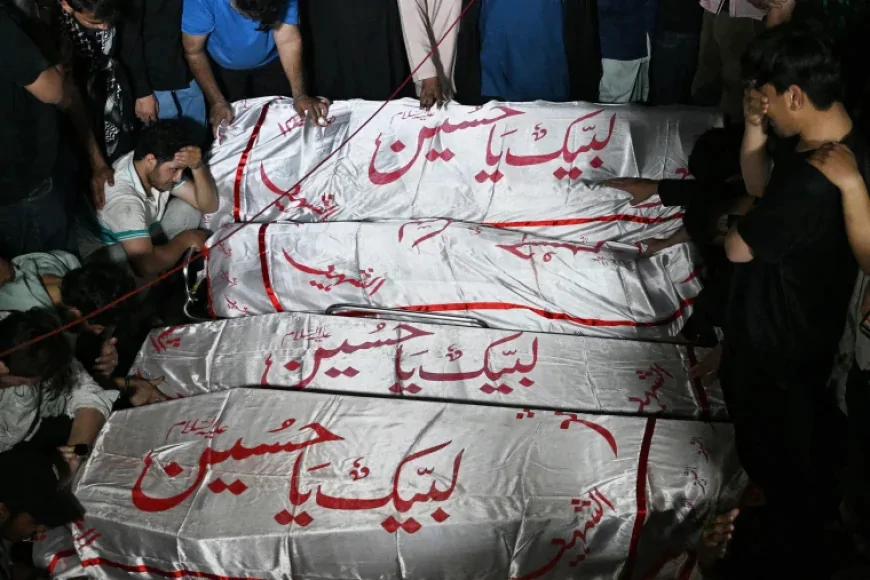
Pakistan is in crisis. At least 24 people are dead. Troops are on the streets of two northern cities. A three-day curfew is in force. And the US consulate in Karachi was stormed by thousands of demonstrators who smashed windows and attempted to burn the building to the ground.
The unrest erupted after US and Israeli forces killed Iran's Supreme Leader Ayatollah Ali Khamenei on February 28. Pakistan's Shiite minority — a significant population in the north and in Karachi — responded with fury that the government struggled to contain.
Pakistani authorities deployed troops and imposed a curfew before dawn Monday in the northern cities of Gilgit and Skardu, after at least 12 people died and 80 others were injured in the Gilgit-Baltistan region alone, police confirmed.
Consulate Stormed in Karachi, US Embassy on High Alert
In Karachi, demonstrators stormed the US consulate compound, smashing windows and attempting to set the building ablaze. Security personnel opened fire. Ten people were killed and more than 50 injured in the confrontation before police arrived with tear gas and batons.
One additional person was killed in Islamabad, where a crowd attempted to march toward the US Embassy. The embassy and its consulates in Karachi and Lahore immediately cancelled all visa appointments and American Citizen Services, citing security concerns.
In the city of Skardu, thousands of demonstrators attacked the offices of the UN Military Observer Group monitoring the Kashmir ceasefire, and the UN Development Programme. Protesters burned a police station, damaged a school, and ransacked a local charity in Gilgit.
Markets Crash, Afghanistan Fighting Ongoing
The Pakistan Stock Exchange collapsed on Monday. The benchmark KSE-100 Index fell nearly 10% as investors reacted to rising geopolitical tensions. Analysts cited political instability and the risk of further unrest as the main drivers of the sell-off.
The crisis comes as Pakistan is also engaged in cross-border clashes with Afghanistan that began Thursday after Afghan forces launched attacks across the border — adding a second military front to a government already stretched to its limits.
According to Shabir Mir, a Gilgit-Baltistan government spokesman, "The situation is under control and the curfew will remain in place until Wednesday."
Police Chief Akbar Nasir Khan urged all residents to remain indoors, citing deteriorating law and order conditions across the affected districts.
Diplomatic Fallout Spreads
The US Embassy in Islamabad confirmed it would maintain emergency consular services while suspending routine appointments. Pakistani authorities reinforced security around all US diplomatic missions in major cities.
Pakistan's foreign ministry released a statement condemning both the violence against diplomatic property and the killing of Khamenei, attempting to manage pressure from Washington and its own domestic Shiite population simultaneously.
With the curfew set to lift Wednesday and an ongoing military operation on the Afghan border, Pakistani authorities face the coming days with depleted political capital, a crashing stock market, and a population divided by sectarian fury. Whether the unrest has peaked — or is only beginning — will depend on how long Operation Epic Fury continues next door in Iran.
What's Your Reaction?
 Like
0
Like
0
 Dislike
0
Dislike
0
 Love
0
Love
0
 Funny
0
Funny
0
 Wow
0
Wow
0
 Sad
0
Sad
0
 Angry
0
Angry
0










Comments (0)