

Rwanda Condemns US Sanctions on Military Chiefs as Politically Biased
Rwanda condemned US sanctions on its military chiefs as biased and politically motivated, deepening the rift over Kigali's role in eastern DRC fighting.
Key Takeaways
- Rwanda condemned US sanctions on its military chiefs as biased and politically motivated, deepening the rift over Kigali's role in eastern DRC fighting.
- Kigali Fires Back at Washington: Rwanda Calls US Military Sanctions Politically Motivated Rwanda's government issued a sharp public condemnation Thursday of US sanctions imposed...
- Published: Mar 05, 2026 — World News

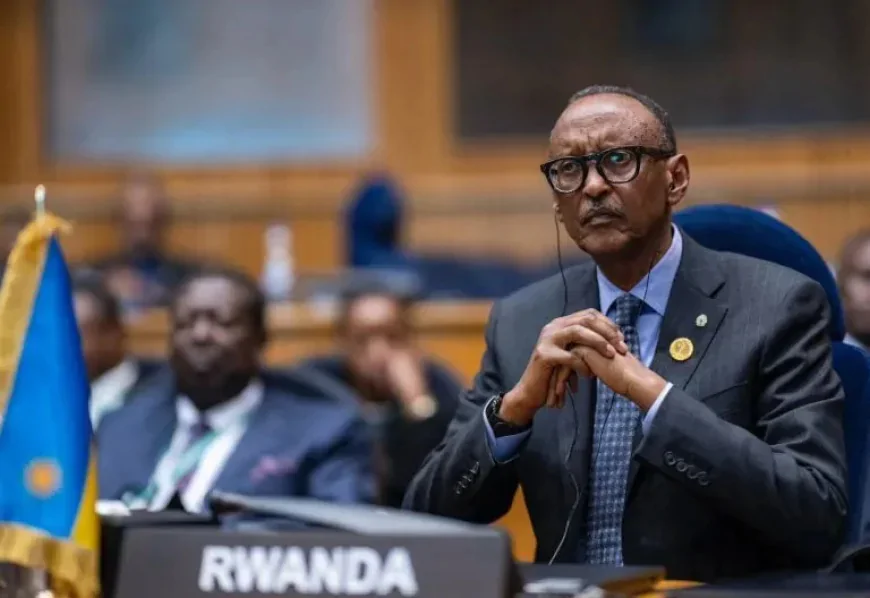
Kigali Fires Back at Washington: Rwanda Calls US Military Sanctions Politically Motivated
Rwanda's government issued a sharp public condemnation Thursday of US sanctions imposed on senior officers of the Rwanda Defence Forces, calling the measures "biased" and politically motivated, and rejecting what Kigali described as Washington's double standard in applying accountability measures selectively to African military actors while ignoring the conduct of other armed parties in the eastern Democratic Republic of Congo conflict. The statement, released by the Ministry of Foreign Affairs in Kigali, marks a significant escalation in Rwanda's rhetorical confrontation with the United States over its role in a conflict that has killed hundreds of thousands and displaced millions across eastern DRC.
The US Treasury Department had designated the Rwandan military officers — whose names were released in accompanying documentation — under executive order authorities targeting individuals responsible for destabilising actions in the DRC, including providing support to the M23 rebel group. The M23, which has captured significant territory in eastern DRC including the city of Goma, has been extensively documented by UN Group of Experts reports as receiving Rwandan military personnel, weapons, training, and logistical support — findings that the Rwandan government has consistently and formally denied.
Rwanda's categorical denial of supporting M23 stands in direct contradiction to multiple independent UN assessments, Western intelligence conclusions, and firsthand journalistic documentation. The gap between Rwanda's official position and the documented evidence has been a central source of friction between Kigali and its Western partners for more than three years.
The Eastern DRC Crisis: What the Sanctions Are Responding To
Eastern DRC has been the site of one of Africa's most destructive and neglected armed conflicts for more than three decades. The M23 rebel group — whose members include many ethnic Tutsi Congolese with strong links to Rwanda — captured the provincial capital of Goma in January 2025 after a rapid advance that routed the Congolese national army and MONUSCO, the UN peacekeeping mission. The fall of Goma triggered international alarm, emergency AU mediation, and a new round of ceasefire negotiations that have produced limited results.
The AU-mediated Luanda process had been the primary diplomatic framework for addressing the crisis, with Angola's President João Lourenço serving as lead mediator. That process has achieved temporary pauses in fighting but no durable ceasefire, and M23 forces have used periods of negotiation to consolidate territorial gains rather than withdraw. The UN, AU, and major Western governments have attributed this pattern directly to continued Rwandan military support for M23 operations.
According to Dr. Kris Berwouts, a Belgium-based independent analyst specialising in Central African conflict dynamics, "The Rwandan position that M23 is an independent Congolese actor unrelated to Rwanda's military is simply not credible given the volume and consistency of documentation from UN experts, satellite imagery analysts, and ground-level reporting. Kigali knows this. The sanctions are an attempt by Washington to impose a cost on that documented behaviour."
Rwanda's Counter-Narrative and the Geopolitics of Accountability
Rwanda's counterargument is not without political content. Kigali points to the DRC government's documented alliances with the FDLR — the Democratic Forces for the Liberation of Rwanda, a militia that includes perpetrators of the 1994 Rwandan genocide who fled to eastern DRC — as evidence that Kinshasa's hands are equally unclean in the conflict's architecture. The FDLR's presence on the Congo-Rwanda border is, Rwanda argues, an existential security threat that justifies Rwandan preventive engagement — a position that international law does not recognise as valid justification for state-sponsored proxy military operations on foreign soil.
The deeper geopolitical question is whether Western sanctions, without Chinese or African Union alignment, will meaningfully alter Rwanda's strategic calculus. Beijing, which has significant mining investment interests in eastern DRC and complex relationships with both Kinshasa and Kigali, has not joined the sanctions. The AU, which has prioritised mediation over condemnation in its handling of the crisis, has resisted Western pressure to formally censure Rwanda. That multilateral fragmentation leaves the US measures as symbolically important but strategically limited.
Whether the sanctions serve as a genuine deterrent, as part of a longer coercive diplomacy sequence, or as a largely declaratory act that allows Washington to demonstrate accountability while leaving Rwanda's behaviour essentially unchanged — that question will be answered not by today's communiqués but by the trajectory of M23's military operations in eastern DRC over the coming weeks.
The Diplomatic Isolation Risk and Rwanda's Western Relationships
The US sanctions against Rwandan military chiefs arrive at a moment when Kigali's relationships with its major Western partners are under broader strain. The United Kingdom has suspended development assistance to Rwanda pending review of its eastern DRC policy. Belgium, which shares a colonial-era bond with both Rwanda and the DRC, has been among the most vocal European critics of Rwandan military involvement. The European Parliament adopted resolutions calling for accountability over eastern DRC in 2024 and 2025. The pattern of Western condemnation has been consistent; the pattern of consequences has been episodic and uncoordinated.
Rwanda has responded to this pattern by deepening its relationships with China — which has maintained commercial investment in both Rwanda and eastern DRC without political conditions — and by emphasising its role as one of the most capable contributors to African Union peace operations, including missions in Mozambique, Central African Republic, and South Sudan. Kigali's argument is that Western condemnation of its DRC policy coexists with extensive dependence on Rwandan military professionalism across the continent, creating a hypocrisy that legitimises Rwanda's defiance.
The sanctions' practical effect on Rwandan military behaviour depends on factors beyond the designation itself: whether allied governments follow with coordinated measures, whether multilateral financial institutions apply conditionality, and whether the AU mediators in the Luanda process use the sanctions as use as use in their ceasefire negotiations. In the absence of that coordination, the measures carry symbolic weight without strategic impact — and Rwanda's government has consistently demonstrated it can absorb symbolic pressure without altering the core strategic calculations that drive its eastern DRC policy.
What's Your Reaction?
 Like
0
Like
0
 Dislike
0
Dislike
0
 Love
0
Love
0
 Funny
0
Funny
0
 Wow
0
Wow
0
 Sad
0
Sad
0
 Angry
0
Angry
0






Comments (0)