

















Senegal's Hidden Debt Crisis: $485M Eurobond Test Exposes 132% Debt-to-GDP Ratio
Senegal faces its first major debt test this month as a $485 million Eurobond matures amid a hidden-debt scandal that has suspended its IMF programme and pushed public debt to 132% of GDP.
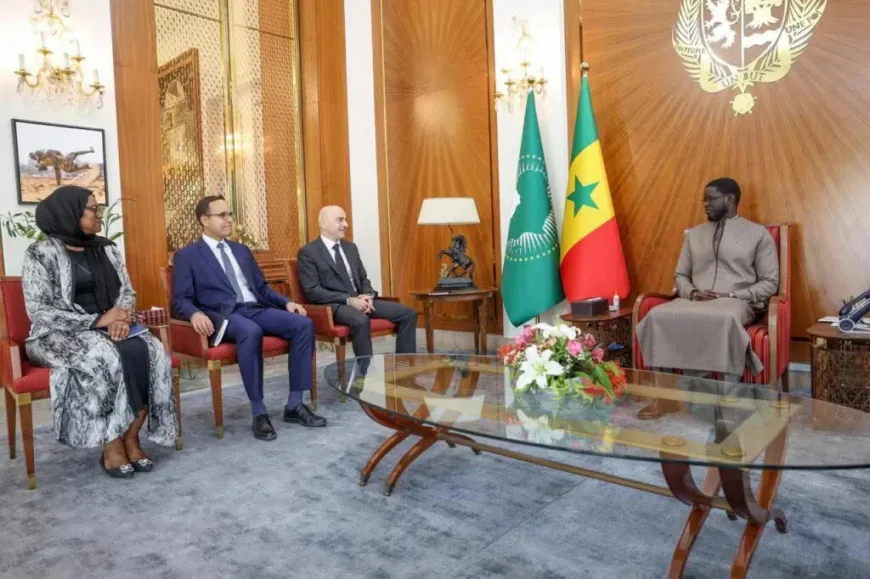
Senegal's Hidden Debt Scandal Collides With a $485 Million Repayment Deadline
Senegal is navigating the most acute fiscal emergency in its post-independence history this month, as a $485 million Eurobond maturity date arrives in the middle of a hidden-debt scandal that has suspended the country's IMF programme, pushed public debt to 132 percent of GDP, and triggered a political crisis between Prime Minister Ousmane Sonko and President Bassirou Diomaye Faye that threatens to split the governing coalition assembled just two years ago.
The government has mobilised approximately 510 billion CFA francs — roughly $850 million — through short-term WAEMU money market bills to cover the immediate repayment. Analysts from multiple African financial institutions warned this week that the liquidity problem has been deferred rather than resolved: servicing costs will double to $2.2 billion in 2026, Senegal's total public debt has reached 132 percent of GDP, and the IMF programme that was supposed to provide the external anchor for the country's fiscal adjustment has been suspended pending the completion of an audit into how the debt grew to its current level without appearing in official statistics.
The hidden-debt scandal broke late in 2025 when an independent audit commissioned by Faye's new government revealed that the previous administration of Macky Sall had substantially misrepresented the country's fiscal position. The true debt figure was significantly higher than what had been disclosed to the IMF, the World Bank, or Senegal's bilateral creditors. The revelations triggered the suspension of the IMF programme, a wave of credit rating downgrades, and immediate pressure on the Faye-Sonko government to produce a credible stabilisation plan before bond markets lost confidence in Dakar's ability to service its obligations.
The Political Fracture That Complicates Fiscal Recovery
Sonko's statement last week — that he was willing to withdraw his party from the government if Faye deviated from their shared political programme — arrived precisely when the fiscal emergency requires the most coordinated and unified government response possible. The friction between the two men centres on what Sonko's allies describe as Faye's willingness to moderate the coalition's reform agenda under pressure from international financial institutions whose structural adjustment conditions conflict with PASTEF's original sovereignty-first economic programme.
The tension reflects a structural contradiction embedded in every populist government that wins on anti-IMF rhetoric and then discovers it needs IMF support: the political base that elected you opposes the conditions under which fiscal stabilisation is available. Senegal is not unique in facing this dilemma, but the scale of the hidden-debt revelation and the concurrent political crisis makes it uniquely exposed. If Sonko follows through on his threat and withdraws PASTEF from the coalition, the National Assembly arithmetic shifts against the government at the moment it most needs legislative support for emergency fiscal measures.
The IMF suspended Senegal's programme specifically because the hidden-debt revelation meant that the programme conditions — which were calibrated to the officially reported debt level — were no longer applicable. A new programme would require negotiation of new conditionalities based on the actual fiscal position, a process that typically takes six to twelve months and produces intense political pressure on whichever government is implementing it.
West Africa Watches Senegal's Reputation for Stability Erode
Senegal has historically been one of West Africa's most reliable anchors of democratic governance and fiscal credibility — qualities that attracted significant French, Emirati, and Qatari investment, particularly in the infrastructure surrounding new offshore oil and gas production that came online in 2024. That investment climate depends on confidence in government institutions, transparency, and the rule of law — exactly the qualities the hidden-debt scandal has placed in question.
Nigeria's banking recapitalisation, by contrast, raised $3 billion and earned a sovereign credit upgrade, demonstrating that strong institutional action can rapidly improve a country's international financial standing. South Africa's budget stabilised its debt trajectory for the first time in 17 years. Senegal's trajectory is moving in the opposite direction, and the reputational consequences for West Africa's investment climate more broadly are a concern that the Economic Community of West African States has begun discussing at the institutional level.
The Republic of Congo holds presidential elections this month, with Denis Sassou Nguesso — president since 1997 — seeking re-election in a contest that international observers have already flagged as unlikely to meet democratic standards. Combined with Senegal's fiscal crisis, the simultaneous political and governance challenges facing two significant West African states in March 2026 have deepened the African Union's credibility problem in managing continental democratic norms.
According to Gyude Moore, Senior Policy Fellow at the Center for Global Development and former Liberian Minister of Public Works, "The Senegal hidden-debt crisis is a reminder that Africa's most respected democracies are not immune from the elite capture and institutional opacity that drives debt crises — and that the consequences fall hardest on citizens who had no voice in the decisions that created the problem."
Whether Senegal can complete a credible audit, negotiate a new IMF programme, hold its governing coalition together, and service its immediate debt obligations simultaneously — four tasks that would strain any government's institutional capacity — is a question that West African financial markets will answer before Dakar's technocrats have finished writing the plan.